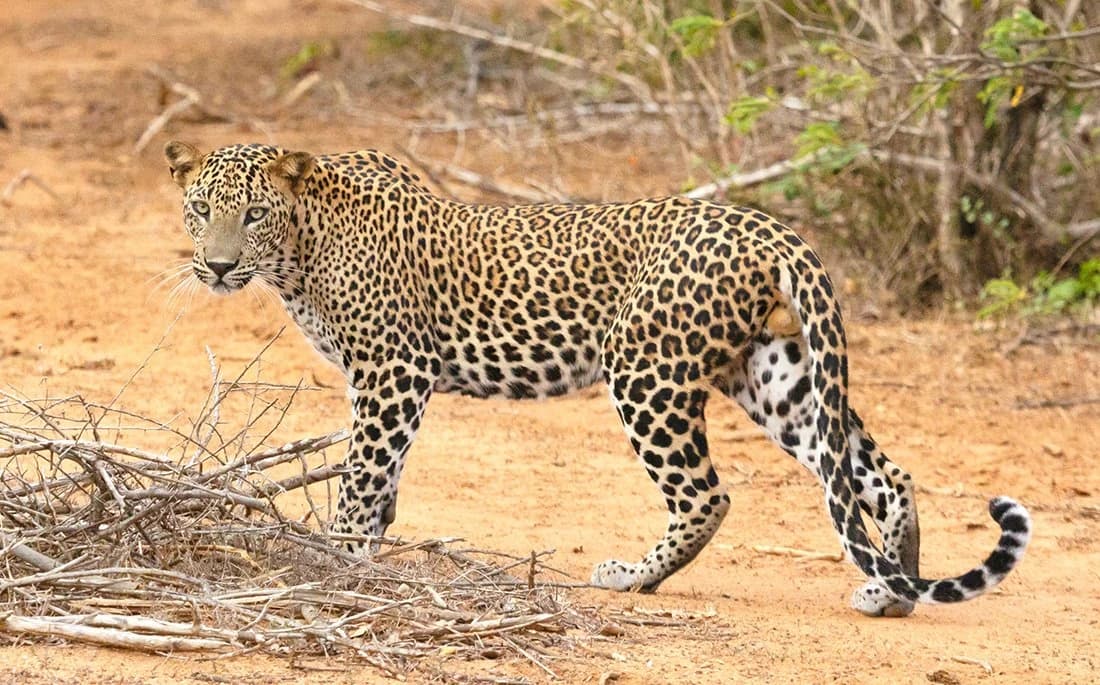
Which of our six Sri Lanka tours actually include Yala or Udawalawe, how many jeep drives you really get, and the one thing we do not sell at all: whale watching off Mirissa.
Sri Lanka is small enough that a national park is rarely more than half a day's drive from a temple, a tea estate or a beach. That is why wildlife appears on most of our routes. It is also why none of our six Sri Lanka tours is a safari tour. Each one is a private, guided round trip with one game drive written into it — or none at all.
This page says which tour includes which park, how many drives you actually get, what a jeep morning is really like, and what we do not sell.
Which of our tours include a safari, and which do not
- Between culture and jungle — 14 days, from EUR 1,380. One afternoon jeep drive in Udawalawe on day 9, plus two days on foot in the Sinharaja rainforest.
- Sri Lanka's glory — 14 days, from EUR 1,050. A shared afternoon jeep drive in Udawalawe on day 4, a ranger-led Sinharaja hike on day 3, then several beach days at Nilaveli.
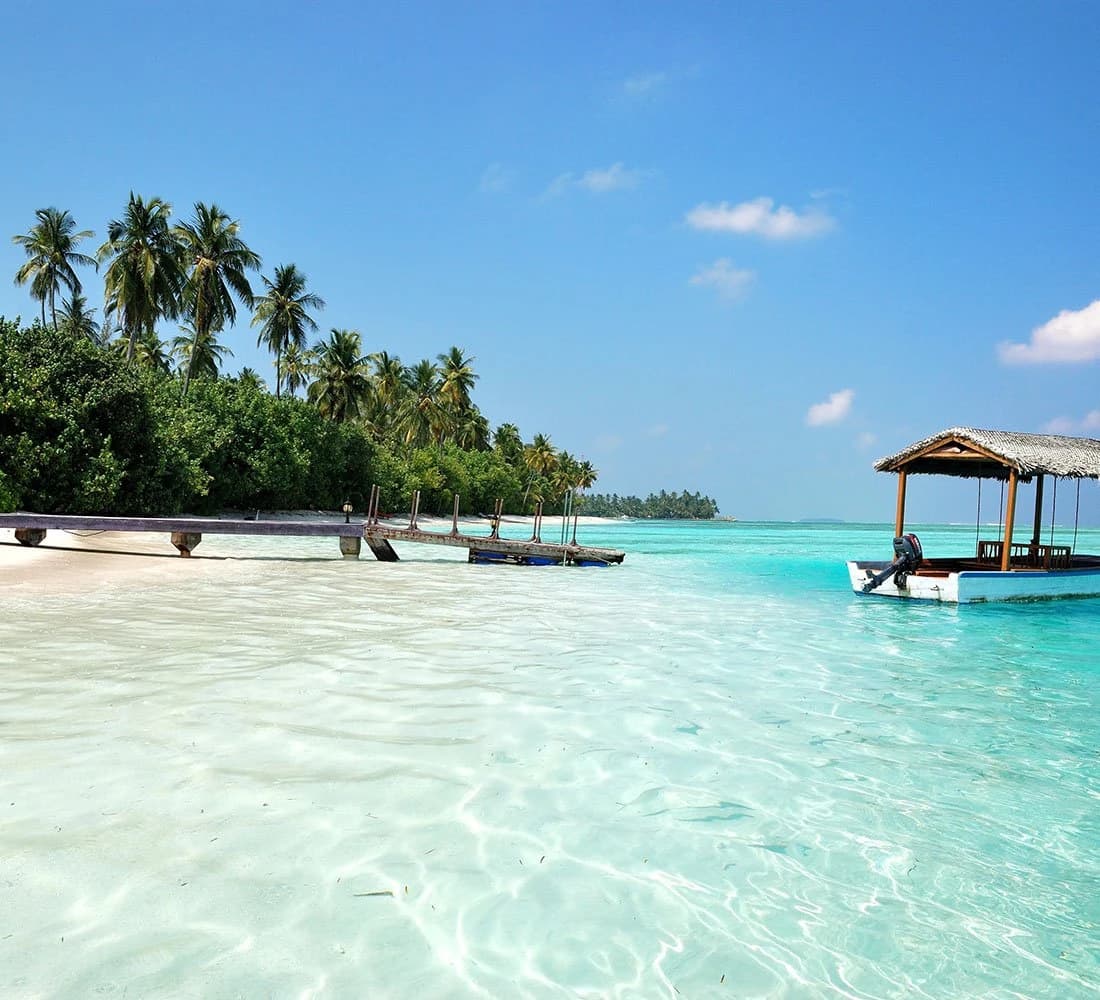
- Breathtaking nature & culture — 14 days, from EUR 1,220. One jeep drive in Yala on day 11, the Pinnawela elephant orphanage on day 2, a turtle hatchery near Galle on day 12, and a four-night beach finish in the Maldives.
- Culture & nature — 14 days, from EUR 1,120. An afternoon jeep drive in Yala on day 7, out of Tissamaharama, and two days in Sinharaja.
- Forests, tea plantations & culture — 14 days, from EUR 1,140. No jeep safari at all. Pinnawela on day 2, Horton Plains on day 5, Sinharaja on days 10 and 11, Adam's Peak before that.
- The wonderful world of Sri Lanka — 13 days, from EUR 750. A culture route through Kandy, Dambulla, Sigiriya and Anuradhapura. Horton Plains is the only wildlife on it.
Two things follow from that list. No tour includes both Yala and Udawalawe. And no tour includes a full safari day — every jeep drive on our Sri Lanka routes is a single drive, usually in the afternoon. If you want a second drive, or a dawn one instead, tell us before we build the trip. These are private trips and the published day-by-day is a starting point, not a timetable.
Yala: a lot of leopards, and no promises
Yala sits in the dry south-east, reached from Tissamaharama. Block 1, the section almost every visitor drives, holds one of the highest leopard densities anywhere. Density is not the same as a sighting. On one three-to-four-hour drive, plenty of people see a leopard and plenty of people do not. Treat it as a lottery ticket that comes with a good afternoon attached.
What you are close to certain of on that same drive: elephants, buffalo, spotted deer, wild boar, crocodiles at the waterholes, peacocks, and a lot of birds — painted storks, bee-eaters, eagles.
Two practical points. Yala is at its best roughly February to July, when the south-east is dry, water is scarce and animals come to the tanks. And Block 1 usually closes for maintenance from about September to mid-October, so a Yala tour in that window either drives a different block or does not drive at all. Ask us which, in writing, before you book. Our month-by-month guide to Sri Lanka and the weather page set out the rest of the year.
Yala is also busy. In the early morning in high season, jeeps queue at the gate and cluster around a sighting. If that ruins it for you, say so — Udawalawe is the quieter park, and it is on two of our tours.
Udawalawe: elephants, close to a certainty
Udawalawe is open grassland and scrub around a reservoir, and several hundred elephants live there permanently. There is very little forest for them to disappear into, so you see them — usually several groups, often with calves, often close to the track. An elephant-free drive there is the exception, not the norm.
You are not going to Udawalawe for leopards. Sightings happen and they are unusual enough that guides talk about them for weeks. Go for elephants, water buffalo, mongooses, jackals, crocodiles and raptors, and take anything else as a bonus. It also works better than Yala in the wetter months, because the animals are not dependent on a handful of drying tanks.
Both our Udawalawe drives are afternoon drives. On Sri Lanka's glory the itinerary says plainly that the jeep is shared.
Sinharaja: the wildlife you walk to
Four of our six tours spend time in the Sinharaja rainforest, which is the largest unbroken stretch of forest left in the country. There is no jeep. You walk, with a ranger who knows the trees as well as the animals.
Be clear about what that is. Sinharaja is not a big-animal place. It is birds — a long list of endemics — plus purple-faced langurs, giant squirrels, lizards, frogs and insects you will need someone to point out. On the two-day version (Between culture and jungle, Culture & nature, Forests, tea plantations & culture) the second morning starts early, which is when the forest is loudest.
It rains in Sinharaja in every month of the year. Leeches are normal after rain. Bring long socks and shoes you do not mind soaking.
Horton Plains, Pinnawela and the turtles
Horton Plains is on four of the six tours, at 2,000 to 2,300 metres above Nuwara Eliya. It is a walk, not a drive: grassland and cloud forest out to World's End, an 800-metre drop with a view to the coast on a clear morning, and Baker's Falls on the way back. Start before dawn — it can be close to freezing at the car park, and the cloud usually closes World's End in by mid-morning. Sambar deer are near certain. Leopards live there; almost nobody sees one.
Pinnawela, on two tours, is an elephant orphanage, not a wild sighting, and it gets a lot of visitors. Some travellers find it moving and some would rather skip it. Tell us which you are — on a private trip it is an easy swap.
The turtle hatchery near Hikkaduwa, on Breathtaking nature & culture only, is a short stop on the way through Galle.
What a jeep drive is actually like
An open-sided 4x4, usually up to six seats, on rough tracks for three to four hours. It is dusty in the dry months and cold in an open jeep at dawn. Bring a hat, sunglasses, something with sleeves, and a camera you can hold steady without a tripod. Binoculars matter more than a long lens for most people.
Shared or private: only Sri Lanka's glory states it outright, and it says shared. The other itineraries just say "jeep safari". Ask us to confirm the arrangement in writing before you book rather than assuming a private vehicle. If you are also looking at India, note that Ranthambore drives are always shared — a jeep for up to six, or an open canter for up to twenty — and never private. Our wildlife trips page collects everything across both countries.
On inclusions, the same list applies to all six tours: hotel accommodation, breakfast, a German-speaking guide, 24-hour contact for the whole trip, and a bottle of water on arrival. International flights are not included. Park entrance and the jeep are not on the published inclusions list either, so get the safari cost confirmed before you commit. Three of the six tours publish their hotels in advance; on the other three the properties are confirmed when we build the trip.
What we do not sell
Whale watching off Mirissa is the honest gap here. It is not in any of our six Sri Lanka itineraries, and we do not run it as part of a tour. Blue whales do pass the south coast, mainly December to April, but do not book one of these trips assuming a boat is included, because it is not. Ask us before you book and we will tell you straight what is possible.
We also do not visit Wilpattu, Bundala, or Minneriya and Kaudulla for the dry-season elephant gathering. They are real and they are good; no tour of ours goes there. And on the Maldives finish, the room is a beach bungalow. We do not sell an overwater villa anywhere in our programme.
Picking the right one
Want elephants and quiet: Between culture and jungle or Sri Lanka's glory. Want the leopard lottery: Culture & nature, or Breathtaking nature & culture if you want to end the trip in the Maldives — see combining the two. Want forest and hill country rather than jeeps: Forests, tea plantations & culture. Still deciding between countries: India or Sri Lanka lays out the trade-off.
Every one of these is private and guided, with no fixed departure dates. Tell us which animals matter to you and in which month, and we will say honestly whether the tour delivers it or not.