Sri Lanka has two monsoons and they hit opposite coasts, so there is no bad month — only a wrong side of the island. Here is what each month does, and where to go in it.
Sri Lanka has two monsoons, and they hit opposite sides of the island. That is the whole answer. There is no month when the entire country is wet, and no month when the entire country is dry. There is only the question of which coast you are standing on.
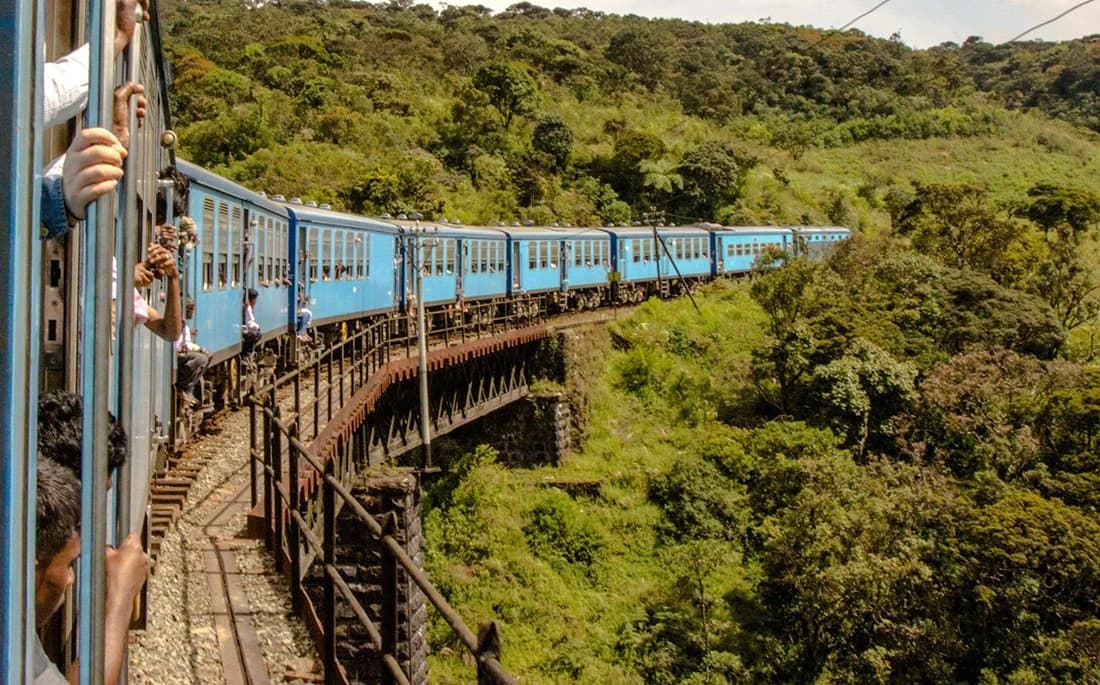
What follows is what each month actually does in the regions our routes run through: the hill country around Ella, the dry-zone ruins around Sigiriya, the southern parks around Yala, and beaches on both coasts.
The two monsoons, in short
The southwest monsoon — locally, Yala — runs roughly May to September. It soaks the west coast, the south coast and the western slopes of the hill country. Colombo takes around 370 mm of rain in May alone.
The northeast monsoon — Maha — runs roughly November to February. It soaks the north and the east: Trincomalee, Nilaveli, Pasikuda. Trincomalee takes about 360 mm in November and again in December, and close to nothing in June.
Between them sit two inter-monsoon periods, in March–April and October–November, when afternoon thunderstorms can build almost anywhere.
Temperature is barely a variable at sea level: 29–32°C by day, mid-20s at night, sea around 28°C, all year round. Altitude is the variable. Nuwara Eliya, at about 1,900 m, sits at 18–21°C by day and drops to around 10°C before dawn, into single digits in January and February.
One thing applies year-round: every full moon is a public holiday (poya). Alcohol is not served, and religious sites are busier than usual.
January
Dry on the west and south coasts and through the hill country. Colombo takes around 75 mm for the whole month. The highlands are cold at first light, colder again on Horton Plains at over 2,000 m, so a fleece belongs in the bag even though the coast is 31°C. The east coast is wet. This is the strongest month for the Galle–Ella–Kandy–Sigiriya loop that most of our routes follow.
February
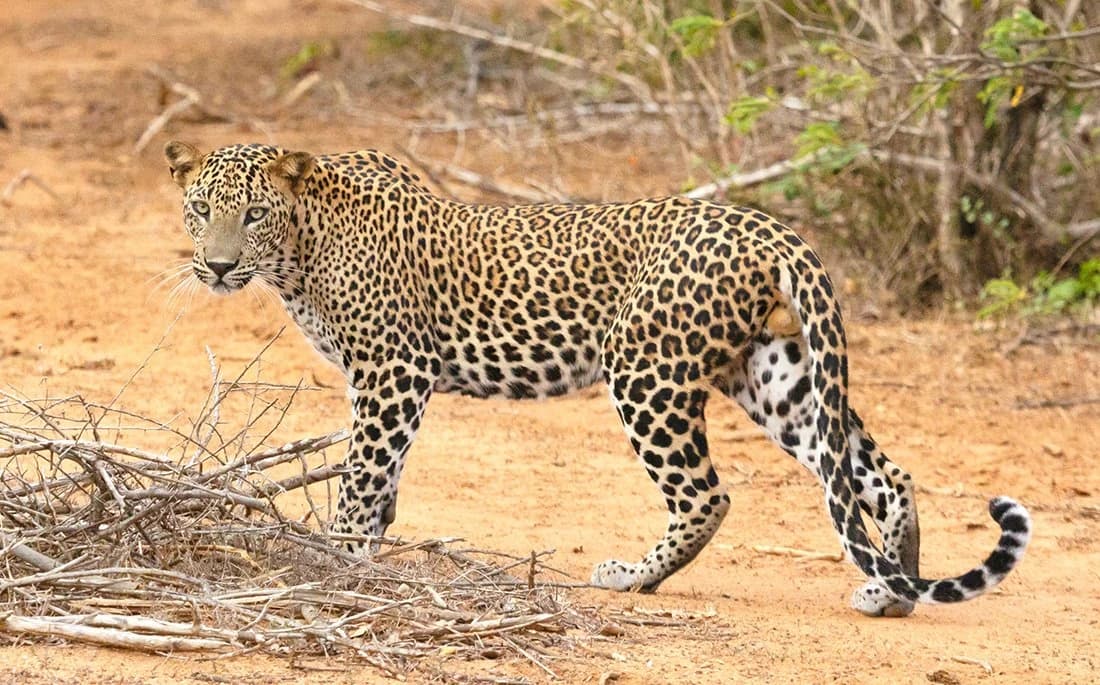
The driest month across most of the island. Colombo around 70 mm. Clear skies in the hills, which matters for Horton Plains. Waterholes are shrinking in Yala, so animals concentrate and game viewing improves through the month.
March
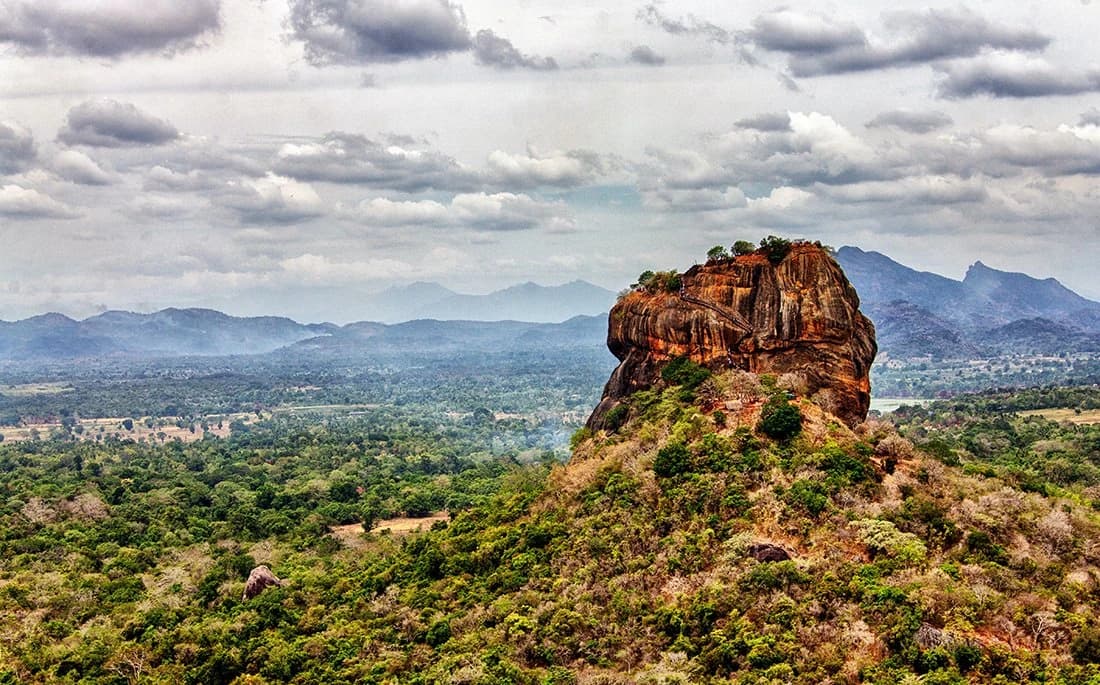
Still dry, and getting hot. The dry zone around Sigiriya, Polonnaruwa and Anuradhapura climbs to 33–34°C by mid-afternoon, which matters when the day involves roughly 1,200 steps up Sigiriya rock. A 7am start is the difference. The hill country stays comfortable at around 22°C. Afternoon thunderstorms start appearing late in the month.
April
The hottest month, and a transition. Colombo reaches 32°C with heavy humidity, and rainfall climbs to around 250 mm as the southwest monsoon arrives. Sinhala and Tamil New Year falls on 13–14 April: shops close, roads are busy for several days, and hill-country hotels fill with domestic travellers. Worth planning around. The east coast is still dry.
May
The southwest monsoon breaks. Colombo's wettest month, around 370 mm, though it usually falls in heavy bursts rather than all day. The south and west beaches are out. The east is where beach days belong now. May is also the last month of the Adam's Peak pilgrimage season.
June
The east is at its driest. Trincomalee takes around 25 mm and the sea off Nilaveli is flat. The southwest keeps raining. Ella, on the eastern side of the range, stays noticeably drier than Nuwara Eliya on the western side. Yala is good, if hot and dusty.
July
Dry and hot in the east and across the dry zone. Kandy's Esala Perahera usually falls in late July or early August — ten nights of processions, and the busiest week of the year in Kandy, so it needs booking months ahead. Yala is still inside its good window, which closes at the start of September.
August
Much like July: the east dry, the southwest still under monsoon but easing. The cultural triangle is fine. A good month if the trip is built around the east coast and the ruins rather than the southern beaches. Sinharaja rainforest, which several of our routes walk into, has no dry month at all — pack for rain there whenever you go.
September
The transition begins. Southwest rain becomes scattered, and the east starts losing its dry spell late in the month. One thing to know: Yala's main block usually closes for around six weeks from the start of September. Udawalawe stays open all year and its elephants are reliable.
October
The most unsettled month of the twelve. Both coasts can be wet, thunderstorms build in the afternoons almost everywhere, and Colombo takes around 350 mm. Sea conditions are poor on both sides. Inland culture days are usually still fine. If beach time is the point of the trip, this is the month to avoid.
November
The northeast monsoon establishes itself and the east coast goes out — Trincomalee takes around 360 mm. The southwest begins drying, and by late November Galle, Unawatuna and the southern beaches are usable again. The hill country stays damp. A month of two halves, and the second half is much better than the first.
December
The season turns. The south and west coasts dry out, the hill country clears, and the cultural triangle is comfortable at around 30°C. The Adam's Peak pilgrimage season opens on the December full moon, when the path is lit and the summit temple is open. December to March is the island's high season, and hotel space over Christmas and New Year is booked furthest ahead. The east is wet.
Three things a rainfall chart won't tell you
- Yala closes. The main block shuts for roughly six weeks from early September during the drought period, with exact dates set each year. If a leopard safari is the reason for the trip, February to early July is the window. Two of our Sri Lanka routes include a Yala jeep safari. Two others use Udawalawe instead, which is open all year.
- Adam's Peak has a season, not just a weather window. The climb makes sense only from the December full moon to the Vesak full moon in May. Outside that, the 5,000-plus steps to the temple at 2,243 m are unlit, the summit is closed, and the mountain sits in cloud. Two of our routes build the pre-dawn climb in. Little Adam's Peak at Ella, which several routes include, is a different thing entirely: an easy hour, no season, no steps to speak of.
- Horton Plains is a morning, not a day. World's End is an 800 m escarpment with a view to the coast when it is clear, and cloud usually fills it from mid-morning onwards. In every month the answer is the same: be at the escarpment by dawn. January to March gives the best odds of seeing anything at all.
How we plan around it
Every trip we run in Sri Lanka is private and guided. There are no fixed group departures, so the route follows the weather rather than a brochure. Two of our routes already build in east-coast beach days — Nilaveli on one, Pasikuda on the other — which is what June and July call for. In January the south coast, Kandy and the hill country carry the trip instead.
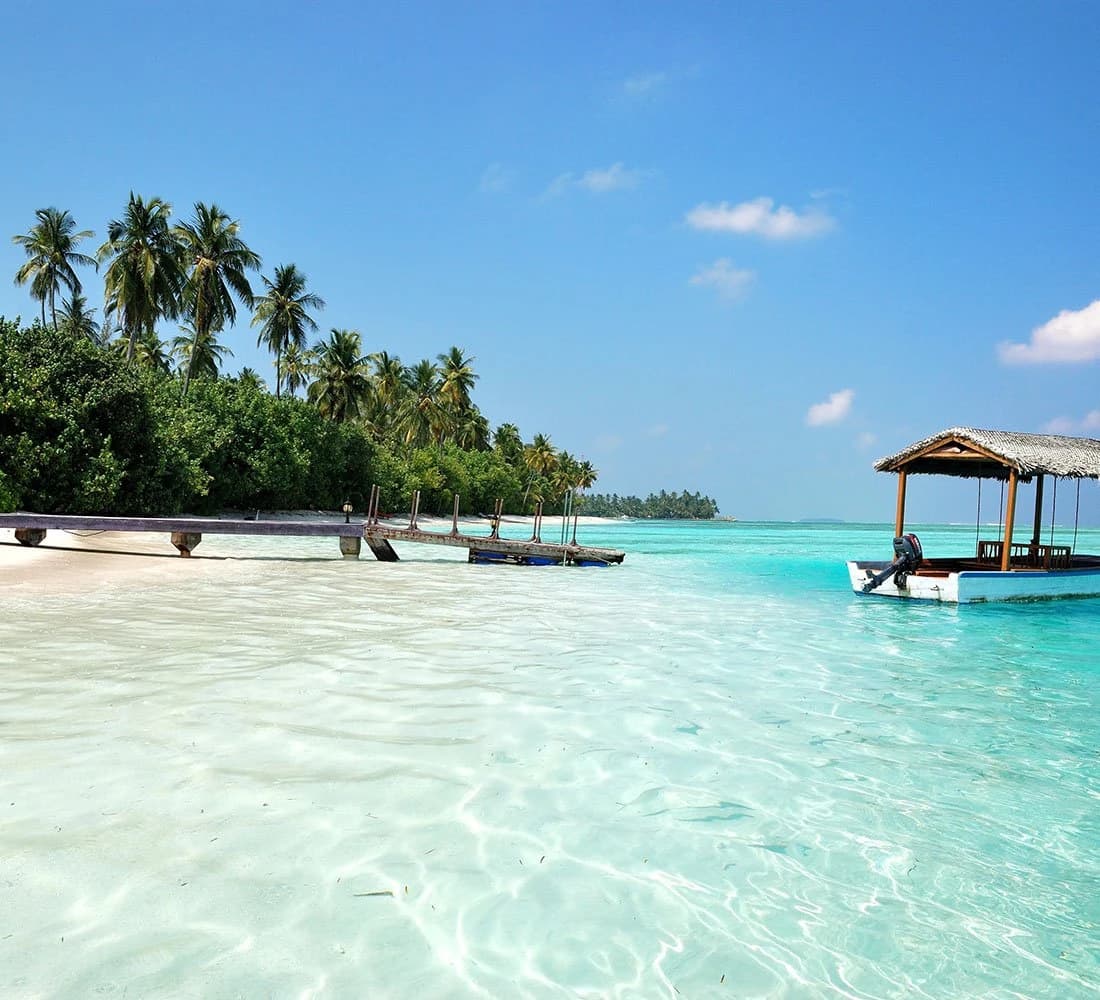
There are six Sri Lanka routes, all 13 or 14 days, from EUR 750 to EUR 1,380 per person. The hotels are Standard and Deluxe rooms. We do not run a five-star tier. One route can be extended with four nights in the Maldives at the end, but those nights and the flight to Malé are an optional extra and are not in the from-price.
Breakfast, hotel accommodation and a German-speaking guide are included on every route. International flights are not, and none of the Sri Lanka routes use an internal flight. One honest detail: on one itinerary the Udawalawe safari runs in a shared jeep, which is normal practice at that park gate.
Start with the Sri Lanka destination page, or browse all our tours. If you are thinking about adding the mainland, India runs on a different calendar — worth checking before you fix dates.