Every one of our 31 tours is private — your own car, driver, guide and dates. Here is what the driver actually does, how long the drives really take, and where a private car stops being the right answer.
Every trip we sell is private. Not "small group" — private. Your own car, your own driver, your own guide, your own dates. There are 31 tours in our catalogue and exactly one has fixed departures: Golden Triangle & Colours of India, 7 days, EUR 1,515, which runs on set March dates because Holi falls when it falls.
That is the whole proposition. It is worth being precise about what it gives you, and what it does not.
The driver drives. The guide guides.
These are two different people, and confusing them causes more disappointment than anything else on an India trip.
Your driver stays with you for the whole route. He handles the car, fuel, tolls, parking, traffic, hotel drop-offs and airport runs. He knows which roadside stop has a clean toilet. He will wait four hours outside a fort without being asked twice. Many drivers speak decent English and will happily point things out through the windscreen.
He will not take you around the fort. Sightseeing is the job of a local guide who joins you city by city — someone who knows Jaipur's history rather than someone who knows every road between Delhi and Jaipur. A German-speaking guide is included on every one of our tours, along with hotel accommodation, breakfast, a 24-hour contact number for our office in Delhi, and a bottle of water when you land.
International flights are not included. Domestic flights written into an itinerary are — and there is a good reason some itineraries have them.
Distance in India is measured in hours, not kilometres
A map will tell you 240 kilometres and you will imagine two and a half hours. Plan in hours instead. Typical days on our North India routes:
- Delhi to Agra — roughly 230 km, about 4 hours on the expressway. Easy, and the best drive in the country.
- Agra to Jaipur — roughly 240 km, about 4 hours, usually with a stop at Fatehpur Sikri or Abhaneri on the way.
- Jodhpur to Udaipur via Ranakpur — a long day. The direct road is about 250 km, but nobody drives it direct. You stop at the Jain temple at Ranakpur, and the last stretch winds through the Aravalli hills. Leave early, and do not plan anything in Udaipur that evening beyond dinner.
Rural Rajasthan roads are slow because of what is on them: trucks, tractors, camels, goats, a wedding procession. Highways are genuinely good. The variable is not the surface, it is what is happening on it.
Why some itineraries put you on a plane
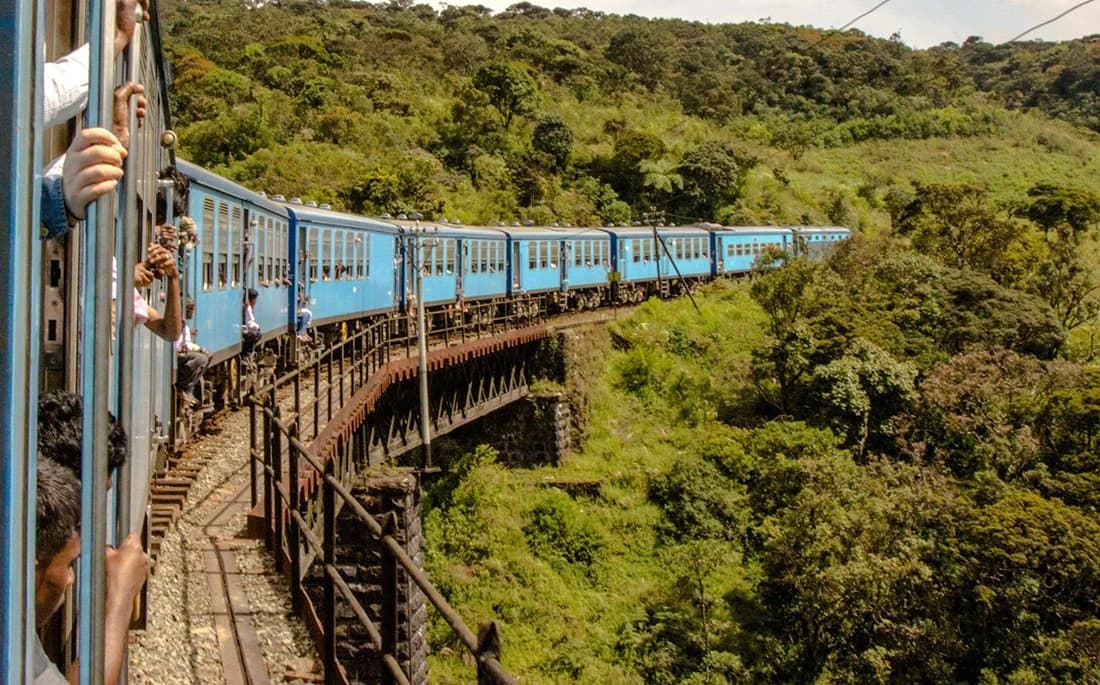
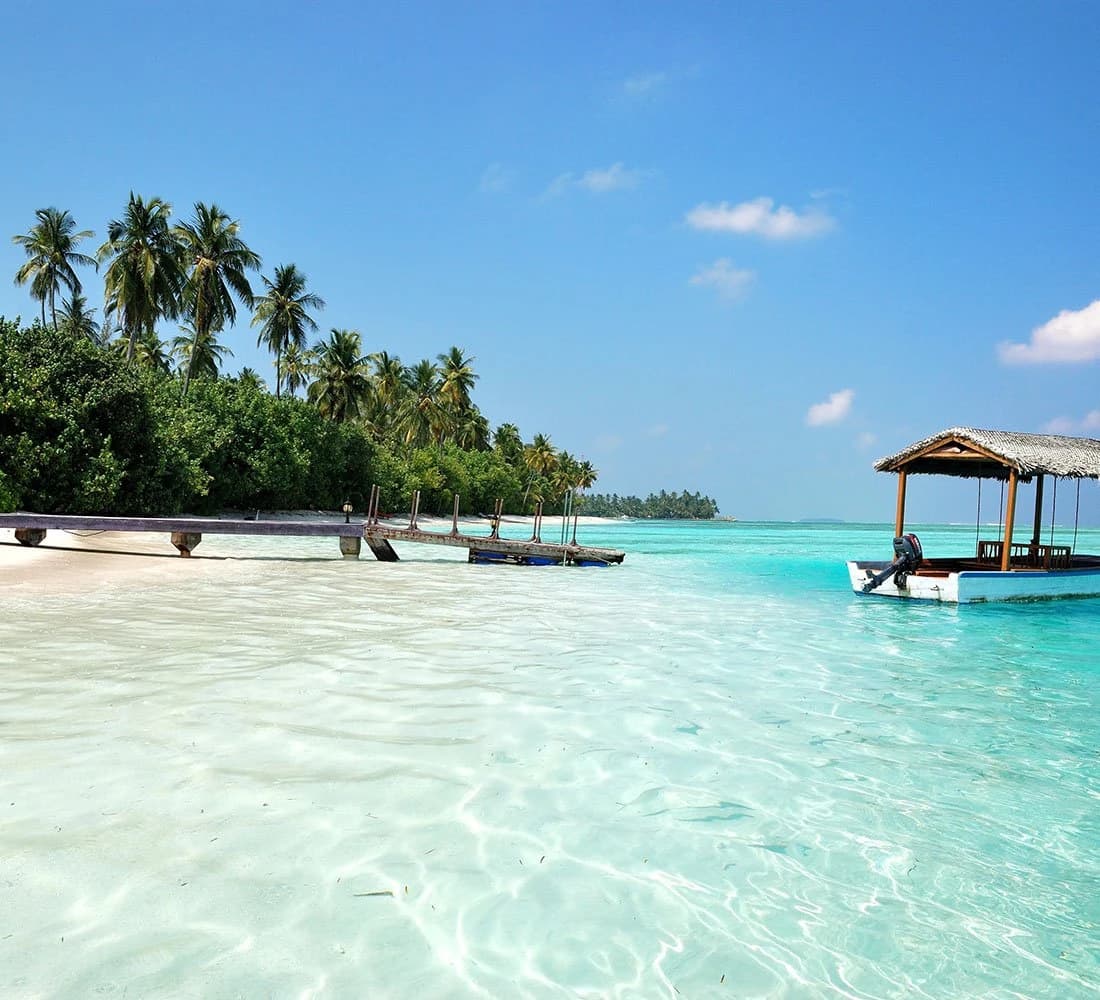
We write domestic flights into itineraries precisely to skip the drives that are not worth doing. India from North to South (14 days, EUR 1,840) moves between the Golden Triangle and Kerala by air, because that stretch by road would eat three days and give you nothing. Same logic applies to the long hops in India's Facets & Maldives (15 days, EUR 3,140).
Those flights are in the price. If an itinerary shows a flight, it is booked and paid for as part of the trip.
Free days, and the days with no car at all
A free day in a city usually means the driver is available and the guide is not. You can ask him to take you to a market or a restaurant; sightseeing with commentary would need a guide booked separately.
The beach components are different, and the itineraries say so plainly rather than burying it. On our Goa beach component (5 days, EUR 350) there is no vehicle and no guide — you are dropped at the hotel and collected at the end. The same is true of the Marari beach stay in Kerala and the Andaman & Nicobar component. That is the point of them: nothing scheduled. If you want to move around Goa, you arrange a taxi at the hotel desk like everyone else.
Tipping, tolls and the small money
Fuel, tolls, parking, and the driver's own food and accommodation are all in the tour price. You never hand him money for any of that.
Tips are not included and are genuinely expected. A common range is 300–500 rupees per day for the driver and 200–300 for a half-day city guide, given at the end rather than daily. Nobody will be offended by less, and nobody will ask. If you are unsure, ask our Delhi office before you go — they will tell you what is normal that season rather than let you guess in the car park.
Wildlife is the one place you give up the private car
Be clear about this, because it is the single largest gap between what "private tour" sounds like and what happens.
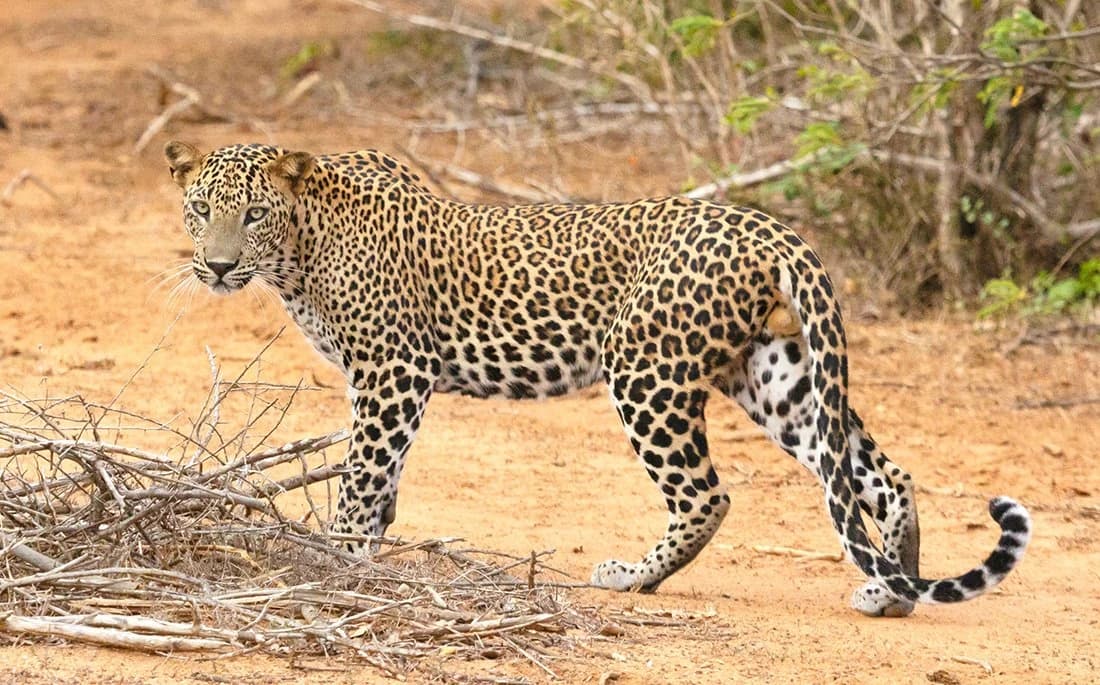
At Ranthambore — which appears on five of our tours, including Rajasthan, the Land of Kings (14 days, EUR 1,800) and On the Trails of the Maharajas (15 days, EUR 1,840) — the park runs the safaris, not us. A full safari day is two shared drives, morning and afternoon, in a jeep with up to 6 people or an open canter with up to 20. The vehicle and the zone are allocated by the park. Safaris here are never private, and a tiger is never guaranteed. Anyone who tells you otherwise is selling you something they cannot deliver.
The other wildlife we actually run: an afternoon jeep safari at Sariska on The Magic of Rajasthan (10 days, EUR 1,000); the Chambal boat safari at Dholpur for gharial and Gangetic dolphin, water level permitting; and the lake at Periyar in Thekkady on our South India routes. That is the honest list. More on all of it under wildlife.
Why a private car suits families
Children do not run on an itinerary. With your own car you leave when the toddler wakes up rather than when a coach departs, you stop when someone feels sick, and you cut an afternoon short without negotiating with thirty strangers. Car seats and a larger vehicle are arranged on request. Our family pages set out which routes have the shortest driving days — Golden Triangle & Spirituality (8 days, EUR 1,175) is the gentlest starting point, with drives of around four hours and nothing longer.
The same flexibility is what most couples actually use it for: an extra hour at a stepwell, and skipping the third fort.
Where a private car is not the answer
Three honest limits.
Long transfers are tiring, whatever the car. Four hours is fine. A Rajasthan itinerary with four-hour drives on five consecutive days is not a rest. If that worries you, take Royal Rajasthan & Varanasi (14 days, EUR 1,520) or North India — Landscapes and Culture (21 days, EUR 2,300) rather than compressing the same ground into ten days.
The driver is not a substitute for a guide. If you want context at every monument, budget for guides in each city rather than expecting it from the front seat.
Some places we simply do not go. The earlier version of this page recommended Bandhavgarh, Kanha and Pench for wildlife, and Munnar and Kumarakom in Kerala. We do not run a trip to any of them. Nor to Shimla, Manali, Dharamshala, Wayanad or Coorg, and we do not sell luxury train journeys of any kind. They may be fine places. They are not ours, and pretending otherwise would be how you end up on a trip that does not exist.
Where to start
- First time in India, one week: Golden Triangle & Spirituality — 8 days, EUR 1,175. See also 1-week trips.
- Rajasthan properly: Rajasthan, the Land of Kings — 14 days, EUR 1,800, or The Magic of Rajasthan at 10 days, EUR 1,000.
- South instead of north: South India — Exotic World — 11 days, EUR 1,570, or The Diversity of South India at 25 days, EUR 2,860.
Twelve of our 31 tours publish their hotels in advance; on the other 19 we confirm each property when we build your trip. Room grades run Standard, Deluxe, Superior, Executive, Premier and Suite.
Before you pick dates, read the best time to visit India month by month — the difference between February and May in Rajasthan is roughly twenty degrees, and it changes what a four-hour drive feels like. If you are still deciding whether to come at all, is India worth visiting is the more honest read. Or start from India and work outwards.