No single month suits all of India. A month-by-month guide to Rajasthan, Kerala, Varanasi, the tiger parks and the beaches — with real temperatures, park closing dates and the trade-offs behind each one.
India runs from the Thar Desert to the Kerala backwaters and from the Himalayan foothills to the Andaman Sea. No single month is right for all of it. The month you travel decides which half of the country works and which half you should leave for another trip.
This guide goes through the year month by month, using the places we actually send people to: Delhi, Agra and Jaipur; Rajasthan from Jodhpur to Jaisalmer; Varanasi; the tiger parks at Sariska and Ranthambore; Kerala, Tamil Nadu and the far south; Darjeeling; and the beaches of Goa, Marari, the Andamans and the Maldives. Every trip we run is private and guided, with a German-speaking guide included, so dates are yours to choose rather than fixed departures — which makes the timing question worth getting right.
The short answer
- North India — Delhi, Agra, Jaipur, Rajasthan, Varanasi: October to March.
- Tiger safaris at Ranthambore and Sariska: March to June for sightings, October to February for comfort. Core zones are closed July to September.
- Kerala and the backwaters: October to March. September is quieter and still green.
- Tamil Nadu and the deep south: January to March. October to December brings the northeast monsoon to the east coast.
- Darjeeling and the Himalayan foothills: October to early December, and again March to May.
- Goa, Marari and the Andamans: November to March.
- The Maldives as a finish: December to April.
January — clear air in Rajasthan, cold mornings
January is dry and settled across the north. Jaipur and Agra sit around 22°C by day. What surprises people is the mornings: 6 to 8°C in Delhi at dawn, and 5 to 10°C in the desert at Jaisalmer and Bikaner, where you will want a fleece for a camel ride at sunset. Air is clearest in the second half of the month, which matters if you want the Taj Mahal at sunrise without haze.
This is a good month for the Golden Triangle and for the long Rajasthan routes through Shekhawati, Jodhpur and Jaisalmer. In Varanasi the evening Ganga ceremony runs regardless of the weather, but the sunrise boat trip along the ghats can be flattened by river fog on the coldest mornings.
February — the steadiest month for a first trip
February gives you January's dry air without January's cold. Rajasthan runs 26 to 28°C by day and around 12°C at night. Everything in the north is open, roads are dry, and you can walk Amber Fort or Mehrangarh at midday without it being a test of endurance.
If this is your first trip to India and you want one month that asks the least of you, it is this one. Our Golden Triangle & Spirituality route — Delhi, Jaipur, Agra, then a domestic flight from Varanasi back to Delhi — sits well here. If you are still deciding whether the country is for you, is India worth visiting is the honest version of that answer.
March — Holi, and the last comfortable weeks in the north
Holi falls in March most years; the date shifts with the Hindu lunar calendar, so it moves between early and late in the month. We build one seven-day route around it, running Delhi, Agra and Jaipur on the day of the festival, then Udaipur to finish. It only works if your dates match the festival, so it needs to be planned early.
Weather-wise, March splits in two. Until about the 15th, Rajasthan stays near 30°C and comfortable. By the end of the month Jaipur is touching 36°C and the afternoons get long. In the south, March is the driest, steadiest month of the year — the best window for the South India temple route through Chennai, Madurai and Thanjavur.
April — heat in the plains, better odds at Ranthambore
April is when the plains stop being pleasant. Jaipur and Ranthambore reach 38 to 41°C. It is also when tiger sightings improve sharply, because the forest dries out and animals come to the remaining waterholes at predictable times.
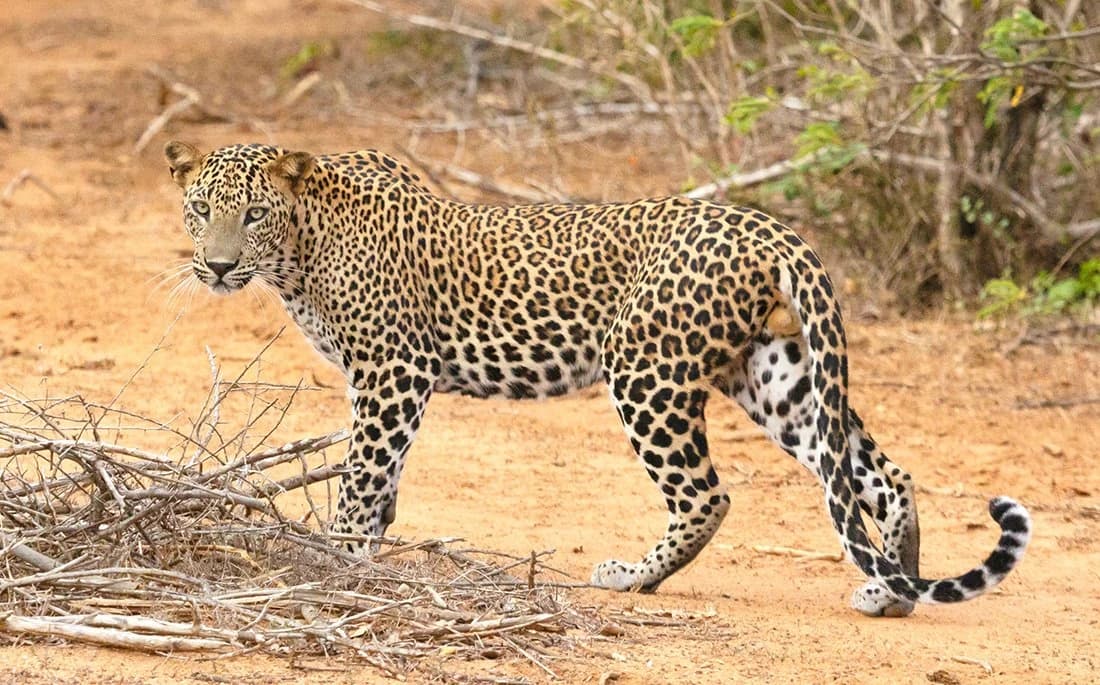
If a tiger is the point of the trip, April and May are the honest recommendation. Two things to know before you book: the game drives at Ranthambore and Sariska are in shared vehicles — a jeep for up to six people, or an open canter bus for up to twenty, depending on what the park allocates — and sightings are never guaranteed. What you can plan for is doing more of them. The 10-day Rajasthan route puts two drives into a single day at Ranthambore plus an afternoon at Sariska, which is the practical way to raise your chances.
May — Darjeeling and the southern hill stations
May is the hottest month in the plains, with 42 to 45°C in Rajasthan. It is also the month the hills earn their reputation. Darjeeling sits at 2,134 metres and runs 15 to 20°C by day. Our 12-day route pairs Rajasthan and Agra with a flight from Delhi to Bagdogra, then Kalimpong, Darjeeling, the narrow-gauge railway to Ghoom, and the pre-dawn drive to Tiger Hill for Kanchenjunga and, on a clear morning, Everest on the horizon.
In the south, Ooty sits at similar altitude and stays around 20 to 25°C — it appears on our 25-day South India route, reached by the toy train up from the plains. If you want mountains as the main event rather than a break from the heat, May is also a strong month next door: see the best time to visit Nepal.
June — the last dry weeks in the foothills
The southwest monsoon reaches Kerala around the first week of June and works north over the following six weeks. Early June still works in the Darjeeling hills; by the third week, cloud sits on the ridges and the Kanchenjunga view is a lottery.
In the plains, June is 40°C and above. Ranthambore and Sariska are still open and still productive for wildlife, but the days are punishing. This is not a month for a 14-day Rajasthan itinerary.
July — Kerala turns green, northern parks close
The monsoon is fully in. Kerala sits at 26 to 30°C with heavy rain that tends to come in bursts rather than all day. The backwaters at Alleppey are full, the Periyar spice hills are at their greenest, and a houseboat night is genuinely pleasant in the rain.
The trade-off is firm: the core zones at Ranthambore and Sariska close from the start of July until the end of September. So a July trip is a southern trip. The 11-day South India route from Chennai through Madurai, Periyar and the backwaters to Kochi works; the tiger routes do not.
August — backwaters, spice plantations, low season
August continues July. Rain remains heavy on the Kerala coast, easing slightly inland around Thekkady. The spice plantation visits and the Kalaripayattu demonstration run whatever the weather. The Periyar lake boat trip depends on the water level, which is high after weeks of rain — this is one of the more reliable months for it.
Expect fewer travellers everywhere and a different pace. If you want warm sea rather than wet hills, this is the month to look at the Maldives instead — though August falls in its wetter half, so read the best time to visit the Maldives before committing.
September — rain easing, and very few travellers
By mid-September the rain in Kerala is noticeably lighter and the landscape has not yet dried out. Prices for accommodation are at their lowest and sites are close to empty. Ranthambore and Sariska reopen on 1 October, so a late-September start that runs into October can pick up safaris in the second week.
The one place to avoid in September is the north Indian plains before the monsoon fully withdraws — humidity in Delhi and Agra is still high, and the Taj Mahal at midday in that air is hard work.
October — the season starts in the north
October is the turn. Delhi drops to around 32°C by day, the air clears, and the tiger parks reopen. Rajasthan becomes comfortable from about the second week. The 21-day North India route through Gujarat, Udaipur, Jodhpur, Jaisalmer and Bikaner starts to make sense again.
One regional exception that catches people out: the northeast monsoon arrives on the Tamil Nadu coast in mid-October. Chennai, Mahabalipuram, Pondicherry and Madurai get their wettest weeks in October and November, while Kerala on the west coast is already drying. If you want the far south, wait for January.
November — the most reliable month overall
If you asked us to pick one month for a first trip covering the classic north, it would be November. Delhi runs about 27°C by day and 12°C at night. Rajasthan is around 28°C. Skies are clear, the parks are open, and the winter fog has not started.
It is also the month the beaches open properly. Goa settles at around 31°C with a calm sea, and the ferries to Havelock Island in the Andamans run reliably again after the rough seas of the monsoon. Both work as a five-day add-on at the end of a longer route.
December — festive season, fog, and warm beaches
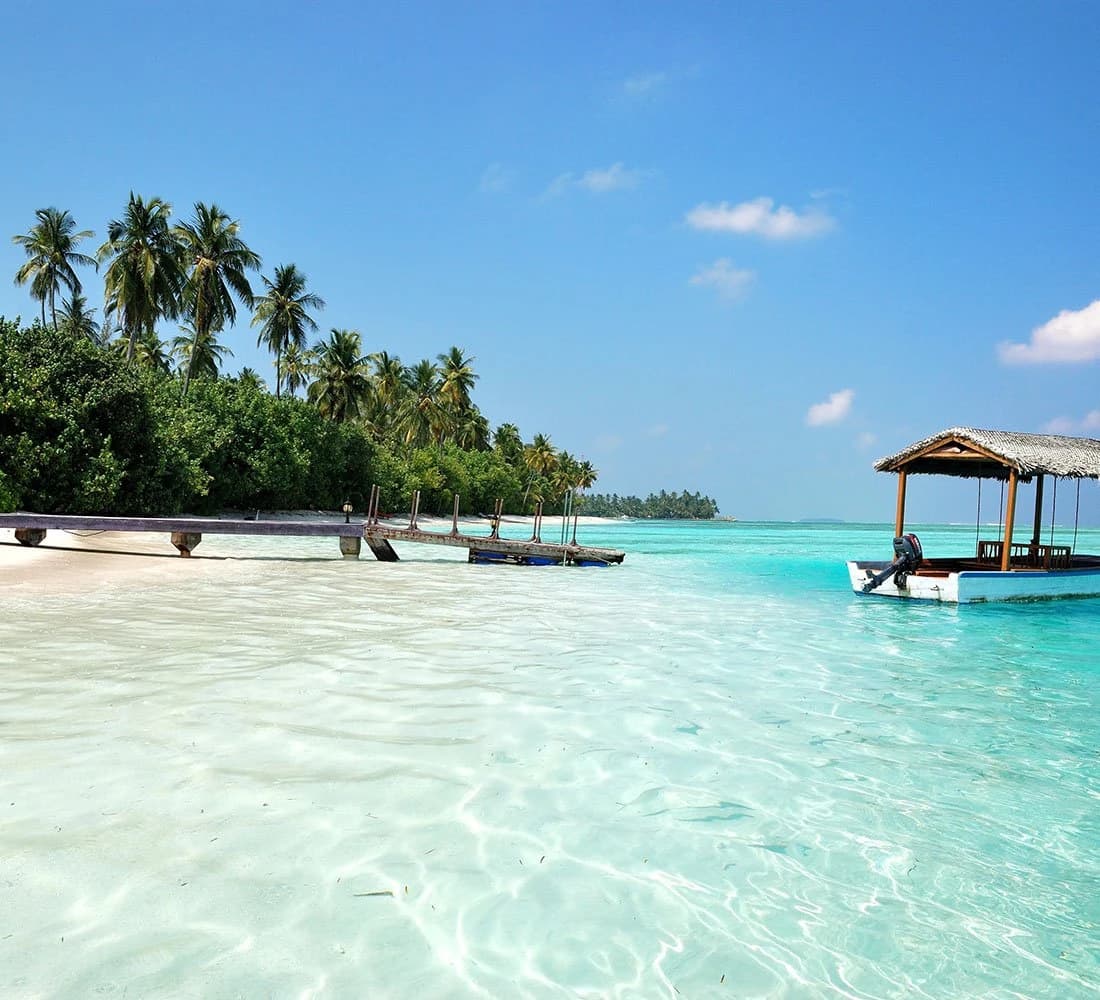
December is the busiest month for international travellers, and the weather in the south and on the coasts is excellent. Goa, Marari and the Maldives are all at their best. The India and Maldives combination — Rajasthan and Mumbai, then the islands — is built for exactly this month.
In the north, December brings one real complication: fog. From about the third week, dense morning fog settles over the Delhi–Agra plain and regularly delays domestic flights and trains. Any itinerary with an internal flight in it — Varanasi to Delhi, Jaipur to Kochi, Delhi to Bagdogra — should have slack built around it in late December and January. Days remain pleasant at around 22°C in Delhi; nights drop to 7°C, and lower in the desert.
Plan around the closing days
Several of the sites on these routes close one day a week, and the pattern is fixed rather than seasonal. The Taj Mahal is closed on Fridays. The Calico Textile Museum in Ahmedabad closes on Wednesdays, the Akshardham Temple near Gandhinagar on Mondays, and the Himalayan Mountaineering Institute and Padmaja Naidu Zoo in Darjeeling on Thursdays. Because every trip is planned individually, we route around these rather than losing a highlight to the calendar — but it is worth knowing why a day sometimes runs in an unexpected order.
India's three seasons, in plain terms
Winter, October to March. The main season. Best for Delhi, Agra, Jaipur, all of Rajasthan, Varanasi, Kerala, the beaches and the Andamans. Cold mornings in the north from late December.
Summer, April to June. Hard in the plains, good in the hills. Best for tiger sightings at Ranthambore and Sariska, and for Darjeeling and Ooty.
Monsoon, July to September. Southern trips only. Kerala, the backwaters and the Periyar spice hills. Northern parks closed; fewest travellers and lowest prices of the year.
Fitting this to a real trip
We run 15 tours in India, from a five-day beach stay from EUR 350 to a 15-day India and Maldives route at EUR 3,140. All of them are private and guided, with a German-speaking guide included. International flights are not included; where a domestic flight is part of the itinerary — Jaipur to Kochi, Varanasi to Delhi, Delhi to Bagdogra — it is.
Because nothing runs as a fixed group departure, the sensible order is to pick the trip first and then the month, not the other way round. If you are weighing India against a neighbour for the same weeks, India or Sri Lanka and combining India and Nepal cover the trade-offs. To see the routes themselves, start with our India destination page or browse all tours.