Yes for most people, no for some — and worth knowing which one you are before you book. What first-timers find hard, who India suits, and what a private guided trip actually changes.
The short answer
Yes, if you want a trip you will still be thinking about in ten years and you can accept some discomfort to get it. No, if what you want is a low-effort holiday where nothing goes sideways.
Both are reasonable things to want. India is only the first one.
Most people who come home disappointed were sold the second and given the first. So before any sales pitch, here is what the trip actually feels like.
What you actually get
Not adjectives — places, all of them on itineraries we run.
- The Taj Mahal in Agra (closed on Fridays), white marble changing colour as the light moves, and Agra Fort across the river, where its builder Shah Jahan spent his last years looking at it.
- Jaipur: the Amber Fort above Maotha Lake, the Jantar Mantar stone observatory, the City Palace still partly lived in by descendants of the former ruler, and the Hawa Mahal.
- Old Delhi: the Jama Masjid, which holds 20,000 people at prayer, and the lanes behind it selling spices, cloth and street food at a density that is hard to describe.
- Varanasi: the evening Aarti ceremony on the Ganges, then a boat at dawn along the ghats while the city washes, prays and cremates its dead in full view. Sarnath, where the Buddha gave his first sermon, is half an hour away.
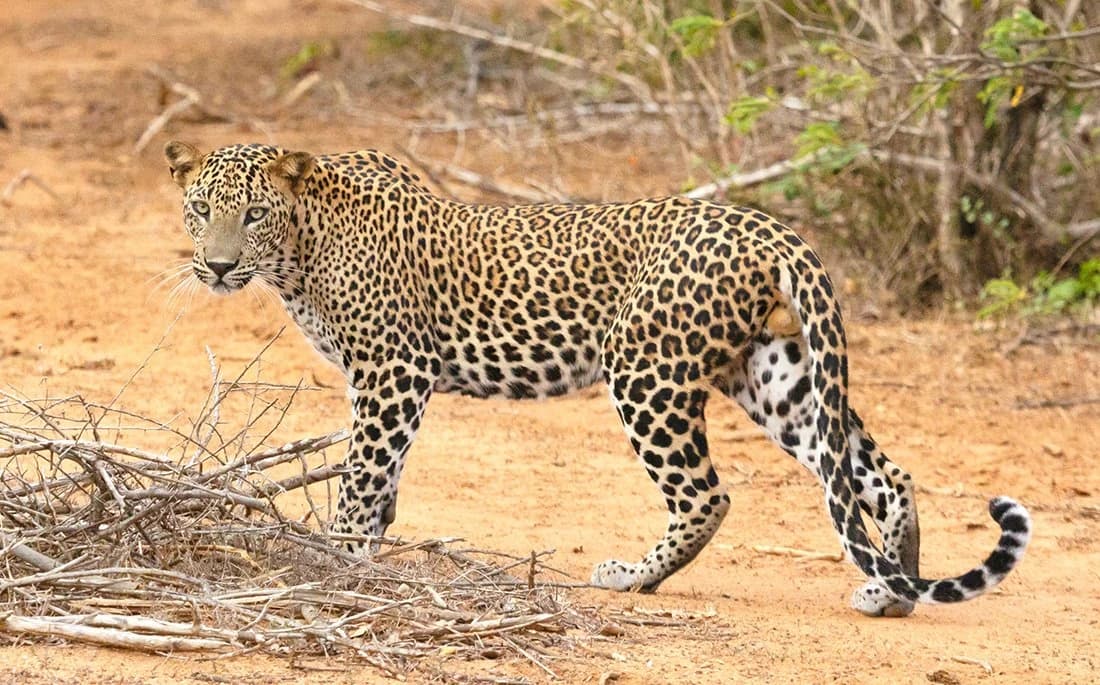
- Ranthambore: two safaris in one day, a real chance of a tiger, near-certain monkeys and peacocks.
- Kerala: a night on a converted rice boat in the backwaters at Alleppey, and a spice plantation in the Cardamom hills above Thekkady, where you can smell what is growing before you are told.
That is the return. Now the cost.
The four things first-timers find hard
Crowds and noise. Delhi, Jaipur and Varanasi are loud in a way that is constant rather than occasional. Horns are used as a turn signal, not an insult. Some people find this energising by day three. Some never do.
Traffic and distance. Delhi to Agra is about 230 km and takes roughly four hours. Jaipur to Ranthambore is about 160 km and most of a morning. Road days are part of India, not an interruption to it, and no operator can shorten them. On the longer trips we fly the worst legs instead — Varanasi to Delhi on the 8-day Golden Triangle & Spirituality, Jaipur to Kochi on the 14-day India – from North to South — which turns two lost days into two hours.
Your stomach. Plan for it rather than hope. Bottled or filtered water only, no ice, no raw salad in the first days, hot food that has just been cooked. Street food is not off-limits, but let your guide pick the stall. Most people get one uncomfortable day and it passes.
Hassle. Touts at monuments, drivers with a cousin who owns a carpet shop, prices that move depending on who is asking. It is not dangerous. It is tiring, and it is relentless if you are alone with a map.
There is a fifth for some people: the visible poverty. India does not hide it, and no itinerary can arrange for you not to see it.
What a private guided trip changes — and what it does not
Every trip we sell is private. There are no fixed group departures and no set dates to fit around: a guide and driver are yours for the trip. Every itinerary lists a German-speaking guide among what is included, so say which language you want when you enquire.
What that fixes:
- The hassle stops being yours. Your guide handles the touts, the ticket queue, the driver who wants a detour to a shop.
- Food gets filtered by someone who eats here, which is the practical reason guided travellers tend to have fewer bad days than people improvising alone.
- A bad day gets rearranged instead of missed. Slept badly, stomach off, too hot — the day moves.
- The pace is yours. Two hours at Amber Fort or forty minutes, your call.
What it does not fix, and no one should tell you otherwise:
- The national park safaris are shared, not private. At Ranthambore and Sariska you are in a jeep with up to six people, or — depending on what the park allocates that morning — an open canter bus with up to twenty. That is how the parks issue permits, and no operator gets around it.
- Traffic is still traffic.
- The Taj Mahal is closed on Fridays, and busy every other day.
- Delhi's air is poor from late October into January. If you have asthma, treat that as a real consideration.
- A tiger sighting is never guaranteed. Ranthambore is one of India's best-known tiger reserves and people still leave without one.
Who India suits
- Curious travellers who want the culture, not just the pool.
- Couples and families with older children — teenagers usually do well in India.
- Repeat travellers to Asia who found Thailand too easy.
- People who want architecture, religion and history rather than nightlife.
- Anyone who would rather have their own guide than a group.
Who it does not suit
- Travellers who want a genuinely restful two weeks. Book a beach instead.
- Anyone with low tolerance for heat, dust, noise or improvisation.
- People who need five-star hotels throughout. Our tiers are Standard, Deluxe, Superior and Executive — comfortable, well-run hotels, some with real character, but we do not run a palace-hotel luxury tier and we would rather say so than sell you one that does not exist.
- Very young children on a long touring route. The road days are hard on them.
- Anyone travelling in May or June who is not prepared for the heat.
When to go
- October to March is the season for North India, Rajasthan and the Golden Triangle. December and January mornings in Delhi sit around 6–8 °C with fog that regularly delays domestic flights; the days are pleasant.
- March is warm, clear and the month of Holi. The 7-day Golden Triangle & Colors of India is built around the festival and finishes in Udaipur.
- April to June runs to 40–45 °C across the northern plains. Avoid unless you have a specific reason.
- Late June to September is the monsoon. Rain is heavy but rarely all day, prices drop and the south turns green.
- November to March is the window for Kerala and South India, and for beach time in Goa or the Andaman Islands.
The month-by-month detail sits in our guide to the best time to visit India.
What it costs
Real numbers from our own catalogue, per person, land arrangements:
- Golden Triangle & Spirituality, 8 days, Delhi–Jaipur–Agra–Varanasi, from EUR 1,175.
- The magic of Rajasthan, 10 days, with Sariska, Ranthambore and Dholpur, from EUR 1,000.
- South India – Exotic World, 11 days, Chennai down to the backwaters, from EUR 1,570.
- India – from North to South, 14 days, the Golden Triangle and Ranthambore, then Kerala, with a domestic flight between them, from EUR 1,840.
- Beach holiday in Goa, a 5-day add-on, from EUR 350.
International flights are not included. Domestic flights inside an itinerary are. Our whole India range tops out at EUR 3,140, which tells you honestly which part of the market we are in.
So — is it worth it?
If you are choosing between India and somewhere easier, and you are hoping India will turn out to be easy: it will not, and you should pick the easier place.
If you want the harder, denser, more interesting version of a holiday, and you would rather have a guide standing between you and the friction: yes, it is worth it, and a private trip is the version of India most people should do first.
Start with India, browse the full range of tours, or read the first-time visitor's guide before you decide.