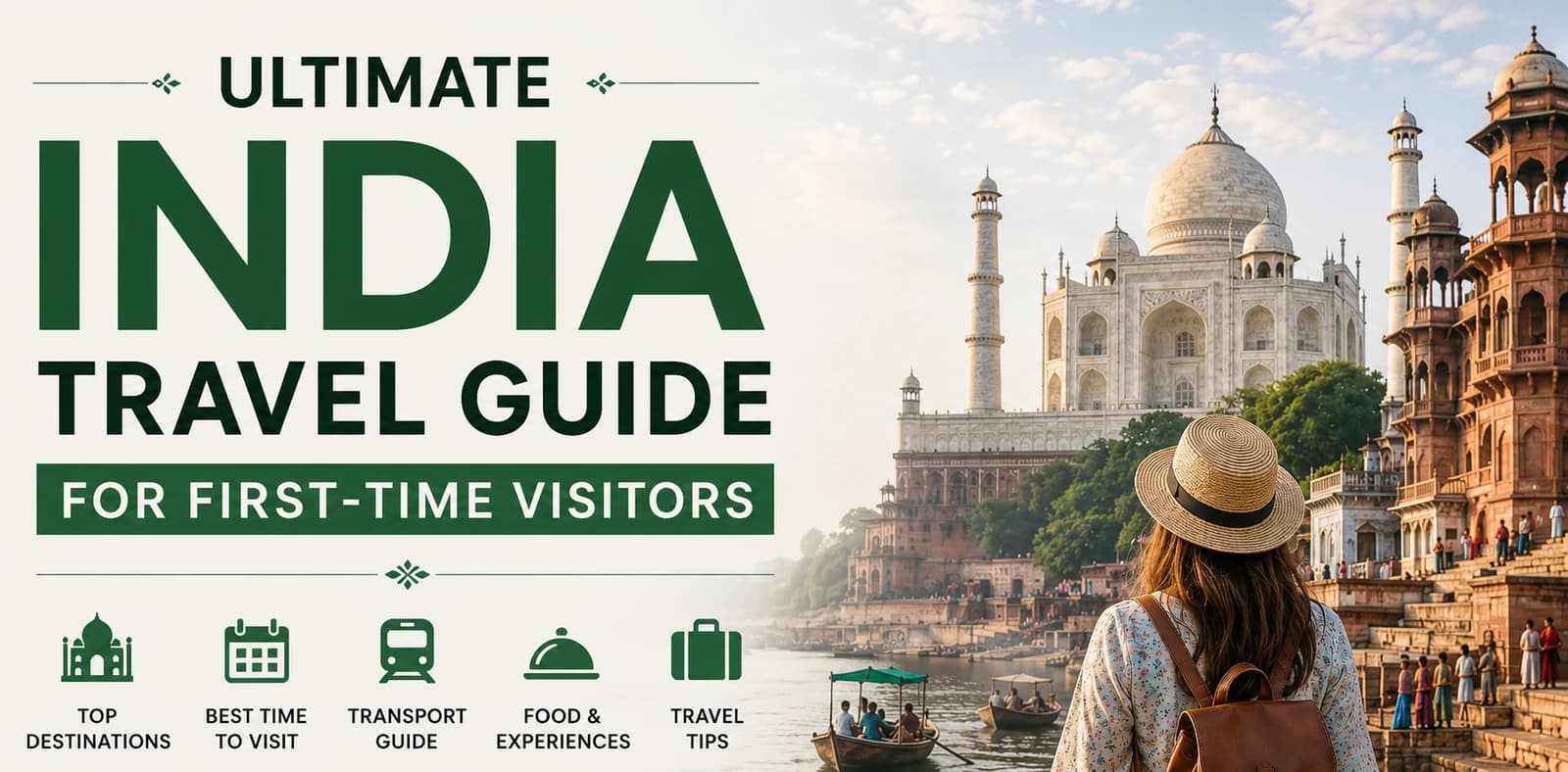
When to go, where to start, how you get around, and what a first India trip actually costs — written from the routes we run, with a team in Delhi. No generic advice, just the trade-offs first-timers face.
India is large, and planning a first trip is mostly a question of what you leave out. Two weeks will not show you the country. Two weeks will show you Rajasthan properly, or the south properly, or Delhi–Agra–Jaipur plus one thing you genuinely want to see.
This guide covers when to go, where to start, how you move between places, what it costs, and the details that catch first-time visitors out. Everything here matches the trips we actually run, planned by our own team in Delhi.
If you are still deciding whether India is the right destination for your first big trip, start with is India worth visiting, then come back here for the practical part.
Where a first trip usually starts
Most first-timers begin with the Delhi–Agra–Jaipur circuit, often called the Golden Triangle. There is a reason it has held that position for decades: three cities, short drives between them, and the country's three big themes — a working capital, Mughal architecture, and Rajput palaces — in about a week.
We run it in two forms.
- Golden Triangle & Spirituality, 8 days, from EUR 1,175. Delhi, Jaipur, Agra, then Varanasi for the evening Aarti ceremony and a sunrise boat trip along the ghats. You fly Varanasi back to Delhi at the end; that domestic flight is written into the itinerary and included.
- Golden Triangle & Colors of India, 7 days, from EUR 1,515. Same three cities, but built around the Holi date in March, with a block-printing session with local artisans, a cooking class in a private home, and a finish in Udaipur on Lake Pichola.
Seven or eight days is genuinely enough for this circuit. If you have twelve days or more, add a second region rather than more cities in the same one.
Best time to visit India
The country spans too many climates for one answer, so here it is by season.
October to March
This is the main season for the north, and the reason most itineraries run then.
Delhi, Agra and Jaipur sit around 20–25°C in the daytime in December and January, dropping to 6–10°C overnight. Bring a proper jacket — people rarely expect to be cold in India, and a sunrise at the Taj Mahal in January is cold. October and March are warmer, roughly 28–33°C by day, and are the most comfortable months overall for walking around forts.
One real trade-off: from late December to mid-January, dense fog settles over the northern plains. It is atmospheric on the Ganges and inconvenient at the airport. Domestic flights and trains in that window can run hours late, which is why we build slack into January itineraries rather than pretend it does not happen.
April to June
Rajasthan and Delhi reach 42–45°C in May and June. Fort courtyards are unshaded stone. We do not recommend a Rajasthan trip in those months for a first visit.
What does work: the Himalayan foothills. Rishikesh and Haridwar at the foot of the mountains are workable, and our 21-day North India route reaches them by train from Delhi.
July to September
The monsoon. Landscapes turn green, sites are quiet, and prices soften. The costs are real too: the core zones of the wildlife parks close for the monsoon, Kerala backwater days are wet, and the Andaman Islands have rough seas and reduced ferries.
If you are combining India with the Maldives, check the best time to visit the Maldives before fixing dates — the two do not always line up.
The regions, and what each one is for
Delhi
Nearly every route starts here. Delhi is not a stopover city; it is the clearest single introduction to the country you will get.
On our routes you see the Red Fort, Jama Masjid — India's largest mosque, holding up to 20,000 people at prayer — the lanes of the old city, India Gate and the government quarter, Bangla Sahib Gurudwara where the Sikh community feeds thousands daily, Humayun's Tomb, Qutub Minar, and the tombs in Lodhi Garden. Two days is right. One day is rushed.
Agra
The Taj Mahal, Agra Fort, and Fatehpur Sikri, the capital Akbar built and abandoned when the water ran out.
Two practical notes. The Taj Mahal is closed on Fridays — this shapes the whole itinerary, and we plan around it. And sunrise is worth the early alarm: the marble reads differently in the first hour than it does at midday, and the crowd is a fraction of the size.
Jaipur and Rajasthan
Rajasthan is where most people spend their extra days, and it deserves them. Amber Fort, Jantar Mantar, the City Palace still partly occupied by the Maharaja's family, Hawa Mahal, and a rickshaw ride through the bazaars.
Beyond Jaipur, the longer routes reach the Shekhawati region with its painted merchant havelis, the blue city of Jodhpur under Mehrangarh Fort, Jaisalmer in the Thar Desert, Bikaner, Ranakpur's Jain temple with its 1,444 carved pillars, and Udaipur on the lakes. Our Rajasthan itineraries run 10 to 15 days, from EUR 1,000.
Kerala and the south
A different country in tone. Kochi's Portuguese and Dutch layers, the temple towns of Tamil Nadu — Madurai's Meenakshi Temple, the Brihadishvara Temple at Thanjavur, Srirangam at Tiruchirappalli — the Periyar reserve in the Cardamom Hills with its tea, pepper and cardamom plantations, an overnight houseboat through the Alleppey backwaters, and Marari beach at the end.
South India routes run 11 to 25 days. If you only have two weeks and want both halves, India – from North to South does Delhi, Agra, Ranthambore and Jaipur, then flies Jaipur to Kochi and continues to Periyar, the backwaters and Marari — 14 days, from EUR 1,840, with that internal flight included.
The eastern Himalayas
Colourful Rajasthan & Himalayas (12 days, from EUR 1,910) pairs the Rajasthan circuit with a flight to Bagdogra, the nurseries and monasteries around Kalimpong, the narrow-gauge mountain railway, and a pre-dawn trip to Tiger Hill for the view across to Everest. Go in October–November or March–April; those are the months the peaks are actually visible rather than in cloud.
Beaches at the end
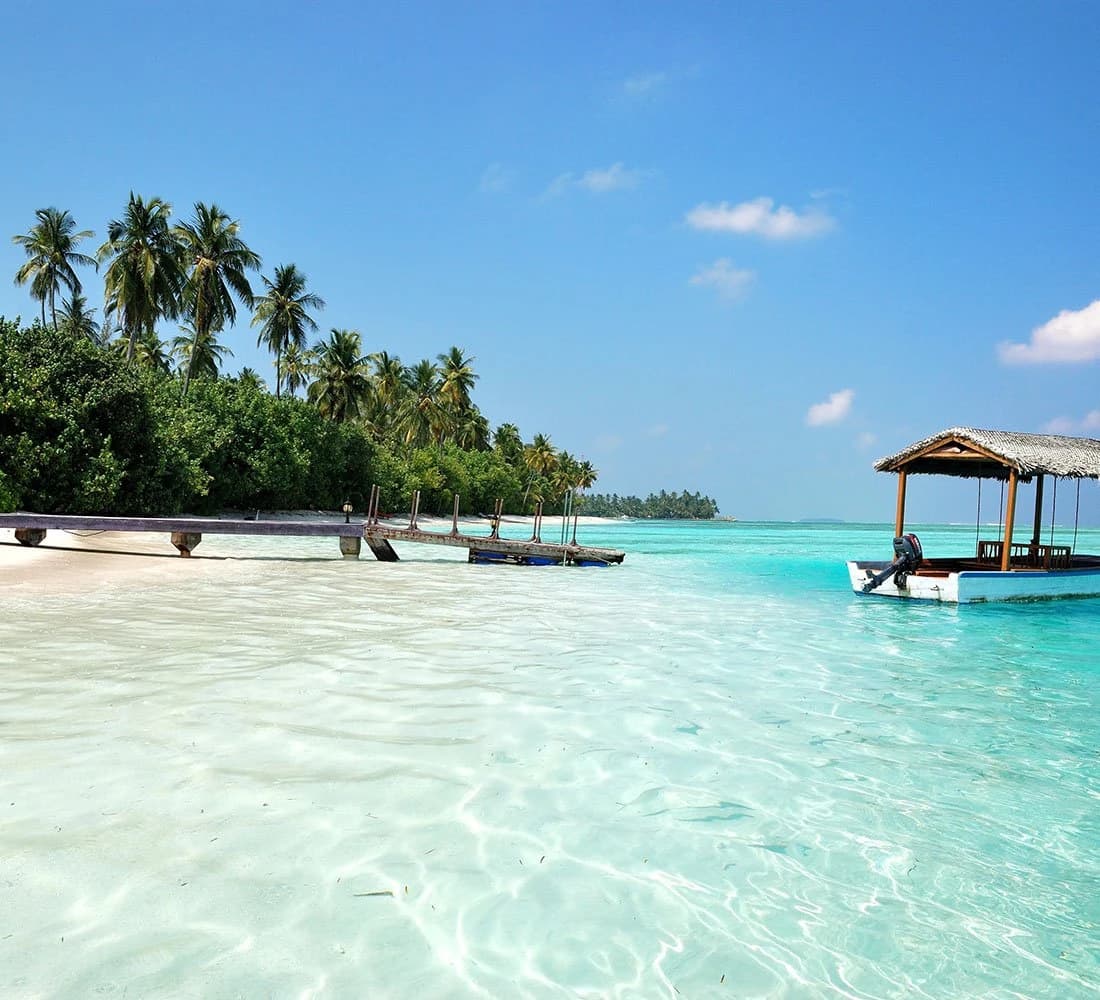
Rather than force a beach into a cultural route, we add it as a separate five-day component: Goa from EUR 350, Marari in Kerala from EUR 400, the Andaman Islands from EUR 410, or the Maldives from EUR 700. Goa works November to February; the Andamans December to April.
Wildlife: the parks you will actually visit
Some guides list every famous reserve in India. Here are the ones on our routes, so you know what you can really book.
- Ranthambore (Rajasthan) — the tiger park on five of our itineraries, with two safaris on the main day, early morning and afternoon.
- Sariska (Rajasthan) — open woodland and savannah, on The Magic of Rajasthan.
- Chambal, near Dholpur — turtles, gharial and heavy birdlife, well off the usual route.
- Keoladeo Ghana, Bharatpur — one of Asia's better bird reserves, on Royal Rajasthan & Varanasi.
- Periyar (Kerala) — a boat trip on the lake and a guided walk along the reserve boundary.
Two honest points. Park jeeps are shared, up to six people — that is the park's rule, not ours, and it applies to every operator. And no safari guarantees a tiger. Ranthambore gives you a fair chance across two drives; anyone promising a sighting is selling you something they cannot deliver.
How you get around
Private car with driver
The backbone of every trip. Delhi to Agra, Agra to Jaipur, and most Rajasthan legs are driven. You stop when you want, and you are not managing timetables in 40-degree heat.
Domestic flights
Used where driving would cost you a day or more: Varanasi–Delhi, Jaipur–Kochi, Delhi–Bagdogra. Where a flight is part of the itinerary, it is included in the price. International flights are not included — you book those yourself, which usually gets you a better fare from your own airport anyway.
Trains
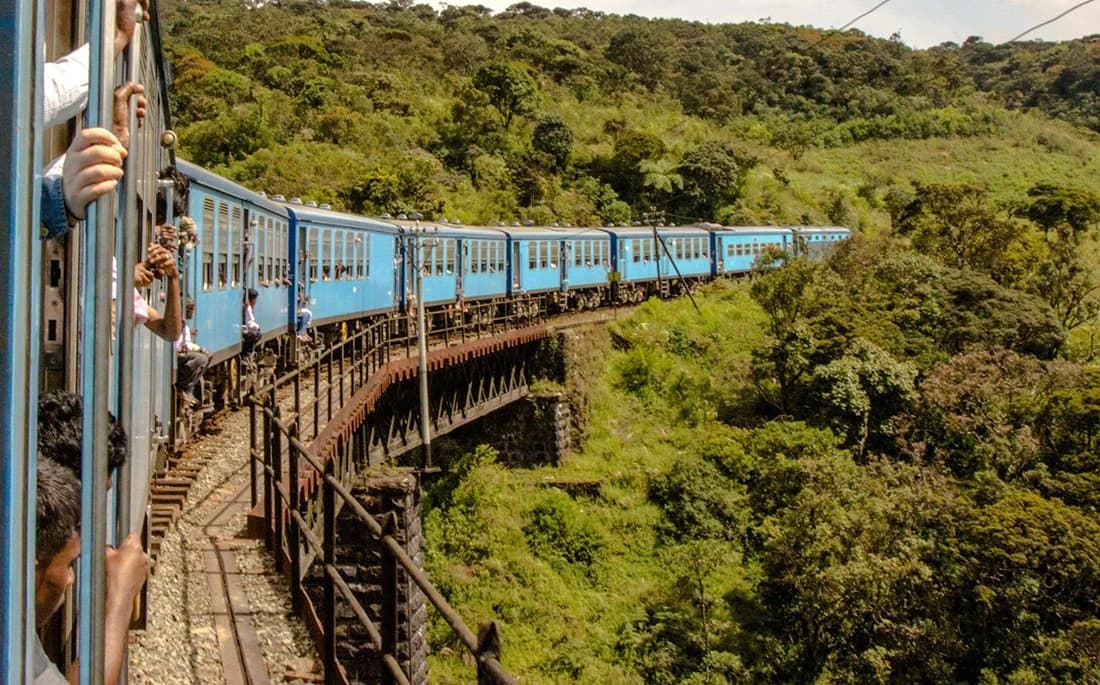
Not a novelty, a genuinely good way to travel. Our North India route uses the Delhi–Haridwar line and a small mountain railway from Kamblighat; the Himalaya route uses the narrow-gauge line near Darjeeling.
Food
Regional, not national. Order what the region is known for and you will eat well.
- Delhi — butter chicken, kebabs, and street food in the Chandni Chowk lanes.
- Rajasthan — dal baati churma, laal maas, and a great deal of ghee.
- Kerala — coconut-based fish curries, appam, and whatever came off the boat that morning.
- Tamil Nadu — dosa, idli, and a full thali served on a banana leaf.
Two rules that prevent most problems: drink bottled or filtered water only, including for brushing your teeth, and eat where there is turnover. A busy stall cooking to order is safer than a quiet restaurant with a long menu. Tell us in advance if you are vegetarian, vegan or need gluten-free — India handles all three better than most countries, but it helps to brief the hotels ahead.
What a first trip costs, and what is included
Our India trips run from EUR 350 for a five-day beach component to EUR 3,140 for the 15-day India and Maldives combination. A full cultural circuit typically lands between EUR 1,000 and EUR 1,900.
What that includes:
- A private trip. Your group only. No scheduled group departures, no strangers on your bus, no fixed departure dates to work around.
- A German-speaking guide, included on every tour.
- Hotels, listed transfers, entrance fees for the sites named in the itinerary, and any domestic flights written into the route.
Rooms come in four tiers — Standard, Deluxe, Superior and Executive. There is no five-star or luxury tier, and we would rather say so plainly than have you arrive expecting one. The rooms are comfortable, well located and clean; the money goes into the route, the guiding and the private car rather than into marble lobbies.
Not included: international flights, visa, travel insurance, meals beyond those listed, and tips.
Practical things that catch first-timers out
- Visa. Apply for the e-visa online before you travel. Do not leave it to the last week.
- Modest dress at religious sites. Shoulders and knees covered. Shoes off at temples, and often at mosques and gurdwaras.
- Cash and card. Cards work in hotels and larger shops; markets, rickshaws and tips are cash.
- Shoes. You will walk on uneven stone for hours. Bring shoes you have already broken in.
- Pace. The single most common mistake is booking one city too many. Cutting a stop nearly always improves the trip.
- Fridays. The Taj Mahal is closed. Akshardham in Delhi is closed on Mondays.
Planning your first trip
If India is your only destination, a 7 to 15 day route through the north or the south is the natural starting point. If you want to combine countries, we also run India with Nepal and India with the Maldives. Still weighing India against a smaller, easier first trip? India or Sri Lanka sets the two side by side.
We have 15 India routes, from a five-day beach stay to a 25-day journey through the south. Browse them all under India or across our tours, and tell us your dates — the itinerary is yours alone, so we can move a day, add a night, or cut a stop to fit how you actually want to travel.