India's wildlife sits in a handful of protected areas, reached by jeep, canter or boat. Here are the parks our trips actually visit — Ranthambore, Sariska, Chambal, Keoladeo, Periyar — what you can expect at each, and when to go.
India's wildlife is not spread evenly across the country. Almost everything travellers hope to see — tiger, gharial, wild elephant, one-horned rhino — lives inside a small number of protected areas, and you reach them on drives, boat trips and walks that have to be booked weeks ahead. Vehicle permits for the popular parks are limited by the forest department and sell out in the high season.
So this is not a list of everything that lives in India. It is a list of the places our own itineraries go, what you can realistically expect at each one, and which months work.
Ranthambore: the tiger park we use
Ranthambore in eastern Rajasthan is the reserve that appears most often in our programmes — five trips include it, from the 10-day Magic of Rajasthan at EUR 1,000 up to the 15-day On the Trails of the Maharajas.
A full safari day means two drives, not one: pick-up at the hotel before dawn for the morning round, back to the hotel through the middle of the day, out again in the afternoon. Depending on availability on the day, you travel in a jeep with up to six people or in a canter, an open safari bus seating up to twenty. Both are shared vehicles allocated by the park, which is the one part of the trip that is not private — worth knowing in advance, because everything else on your itinerary is yours alone.
Tigers are the reason most people come, and Ranthambore gives you a genuine chance rather than a guarantee. Two drives improve the odds considerably over one. What you will almost certainly see instead, or as well: sambar and spotted deer, nilgai, wild boar, langur and rhesus monkeys, marsh crocodiles at the lakes, treepies that land on the jeep, and a long list of birds. Ranthambore Fort sits on a 200-metre hill inside the reserve — the ruins are worth the climb for the view over the forest even on a day the cats stay hidden.
The town at the gate is Sawai Madhopur. Several of our itineraries build in an afternoon at its vegetable market, which is a good use of the gap between drives.
Sariska: one afternoon, open country
Sariska sits closer to Delhi and looks completely different from Ranthambore — dry savannah and open woodland rather than dense forest. It appears on the 10-day Magic of Rajasthan as a single shared afternoon jeep safari, up to six people, timed for the last hours of light.
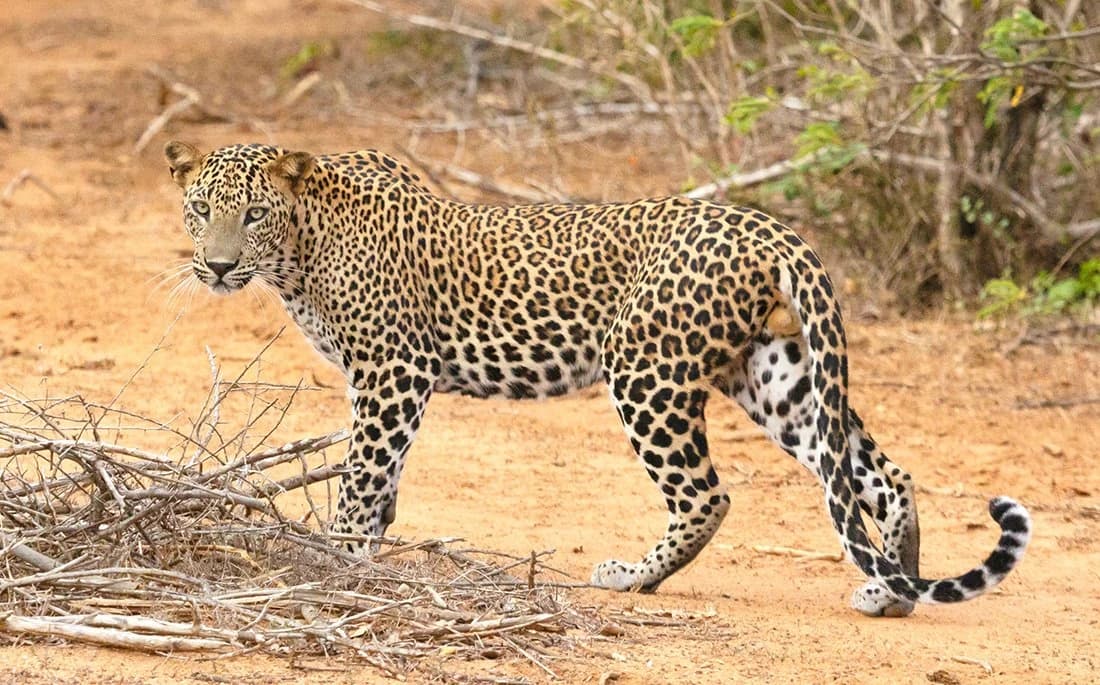
Be realistic about it. Sariska's tigers were reintroduced after the population was lost, the numbers are still small, and sightings are uncommon. What the afternoon reliably delivers is sambar, nilgai antelope, peacocks and a great many monkeys, in country open enough that you see animals at a distance rather than catching a glimpse through undergrowth. Leopards are present. Most visitors do not see one.
The Chambal at Dholpur: gharial and river dolphin
The stretch of the Chambal near Dholpur is the least-known wildlife stop we sell, and for some travellers it turns out to be the best one. It is on the Magic of Rajasthan, paired with two nights at the Raj Niwas Palace.
You go out by boat in the early morning, water levels permitting — the river drops, and if it is too low the trip cannot run. The Chambal is one of the few rivers holding gharial, the narrow-snouted fish-eating crocodile, along with mugger crocodiles, softshell turtles hauled out on the sandbanks, and the Ganges river dolphin, which is blind and surfaces briefly. Skimmers, storks and terns work the water. The lake at Talab-e-Shahi, a former hunting lodge of Shah Jahan just outside town, is the other spot here worth binoculars.
Keoladeo at Bharatpur: birds, no jeep needed
Keoladeo Ghana near Bharatpur, on the 14-day Royal Rajasthan & Varanasi, is a wetland the Maharajas of Bharatpur once used for duck shoots. More than 360 bird species have been recorded there, resident and wintering.
The way you see it is a cycle rickshaw along the park roads. That sounds unpromising and works better than a vehicle: it is slow, it is quiet, the drivers know exactly which tree the owls use, and you can stop anywhere. Painted storks, herons, cormorants, kingfishers, sarus cranes, and in winter large numbers of migratory ducks and geese. It is the easiest wildlife morning in our whole India range — no early alarm, no permit lottery, nothing strenuous.
Periyar in Kerala: a lake instead of a jeep
South India works differently. Periyar, reached from Thekkady, appears on the 11-day South India – Exotic World, the 14-day India from North to South and the 25-day Diversity of South India.
There is no jeep safari here. You go out on Periyar Lake by boat, again subject to water level, and watch the shoreline: wild elephants come down to drink, sambar and gaur graze the grass at the edge, otters and cormorants work the water, and hornbills cross overhead. The following morning is a walk along the park boundary — outside the park itself — and then a drive through the spice hills, where the cardamom, pepper and tea plantations start. Thekkady sits at around 900 metres, so it is markedly cooler than the coast.
Elephant sightings from the boat are common. Tigers are present in Periyar and effectively never seen.
Chitwan, if you continue to Nepal
Chitwan in the Terai lowlands is on the 9-day World of Nepal at EUR 930, and it is the one place in our range where you have a strong chance of a large mammal at close range: the greater one-horned rhinoceros. Sloth bear, gaur and several deer species live there, and Bengal tigers do too, rarely seen.
Two days are given to it — an afternoon activity on arrival, then a dawn bird walk or nature walk, and a jeep safari or canoe trip later, all arranged by the lodge according to weather and conditions. One hard constraint: no jeep safaris run in Chitwan during the rains in July, August and September. If wildlife is your reason for going, do not book Nepal for those months. Our guide to combining India and Nepal covers how the two fit together.
The elephants you meet outside a park
India's elephants are not only forest animals, and the temple ones are part of daily religious life rather than a wildlife sighting. At the Brihadishvara Temple in Tanjore an elephant gives blessings to visitors; at the Meenakshi Temple in Madurai the evening ceremony includes an elephant procession through the corridors. Both are on our South India routes.
In Jaipur you will see working elephants sharing the road with tuk-tuks, cars and camel carts. Camels are working animals across Rajasthan too — the Royal Rajasthan & Varanasi itinerary includes a camel ride at sunset in the Shekhawati desert, and On the Trails of the Maharajas adds a desert jeep drive and camel ride at Manvar.
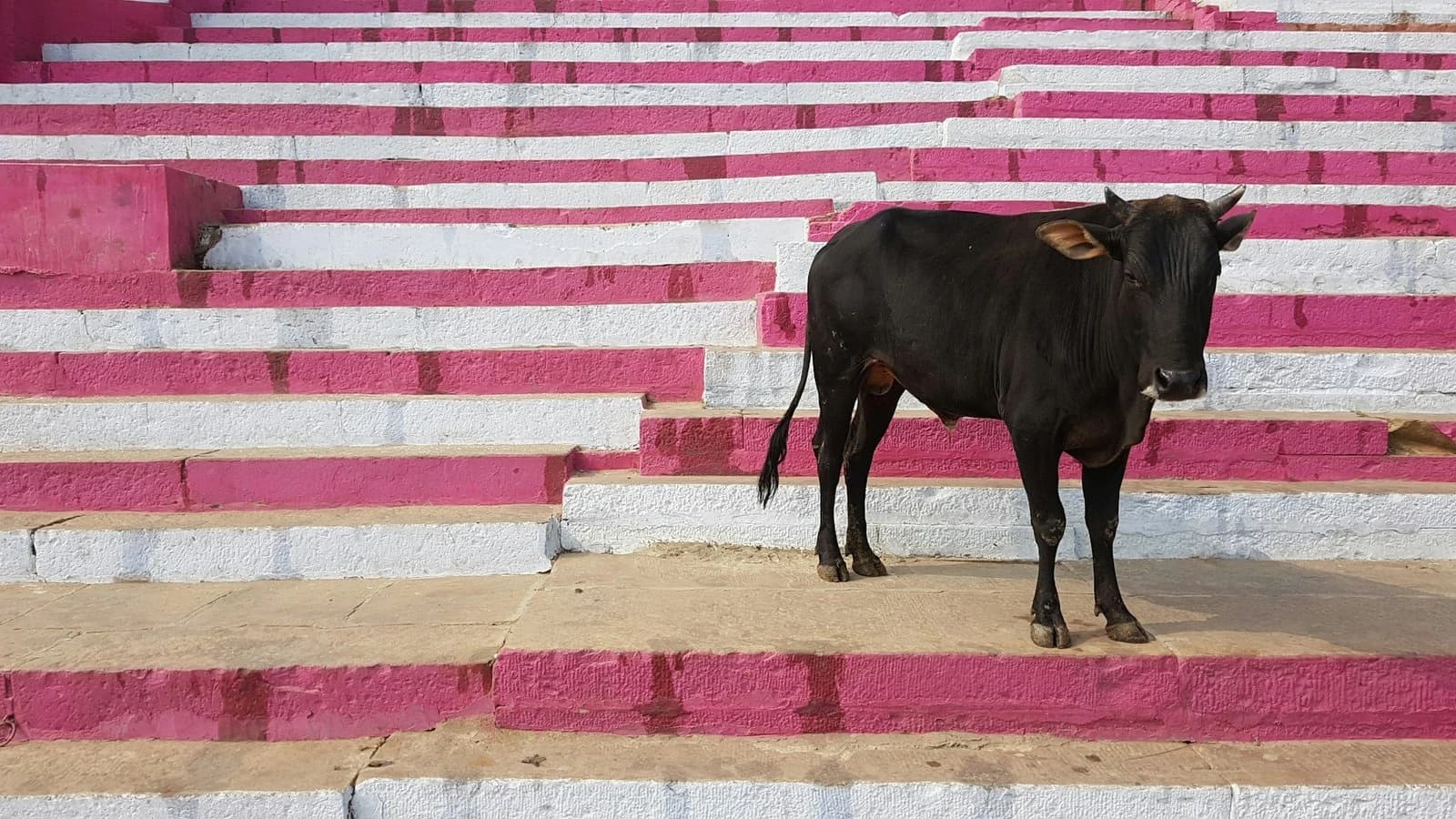
Cows you will meet everywhere, standing in traffic, unbothered, fed and left alone. In a Hindu country the cow is sacred, and the practical consequence is an animal that has right of way over everything else on the street. It is one of the first things travellers notice and one of the last things they forget.
When to go
For the Rajasthan parks, October to April. Within that window there is a real trade-off:
- December and January. Comfortable days, but a dawn drive is genuinely cold — 6 to 10 °C at first light, colder in an open canter with wind. Bring a fleece, hat and gloves. Excellent light for photography.
- February and March. The best all-round compromise. Warm days, tolerable mornings, still good sightings.
- April to June. 40 °C and above by afternoon. Uncomfortable — but the waterholes shrink and animals are forced to them, so this is when tiger sightings are most likely. Serious wildlife travellers pick these months on purpose.
- July to September. Monsoon. Wildlife is not the reason to travel to North India then.
Kerala and Periyar run on a different calendar: December to March is driest and clearest, with rain from June and again in October and November. If you are still weighing the country up, is India worth visiting sets out the wider case.
How we run it
Every trip is private and guided. There are no fixed group departures — your travel dates are your own, and a German-speaking guide is included throughout. The only shared element in the whole itinerary is the park vehicle itself, because that is how the forest departments allocate seats.
International flights are not included; where a domestic flight is written into an itinerary, that flight is part of the price. Rooms come in Standard, Deluxe, Superior and Executive tiers, and near the parks that generally means a comfortable lodge rather than a city hotel.
Prices across our whole range run from EUR 350 to EUR 3,140. See the full range of tours, or start with India, Rajasthan and Kerala to see which wildlife stops sit on which route.