
Tailor-made trips · Nepal
Travel in Pokhara & Annapurna
Tailor-made trips in Pokhara & Annapurna, designed by our team in Delhi and run on the ground by local guides. Lakeside Pokhara is where the Annapurna treks start. All six of our Nepal trips stop here — for the lakes and the mountain views, and on four of them as the base for a trek to Poon Hill or Annapurna Base Camp.
Why Pokhara & Annapurna
One of the regions we know best
We've spent years travelling across Pokhara & Annapurna in every season. The trips below are built around the routes that work — the quiet ones, the beautiful ones, the ones with great food at the end of the day.
If none of them quite fit, get in touch. We'll happily build you a private version, shaped around your interests, fitness and pace.
How we travel here
Three ways to experience Pokhara & Annapurna with us
Cultural & Heritage
Cultural & Heritage in Pokhara & Annapurna
Forts, palaces, temples, festivals and old-quarter walks with local historians. The slow, layered way through the country.
- ▲UNESCO sites
- ▲Heritage hotel stays
- ▲Local guides
- ▲Year-round

Wildlife & Safari
Wildlife & Safari in Pokhara & Annapurna
Safaris and jungle camps in the right reserves at the right time of year. Tigers, leopards, elephants, rhinos.
- ▲National park access
- ▲Naturalist-led safaris
- ▲Conservation lodges
- ▲Best: Oct–April

Mountains & Coast
Mountains & Coast in Pokhara & Annapurna
From Himalayan hill stations and short Bhutanese walks to a quiet finish on Sri Lanka's south coast or a Maldives atoll.
- ▲Hill stations
- ▲Day walks
- ▲Beach finishes
- ▲Maldives add-on
Travel guide
Introduction to Pokhara & Annapurna
Pokhara is a valley of lakes with the Annapurna wall standing behind it. It appears on all six of our Nepal itineraries, usually for two or three nights, and four of them use it as the base for a trek. Every trip is private and guided, built around your own dates — we run no fixed group departures.
Three itineraries reach Pokhara along the road west through Bandipur, the ridge town at 1,000 m; two of those offer an optional white-water run on the Trishuli on the way, at extra cost. Two more come up from Chitwan in the lowlands, and one comes straight from Kathmandu with a village stop en route. No domestic flight appears anywhere in the six itineraries — the journeys between Kathmandu, Chitwan and Pokhara are by road.
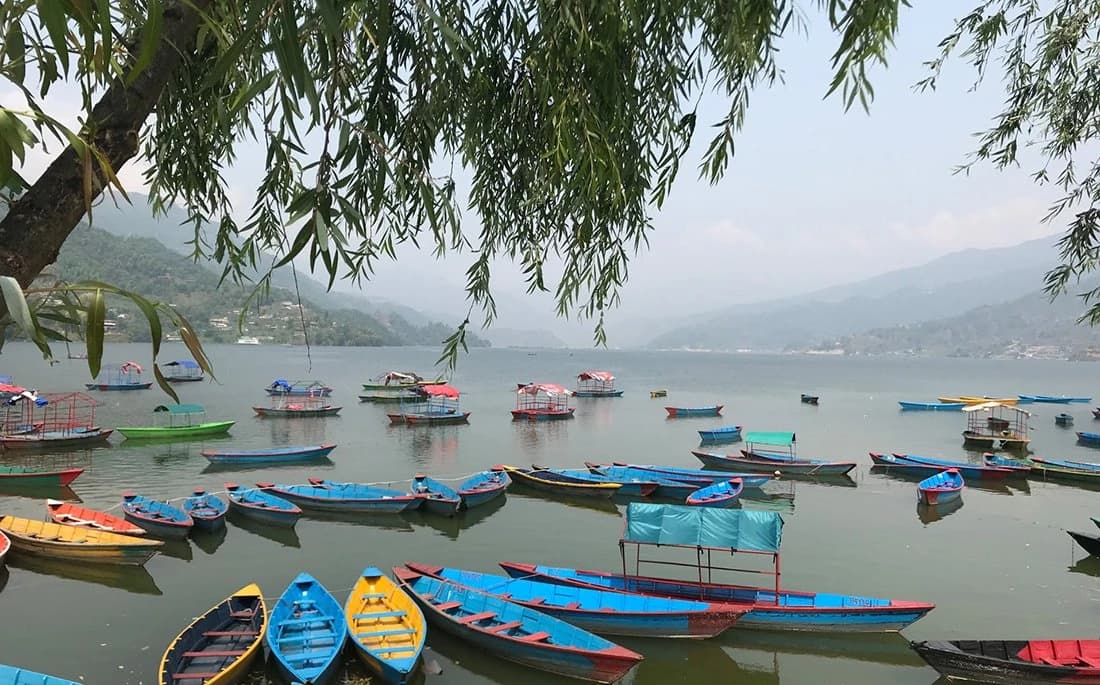
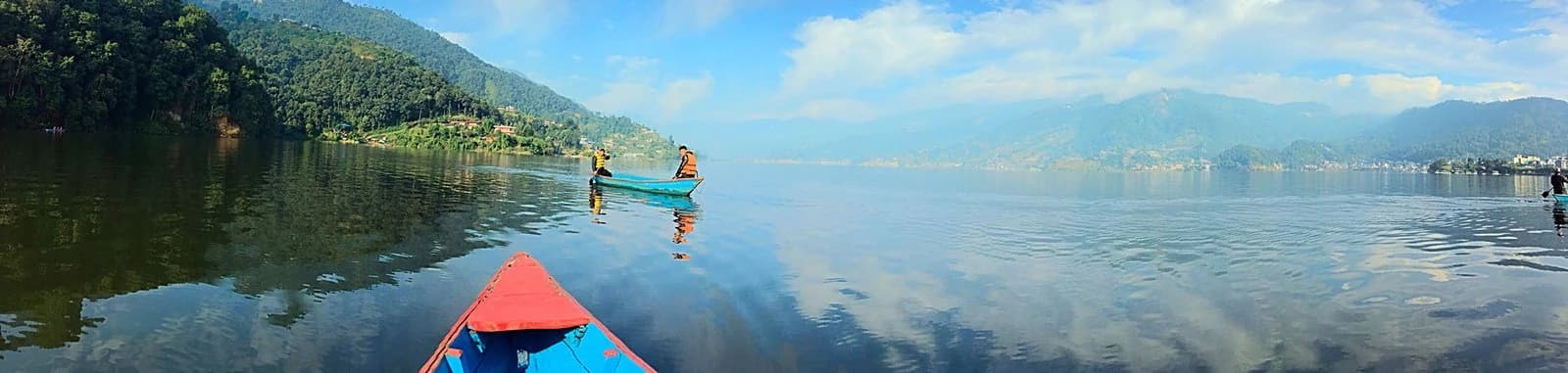
The town days follow a pattern. Five itineraries put a boat on Phewa Lake. Four run the same circuit of the valley's set pieces — Devi's Falls and the Seti River gorge; the Bindhyabasini Temple on its hill above town, dedicated to Pokhara's guardian goddess Bhagwati; and the Gupteshwar Mahadev Cave, one of the longest in South Asia. Three take in the Shanti Stupa, the white stupa on the ridge above the Phewa valley at about 1,115 m, where four Buddha statues face the cardinal directions; on one of the three it is an hour uphill on foot. Two set a 5 a.m. alarm for Sarangkot at about 1,592 m, where Dhaulagiri and Annapurna come up in the first light. The smaller variations matter too: one adds Begnas Lake, away from the crowds; two visit a Tibetan settlement outside town; one rides a mountain bike out to the surrounding villages with a picnic on the riverbank; one spends an afternoon in the International Mountain Museum.
The treks start a short drive out of the valley. Two itineraries run a five-stage loop from Nayapul at 1,070 m — up the Modi and Bhurundi river valleys to Ghorepani at 2,850 m, an early start for sunrise on Poon Hill at 3,210 m, then down through Tadapani at 2,590 m and Ghandruk at 1,940 m and back to Nayapul. A third walks six stages the other way round, from Kande at 1,700 m over the Australian Camp viewpoint at 2,200 m, reaching Ghorepani at 2,750 m the day before Poon Hill. Rhododendron and oak forest, terraced fields, suspension bridges, small villages.
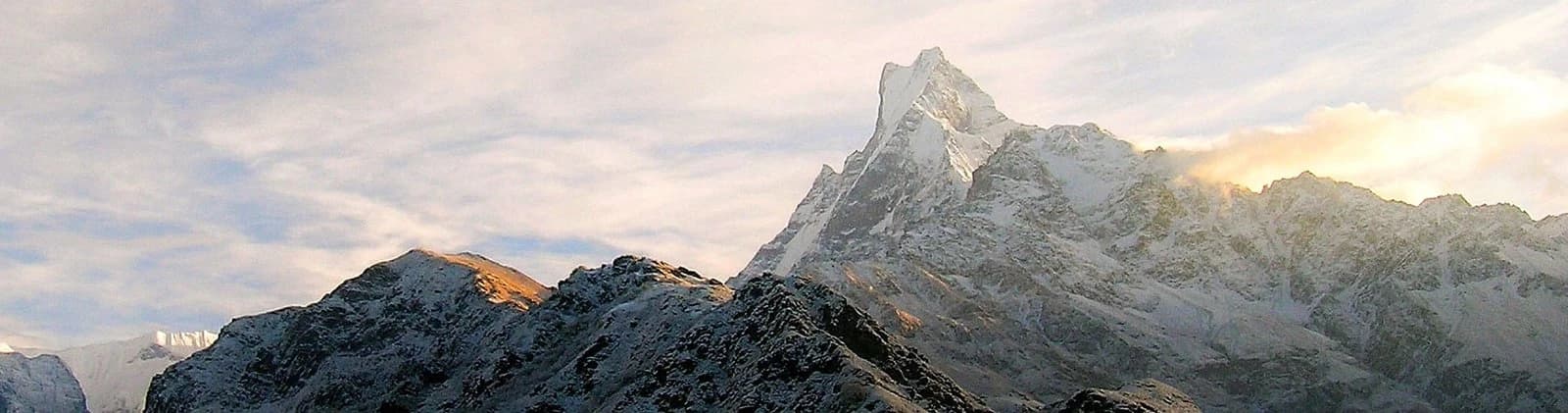
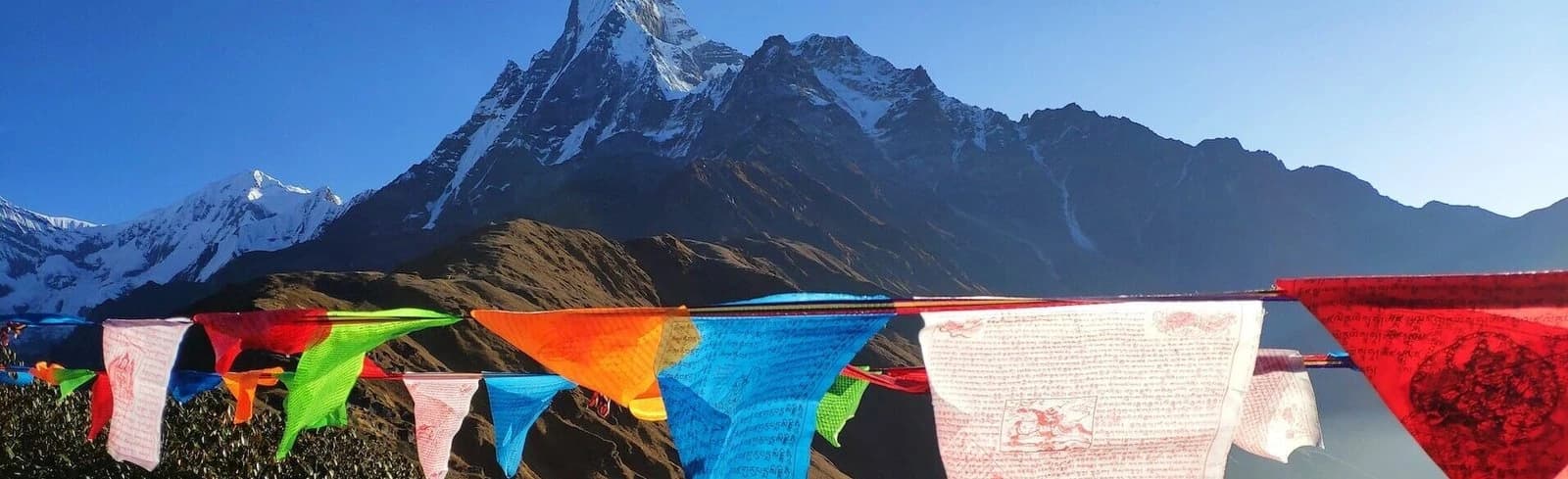
One itinerary keeps going. Majestic Himalayas takes eleven stages from Nayapul: over Poon Hill like the others, then north up the Modi Khola to Machapuchare Base Camp at 3,700 m and on to Annapurna Base Camp at 4,130 m, back down by Jhinu Danda — hot springs nearby, optional — and Pothana, for a last look at Machapuchare, the double-peaked mountain known as Fishtail. Two things to know before you commit to it: conservation rules in the Annapurna region cap the available beds, so from Dovan at 2,500 m onward several nights are in a shared room, and the last stretch up to Deurali at 3,200 m is a rough track rather than a path after winter landslides.
Every trek ends back in Pokhara. One itinerary gives the valley a full sightseeing day before the drive to Kathmandu; two drive back the morning after coming down; the fourth carries on to Lumbini and Chitwan. Of the two trips without a trek, one continues to Chitwan and one drives back into the Kathmandu Valley to overnight at Dhulikhel. If your legs have had enough by then, one day note points at Pokhara's spas and massage parlours — not included.
How many days do you need in Pokhara?
Two or three nights, which is what all six of our Nepal itineraries allow. Temples, Shrines & Himalayas gives the valley its fullest run — three nights covering Sarangkot at sunrise, a boat on Phewa Lake, Devi's Falls, the Shanti Stupa, Begnas Lake and a Tibetan settlement outside town. The four trekking itineraries split their nights: one or two in Pokhara before setting off, and at least one more after coming down. One of those adds a full sightseeing day at the end, before the drive back to Kathmandu.
Which Annapurna trek starts from Pokhara?
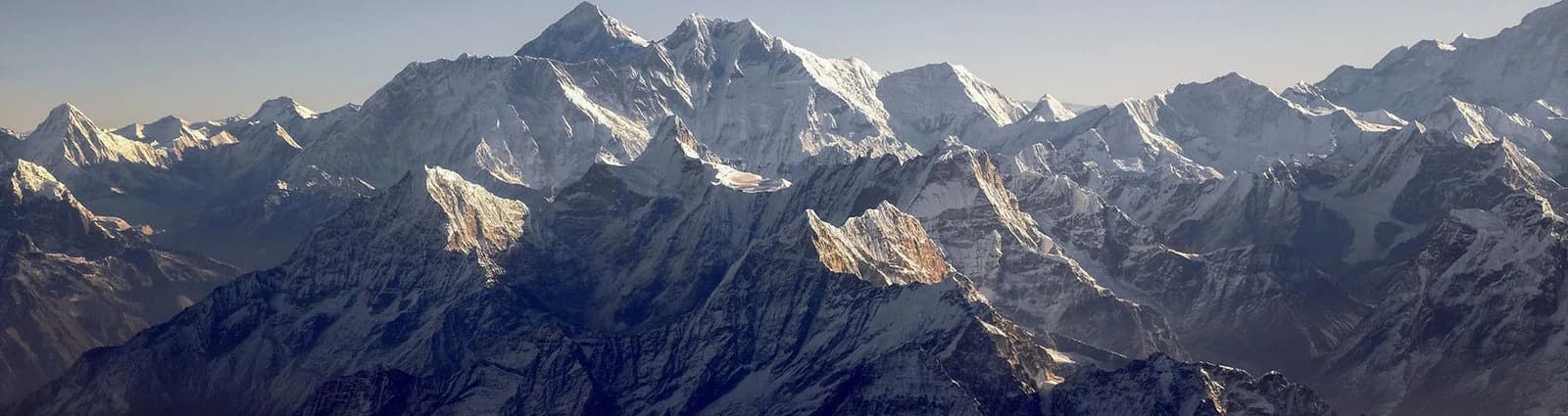
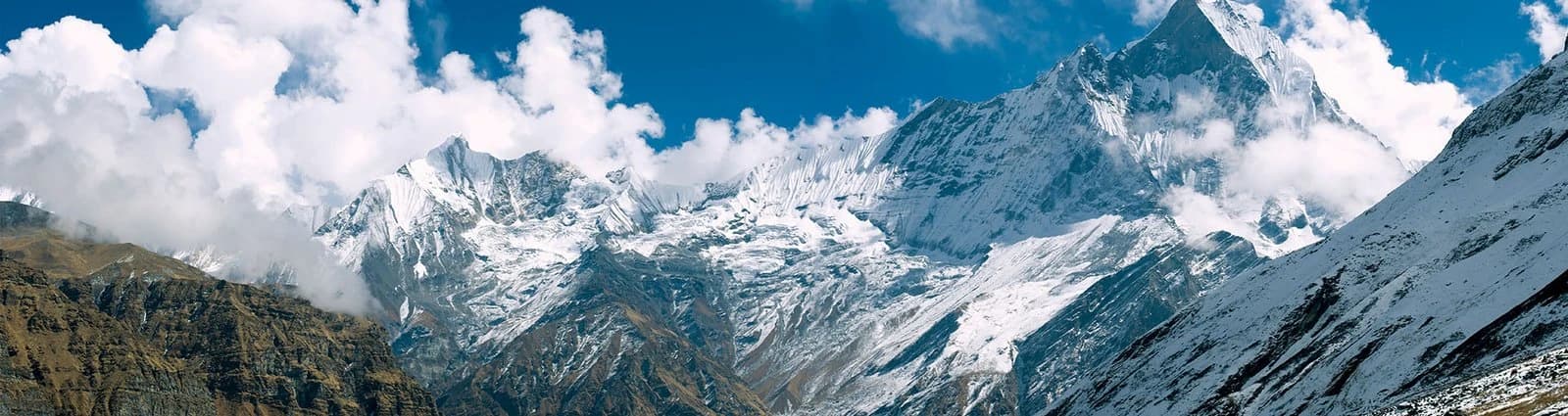
Four of the six trips trek, and all four go over Poon Hill at 3,210 m for sunrise. Three run the Poon Hill route and stop there: five stages out of Nayapul at 1,070 m on two of them, six stages the other way round from Kande at 1,700 m on the third, walking through rhododendron and oak forest, terraced fields and villages. The fourth, Majestic Himalayas, crosses Poon Hill and then keeps going — eleven stages up the Modi Khola to Annapurna Base Camp at 4,130 m. Several nights on that one are in shared rooms, because conservation rules cap the beds available that high up.
Do you offer the full Annapurna Circuit?
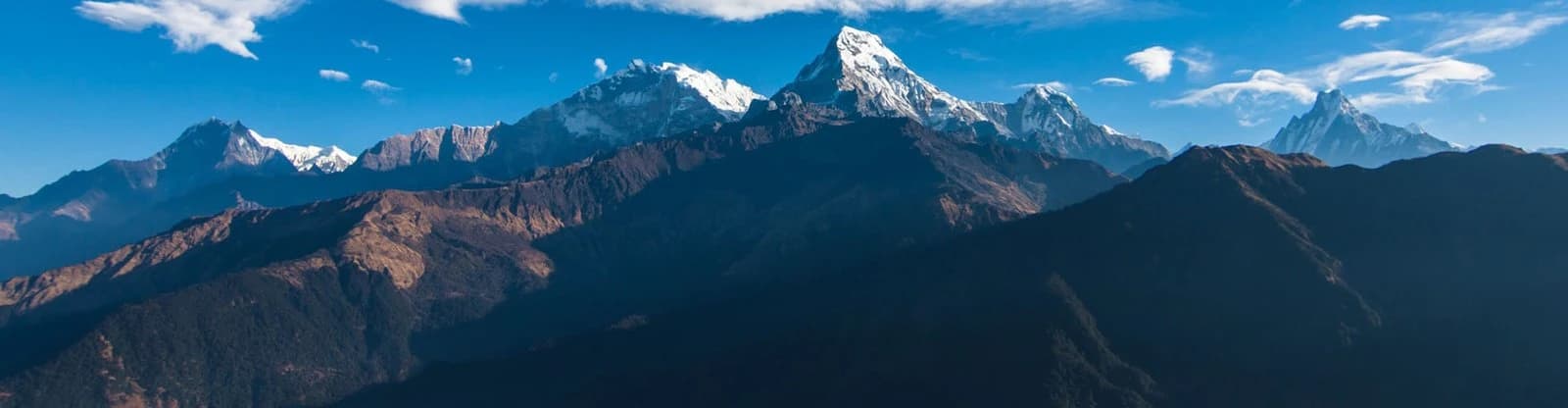
No. What we run from Pokhara is the Poon Hill route and the route to Annapurna Base Camp — not the full circuit around the massif. Our own trip descriptions call Pokhara the starting point for treks on the Annapurna Circuit, and it is, but none of the six itineraries walks it. If the circuit is what you are after, say so when you enquire and we will tell you plainly what we can build.
When is the best time to go?
The mountain views set the timing. Sarangkot at about 1,592 m, Poon Hill at 3,210 m and the panorama from the Shanti Stupa all depend on clear weather, and our day notes say "in good weather" rather than promising a view. If your trip also takes in Chitwan, the itineraries note that the park runs no jeep safaris in July, August and September. Every trip is private and built around your own dates, so send us the window you have in mind.
What is included, and what does a Pokhara trip cost?
From-prices for the six run from EUR 930 for the nine-day trip up to EUR 1,760 for the fourteen-day Culture and Himalayan Hiking. Each one includes hotel accommodation, breakfast, a bottle of water on arrival and someone reachable 24 hours a day; five of the six also include a German-speaking guide, while Majestic Himalayas lists that guide as not included, so check the tour page if the language matters to you. International flights are not included, and no domestic flights appear in these itineraries. Day one of every trip has a member of staff meeting you at the airport and taking you to your hotel.
Our journeys
Tailor-made trips in Pokhara & Annapurna
6 journeys built and led by our local guides — from gentle coastal weeks to high-mountain crossings.
Build your own trip →Meet your guides
Designed and led by local experts
We work in Pokhara & Annapurna year-round. Our team has spent years building relationships with the guides, drivers and small hoteliers we use here. When you book with us, you'll speak directly to the people who design your trip.
Meet the whole team →
Anil
Co-founder · New Delhi

Neetesh
Co-founder · New Delhi
Our guides
Across South Asia
Ready to plan your trip to Pokhara & Annapurna?
Tell us roughly when, who's travelling and what kind of pace you like. We'll send back a draft itinerary within 1–2 days, no payment until you're happy with the plan.
Plan your trip