Sri Lanka is safe for most travellers. The real risks are everyday ones: roads, sea currents, wild animals and small scams.
The short answer
Yes. For most travellers, Sri Lanka is a safe and easy country to visit. The risks you are most likely to meet are everyday ones: busy roads, strong sea currents, wild animals, heat and the odd tourist scam. Most of them come down to a few simple habits, and they are all covered below.
This article does not judge the political situation, because that can change. Check your own government's travel advice before you book, and again before you fly.
Roads and driving
The roads are the biggest real risk in Sri Lanka. Traffic drives on the left. Roads are narrow and shared by buses, lorries, tuk-tuks, cyclists, dogs and the odd cow. Buses overtake on blind bends and expect everyone else to move.
Distances look short and take a long time. Kandy to Nuwara Eliya is about 80 km and takes around three hours. Hill country roads are steep and winding, so travel-sickness tablets are worth packing.
A few habits help:
- Avoid long drives after dark. Roads are poorly lit, and people and animals walk on them.
- Most visitors do not drive themselves. For a first trip, we would not suggest it.
- In a tuk-tuk, agree the fare before you get in, or ask for the meter. Hold on, as there are no seatbelts.
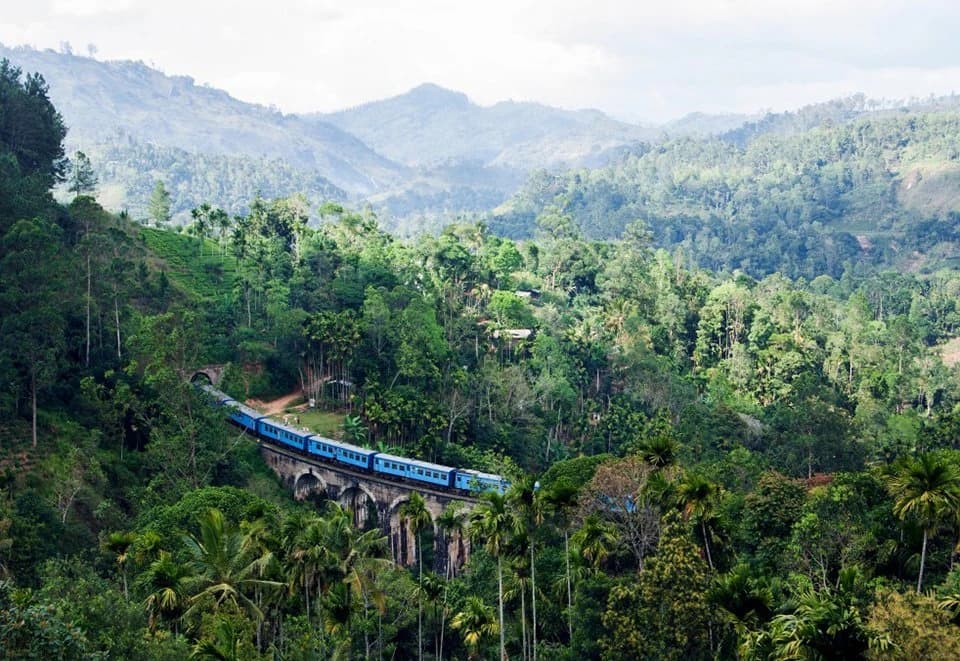
- On the hill country train, people lean out of the open doors for photos. It looks great, and it is how accidents happen.
The sea
Sri Lanka's sea is warm and inviting, and in the wrong month it is dangerous. Rip currents are strong, and many beaches have no lifeguard.
Which coast is safe depends on the month. The southwest coast, from Negombo down to Galle, is rough during its monsoon, roughly May to September. The east coast, around Trincomalee and Pasikuda, is rough from around November to February. In October the sea can be rough on both sides. Our guide to the best time to visit Sri Lanka explains the two monsoons.
- Swim where local families swim, and stay out when red flags are up.
- Ask your hotel which stretch of beach is safe. Conditions change from one bay to the next.
- Do not swim after drinking, or alone at dusk.
Wildlife
Wild elephants live around Udawalawe, Yala and the cultural triangle, and they cross roads, often near dusk. Never stop to feed one, and never get out of the car for a closer photo. Keep your distance and pass slowly.
In the national parks, stay in the jeep and follow the tracker's instructions. The animals are wild, and sightings are never guaranteed. Our safari guide covers Yala and Udawalawe in detail.
Smaller animals cause more trouble than big ones:
- Monkeys at temples such as Dambulla grab food and bags. Do not feed them, and keep snacks out of sight.
- Street dogs are everywhere and mostly calm. Do not pet them. Rabies is present in Sri Lanka, so get any bite or scratch cleaned and seen by a doctor the same day.
- Mosquitoes can carry dengue. Use repellent in the daytime as well as the evening.
- Leeches come out in the Sinharaja rainforest after rain. They are harmless but unpleasant. Long socks help.
- Hornets nest on Sigiriya rock. Stay quiet on the climb and follow the staff's instructions.
Scams and touts
Scams in Sri Lanka are mostly about money, not danger. These are the common ones:
- A friendly stranger says your hotel is closed or full, and offers to take you somewhere else.
- Someone tells you a temple is closed today, or that there is a special festival on, and offers a tour.
- A gem shop promises stones you can resell at home for a profit. You almost never can.
- A spice garden or craft shop charges high prices, and the person who brought you earns a commission.
- An unofficial guide at a big site names his price only at the end.
The fix is simple. Agree prices first, buy tickets at the official counter, and say a polite "no, thank you" and keep walking. Keep your passport and spare cash in the hotel safe, and watch your phone on crowded buses.
Food and water
Sri Lankan food is a highlight, and most visitors eat well without any problems.
- Drink bottled or filtered water, not tap water.
- Rice and curry is cooked fresh and served hot. Busy places with fast turnover are the safest bet.
- Ask for less chilli if you need to. Sri Lankan cooks take "spicy" seriously.
- Peel fruit yourself, and wash your hands before you eat.
- If you have a food allergy, say so clearly. Coconut is in most dishes, and cashews are common too.
Temples, dress and respect
Small cultural mistakes can cause real trouble. At temples, cover your shoulders and knees and take off your shoes. Never pose for a photo with your back to a Buddha statue. Cover any Buddha tattoo, as it can cause serious offence. On poya days, the full moon holidays, alcohol is not served.
Women travelling without a man may get stares or comments, especially on buses and quiet beaches. Dressing modestly away from the beach helps. On buses, you can choose a seat next to other women.
Heat, hills and health
Heat catches out more visitors than crime does. Climb Sigiriya early, before 8am, and carry water. Adam's Peak is more than 5,000 steps, climbed in the dark. Horton Plains can be close to 5°C before sunrise. Take out travel insurance with good medical cover.
How our trips handle the practical side
On every one of our Sri Lanka itineraries, a member of staff meets you at Bandaranaike International Airport. Safaris in Yala and Udawalawe are jeep drives, so you stay in the vehicle. On four of our tours, the Sinharaja rainforest hike goes with a ranger, including Between culture and jungle and Culture & nature. The trips are private and tailor-made, so you can ask for shorter driving days or no driving after dark.
New to the island? Read our Sri Lanka travel guide for first-time visitors, or see every route on our Sri Lanka page. When you have dates in mind, send us a request and we will suggest a route that fits them.