October to March is the season, with November and February the best months. Here is what fog, heat and monsoon mean for each city.
The best time to visit Delhi, Agra and Jaipur is October to March, and the best single months are November and February. Days are warm and dry, the evenings are cool, and you can walk the forts at midday. From late December to January, expect cold mornings and fog. April to June is very hot, and July to September is the monsoon. Wherever your dates land, remember that the Taj Mahal is closed on Fridays.
The short answer
- November: warm days, cool nights, no fog yet. The most reliable month.
- February: dry and comfortable, with the cold of January gone. Ideal for a first trip.
- October and March: good, with warmer afternoons at each end.
- Late December and January: pleasant days, cold mornings and dense fog that delays flights and trains.
- April to June: 38°C and up. Hard work in all three cities.
- July to September: monsoon. Humid, wet and the quietest time of year.
The three cities sit close together on the same northern plain, so they share one climate. If it is a good month in Delhi, it is a good month in Agra and Jaipur too. That makes the Golden Triangle easy to time.
October and November: the season opens
October is the turn. Delhi drops to around 32°C by day early in the month, and the monsoon humidity fades. By the second week the whole route is comfortable.
November is the month we would pick for a first trip. Delhi runs about 27°C by day and 12°C at night. Jaipur is about 28°C. It is dry, everything is open, and the winter fog has not started. It is also high season, so book well ahead.
December and January: cool days, cold mornings, fog
Days stay pleasant. Delhi sits around 22°C in the afternoon. Mornings are a different story: 6 to 8°C in Delhi at dawn, and nights drop to about 7°C. A warm jacket earns its place in the bag.
The real complication is fog. From about the third week of December, dense morning fog settles over the plain between Delhi and Agra. It regularly delays domestic flights and trains, sometimes by hours. If your trip includes an internal flight, keep some slack around it. Fog can also soften the famous Taj Mahal sunrise. The air tends to be clearest in the second half of January.
February and March: the steadiest weeks, then Holi
February gives you dry air without the January cold. Jaipur runs 26 to 28°C by day and around 12°C at night. Walking up to Amber Fort or through the old city of Delhi is easy. If you want the one month that asks least of you, this is it.
March brings Holi, the festival of colours. The date follows the Hindu lunar calendar, so it moves between early and late March. Until about mid-March the weather stays near 30°C. By the end of the month Jaipur touches 36°C, and long afternoons start to drag.
April to June: the hot season
From April the plains heat up fast. Jaipur and Agra reach 38 to 41°C in April and 42 to 45°C in May. June stays above 40°C until the monsoon arrives late in the month.
You can still see the sights by starting at dawn and resting through the afternoon. But this is not the season for a relaxed first visit. The Taj Mahal's white marble and open courtyards get very hot by late morning, and Amber Fort is a climb.
July to September: monsoon
The monsoon usually reaches Delhi in the last days of June. Rain comes in heavy bursts rather than all day, and the countryside turns green. Humidity is the hard part. September is especially muggy before the rain fully withdraws, and the Taj Mahal at midday in that air is tiring.
Prices are low and the crowds are thin. One firm rule: the tiger reserves at Ranthambore and Sariska close their core zones from July to September. So any route that adds a safari to the three cities needs other months.
City notes worth knowing
Delhi. The city is spread out, so heat matters more than in the other two. Old Delhi, the Red Fort, Jama Masjid and Humayun's Tomb are best in the cool hours. In winter, plan the outdoor sights for late morning, after the fog lifts.
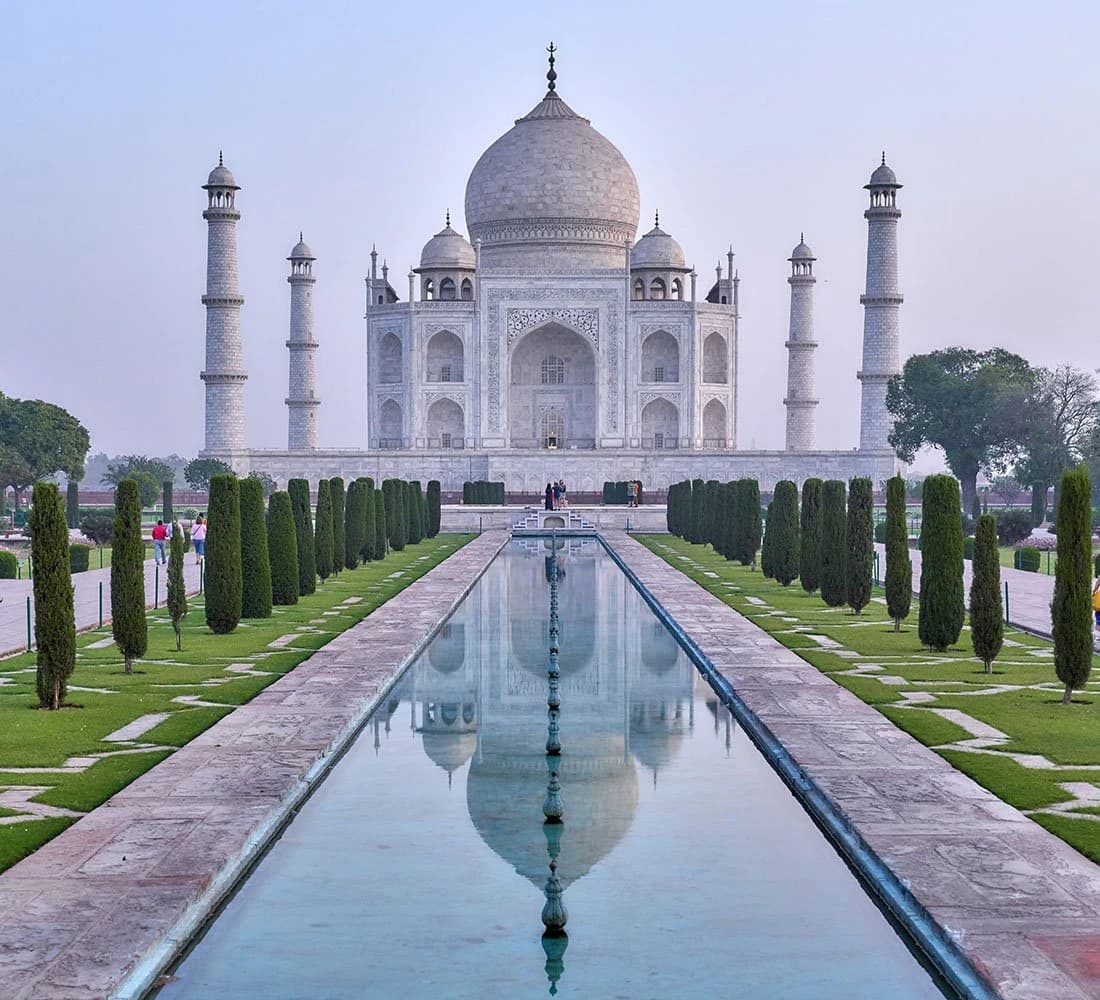
Agra and the Taj Mahal. The Taj Mahal is closed every Friday, all year. Any itinerary needs to put Agra on another day. Sunrise is the classic time to go: the light is soft, the marble changes colour, and the grounds are calmer. From October to March this is a pleasure. In May it is the only sensible time.
Jaipur. Amber Fort sits on a hill outside the city, and the Hawa Mahal and City Palace are in the busy old town. Jaipur has a desert climate, so it swings more between day and night than Delhi does. Winter evenings are noticeably cool.
Our trips through Delhi, Agra and Jaipur
All of our Rajasthan routes pass through these three cities, but three trips focus on them.
Golden Triangle & Spirituality runs 8 days from EUR 1,175. It covers Delhi, Jaipur and Agra, then goes on to Varanasi for the evening ceremony on the Ganges and a sunrise boat ride. You fly back from Varanasi to Delhi at the end. Allow extra time around that flight in late December and January.
Golden Triangle & Colors of India runs 7 days from EUR 1,515 and is built around Holi. It visits the Taj Mahal at sunrise, celebrates Holi in a royal garden, then finishes in Udaipur. It only works when your dates match the festival, so plan it early.
The magic of Rajasthan runs 10 days from EUR 1,000 and adds tiger safaris at Ranthambore and Sariska. That makes it an October to June trip, with March to June best for sightings.
For a full guide to the route itself, read our Golden Triangle tour guide. For the rest of the country, India month by month covers every region. When you know your dates, send us a request and we will match them to the right route.