
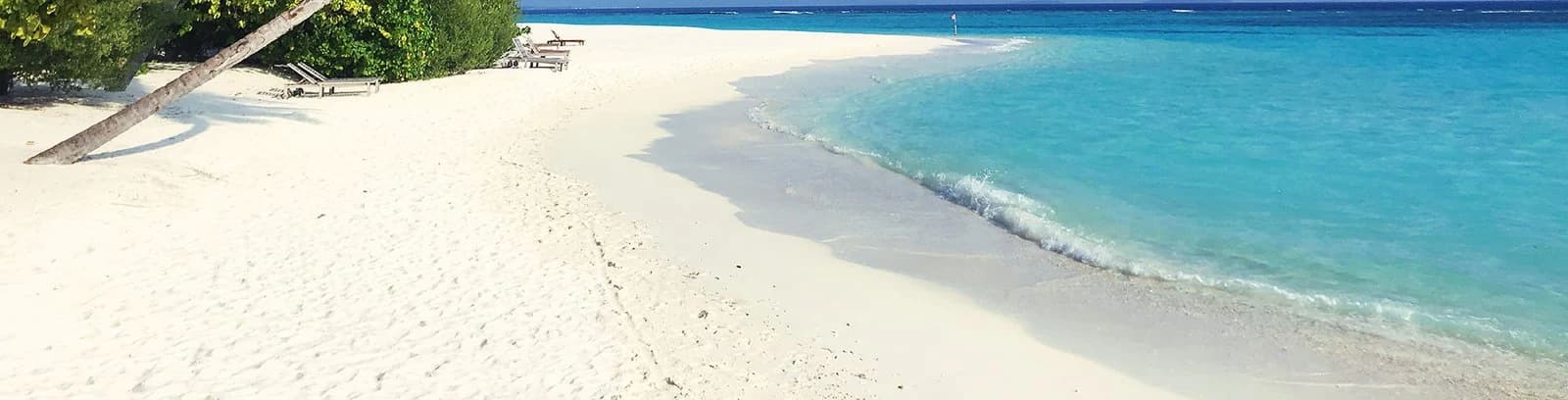
Maldives by season
Best time to visit the Maldives
The best time to visit the Maldives is December to April, the dry season. February and March are the pick: least rain, calmest sea and the clearest water. May to November is wetter and cheaper, and still warm. We sell the Maldives as a four-night beach stay at the end of a longer trip, so the right month also depends on where you travel first.
The short answer
December to April is the dry northeast monsoon, called Iruvai locally. Expect more sun, drier air and calm water.
May to November is the southwest monsoon, Hulhangu. Rain comes most days, usually in bursts, with more cloud and a choppier sea.
The heat barely changes. Days sit at 29 to 31°C all year and nights fall to about 25 to 26°C. What changes is rain, wind and how clear the water is.
December to April: the dry season
December starts unsettled and usually dries out as the month goes on. From about 20 December to early January, rates hit their yearly peak, and many resorts add a compulsory gala dinner at Christmas and New Year.
January brings around eight hours of sun a day. Rain arrives as short, heavy showers. February is the driest month, with the flattest sea and the best visibility. It is the month we would pick. March is almost as dry and a touch warmer, and prices stay high.
April is the hottest month, with the sea close to 30°C. It stays mostly dry, but humidity climbs and afternoon clouds start to build. Rates ease late in the month.
May to November: the wet season
May is the turn, with squalls, real wind and one of the wettest spells of the year. Prices drop hard.
June to August brings rain most days, but rarely all day. July and August get a little busier with European school holidays. September and October are among the greyest months and hold the cheapest weeks of the year.
November is still wet, but the wind starts to swing. Late November is often much better than early November.
Water, snorkelling and mantas
The sea stays at 27 to 30°C all year, coolest in January and February. You will not need a wetsuit. A rash guard for the sun is enough.
Visibility is the real difference. Dry months often give 20 to 30 metres. In the wet months plankton and wind can cut that to 10 to 20 metres.
That plankton draws manta rays, and Hanifaru Bay in Baa Atoll is famous for them from about May to November. Baa Atoll is north of Malé and is not part of our trips, so book it separately if mantas are the goal.
One honest note: very warm water in strong El Niño years has bleached coral here before, notably in 1998 and 2016. Reefs recover, but a bleaching year will not look like the brochure.
Who each season suits
Couples who want the clearest water and can pay for it: February or March. Families tied to school holidays: December or January, booked early. Travellers watching the budget who can live with showers: June to September. Divers chasing mantas: the wet season, on a trip you plan separately.
How our tours fit
Two of our tours include the Maldives, each with four nights on a resort island. Paradise island Maldives is a five-day add-on. Someone meets you at Malé airport and takes you by speedboat to your island. The rest of the stay is yours.
India's facets & Maldives runs through Delhi, Agra, Jaipur, Jodhpur, Udaipur and Mumbai, then continues to the Maldives for four nights on the beach. North India is best from October to March and the Maldives from December to April. So December to March is the overlap, and February and March are the strongest.
Breathtaking nature & culture, a Sri Lanka tour, offers a Maldives finish as an optional extra at additional cost. Sri Lanka's two monsoons make the timing harder. February and March are usually the best compromise for that combination.
Hotel activities on the islands, such as water sports, can cost extra. Check whether the flight to Malé is in your quote.
Ramadan and Malé
The Maldives is a Muslim country. Resort islands run as normal during Ramadan. On Malé and the local islands, daytime cafés close during the fasting month and modest dress is expected all year. Ramadan moves about eleven days earlier each year, so check the dates for your year.
Common questions
What is the best month to visit the Maldives?
February. It is usually the driest month, with the calmest sea and the best visibility for snorkelling. March comes a close second.
Is the Maldives worth visiting in the rainy season?
Yes, if price matters more than a perfect forecast. Rain usually comes in bursts, it stays warm, and rates drop well below the peak weeks.
When is the Maldives cheapest?
Usually September and October, in the middle of the wet season. The most expensive weeks run from about 20 December to early January.
Can I combine India and the Maldives in one trip?
Yes. India's facets & Maldives does exactly that. Travel between December and March to get good weather in both places, ideally February or March.
Our journeys
Tailor-made trips in Maldives
2 journeys built and led by our local guides — from gentle coastal weeks to high-mountain crossings.
Build your own trip →Ready to plan your trip to Maldives?
Tell us roughly when, who's travelling and what kind of pace you like. We'll send back a draft itinerary within 1–2 days, no payment until you're happy with the plan.
Send a request