The Tiger's Nest, Punakha Dzong, the Dochula Pass and a day in Thimphu. Twelve things worth doing in western Bhutan, and which of our tours include them.
The top things to do in Bhutan are the hike to the Tiger's Nest monastery above Paro, the Punakha Dzong at the meeting of two rivers, the view of the Himalaya from the Dochula Pass, and a day in Thimphu, a capital with no traffic lights. Add a tsechu festival if your dates allow, a try at archery, and a walk through the rice fields to the Chime Lhakhang temple, and you have the heart of a first visit.
All of these sit in western Bhutan, which is where our three Bhutan tours go. We do not sell trips to central Bhutan, Bumthang or the Phobjikha valley, so they are not on this list.
1. Hike to the Tiger's Nest
Taktsang, the Tiger's Nest, clings to a cliff about 900 m above the Paro valley. Legend says Guru Rinpoche flew here on the back of a tigress and meditated in a cave for three months. The monastery was later built around that cave.
The walk up takes two to four hours, depending on your pace and how far you go. A café sits at the halfway viewpoint, which is also the best spot for a photo of the whole building. All three of our tours include the Tiger's Nest, each in a different way. The land of happiness offers a one-hour walk to the viewpoint, with the option to carry on to the monastery. The magic of the gigantic Himalayas does the full climb. The Kingdom of the Thunder Dragon comes in from above, after a night camping near Bumdra Monastery.
2. Punakha Dzong
Bhutan's dzongs are fortress monasteries, and Punakha's is the one people remember. It stands where two rivers meet, was first built in 1637 and served as the seat of government for many years. Its local name means "Palace of Great Happiness". Two of our tours include a visit.
3. The Dochula Pass
On the road from Thimphu to Punakha, the Dochula Pass at about 3,080 m has 108 small chortens and strings of prayer flags. On a clear day you see a line of snow peaks, including Bhutan's highest mountain. All three tours cross it twice. On The magic of the gigantic Himalayas you can also hike about three hours from the pass to Lungchuzekha Monastery.
4. A day in Thimphu
Thimphu is a small, calm capital. Police still direct traffic by hand at the main crossing. The sights to look for:
- Buddha Dordenma at Kuenselphodrang, a 51 m golden Buddha looking over the valley.
- The Memorial Chorten, built for the third king, where locals walk circuits all day.
- Tashichhodzong, the white fortress that houses government offices and the main monk body.
- The Painting School (Zorig Chusum), where students train for six years in 13 traditional arts.
- The weekend market, open Friday to Sunday, for chilli, cheese and local food.
All three tours spend at least a day in Thimphu.
5. Chime Lhakhang, the fertility temple
This small temple is dedicated to the "Divine Madman", a 15th-century saint known for his unusual teaching. You reach it on a short walk through rice fields. Couples hoping for children come from all over Bhutan to be blessed here. Two of our tours include it.
6. Kyichu Lhakhang
Near Paro, this is one of the oldest temples in Bhutan, and its building marks the arrival of Buddhism in the country. It is quiet and surrounded by prayer flags. Two of our tours stop here.
7. Paro Dzong and the National Museum
The Rinpung Dzong in Paro is covered in painted murals and looks down over the town. Above it, the old watchtower of Ta Dzong now holds the National Museum. Two tours visit the dzong, and The magic of the gigantic Himalayas also includes the museum.
8. The Haa valley and the Chelela Pass
Haa is a quiet valley west of Paro with few visitors. Its two 7th-century temples, a short walk apart, are tied to a legend of a black and a white bird. On the way back you cross the Chelela Pass at 3,988 m, one of the highest roads in Bhutan. From there you walk about three hours downhill to the Keeli Nunnery. Only The magic of the gigantic Himalayas goes here.
9. Camp below Bumdra Monastery
For a real taste of trekking, The Kingdom of the Thunder Dragon walks four hours up from Sang Choekor (2,800 m) to a camp near Bumdra Monastery at about 3,800 m. On a clear day the summit above the monastery, at about 4,000 m, gives a wide view of the surrounding mountains. The next morning you walk down to the Tiger's Nest. It is the only night under canvas in our Bhutan range.
10. Try archery and wear the national dress
Archery is Bhutan's national sport, and matches are loud, social affairs. The land of happiness offers an archery lesson and a Bhutanese cooking session in Punakha as optional extras, at additional cost. The same tour lets you try on a kira or a gho, the national dress for women and men, also at extra cost.
11. See a tsechu festival
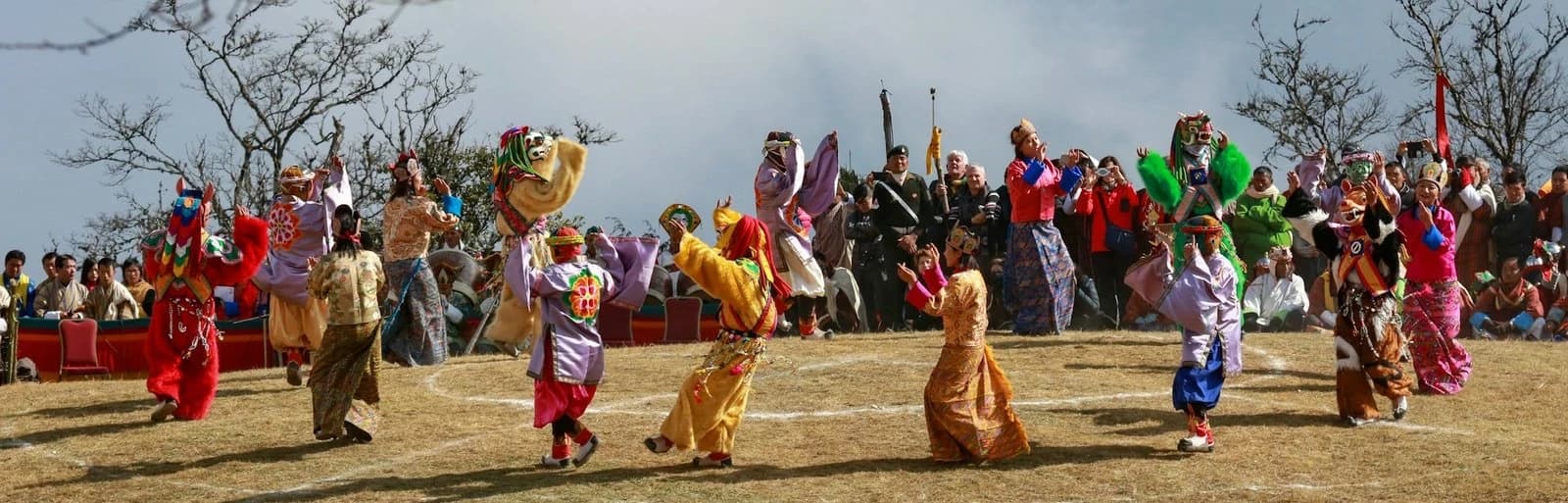
Tsechus are masked dance festivals held in dzong courtyards. Dates follow the lunar calendar and change every year. The best known are the Paro Tshechu in spring and the Thimphu Tshechu in autumn. None of our tours includes a festival day as standard. Because every trip is private, though, you can set your dates to match a festival once they are published.
12. Walk to Khamsum Yulley Namgyel Chorten
Above the Punakha valley, this hilltop temple is reached by a gentle walk across a suspension bridge and through rice fields. The view back over the river is one of the best in Punakha. Two of our tours include this walk.
Good to know
Bhutan charges every visitor a daily Sustainable Development Fee, set by the government. The rate has changed in recent years, so check what applies to your dates. Visas must be approved before you travel. When you visit a dzong or temple, cover your shoulders and knees.
The best months are late March to May and late September to November. Our guide to the best time to visit Bhutan explains each season. To see how to fit these sights into six to eight days, read our Bhutan itinerary guide.
Our three Bhutan tours run six to eight days, from EUR 2,010. Pick the one that matches how much you want to walk, and send us a request with your dates.