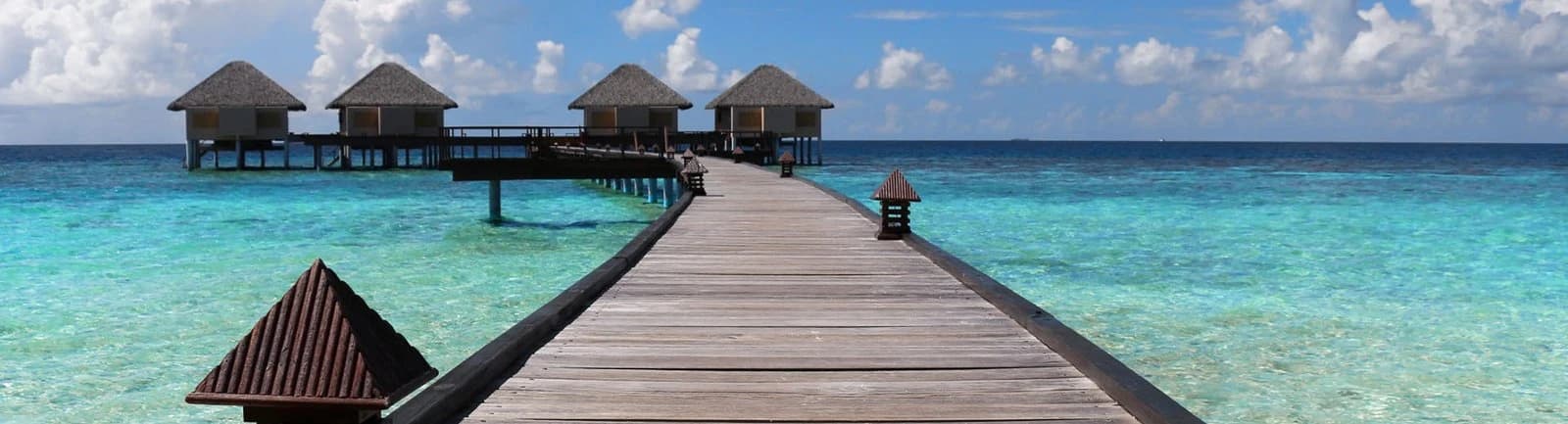
August in the Maldives means warm squalls, choppier sea and summer-holiday prices. Here is what to expect and who it suits.
The short answer
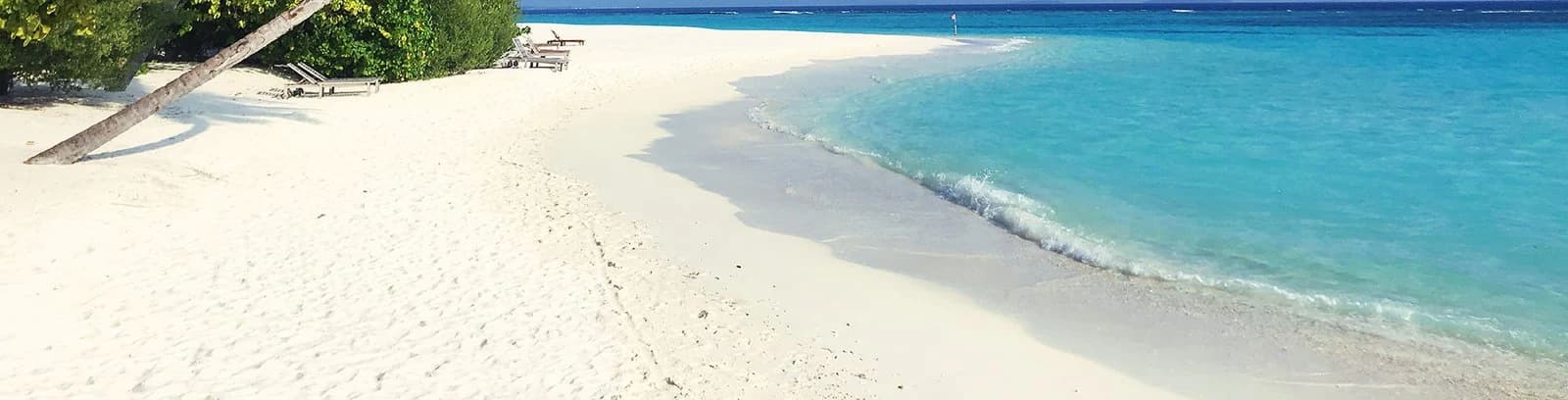
Yes, you can go to the Maldives in August, and plenty of people do. Expect rain on about half the days, mostly in heavy bursts with sun in between. The sea stays warm at around 28°C. It is windier and the water is less clear than in February. And it is not cheap, because European school holidays push prices up.
So August works if your dates are fixed and you can live with some grey afternoons. If you can choose any month, January to April gives you the calmest sea and the clearest water.
One honest note before the detail. Our Maldives stays are short: four nights on one island. Only 3 of our 31 tours have a Maldives stay, always four nights on one island. On one of them, the Maldives is an optional extra at additional cost. More on how August fits those trips below.
What the southwest monsoon means in practice
August sits in the middle of hulhangu, the southwest monsoon. It runs from roughly May to November. In practice, that means three things.
Rain comes in squalls. A typical day brings a dark band of cloud, an hour or two of heavy rain, then sun again. Some days are bright from start to finish. A few stay grey all day. The long-term average for Malé is around 175 mm in August, spread over about 13 wet days.
The wind is stronger. It blows from the southwest and makes the sea choppy. Boat trips can be rough, and a resort may cancel an excursion on a bad day. A speedboat transfer can be bumpy.
The water is less clear. Plankton cuts visibility to roughly 10 to 15 metres. In February and March you can often see 25 to 30 metres. You can still snorkel in August. You just see less of the reef at once.
What does not change is the heat. Daytime highs sit around 31°C and nights stay warm. A cloudy day in August is still a warm day.
Malé lies about four degrees north of the equator, outside the cyclone belt. The real risk in August is a lost beach afternoon or a cancelled boat trip. It is not a storm.
The upside: manta rays
The plankton that clouds the water also feeds manta rays. Hanifaru Bay in Baa Atoll, north of Malé, is the best-known place to see them gather. Its season peaks from about August to November. Whale sharks also feed more predictably in the wet months.
Check the geography before you plan around it. Baa Atoll is a seaplane or domestic flight away from Malé. None of our tours go there, and none of our itineraries schedule diving or snorkelling trips. If mantas are the main reason for your trip, book that part with a Maldives specialist.
Which atolls and which resorts suit August
The atolls near Malé are the simplest choice in the wet season. Seaplanes fly only in daylight and depend on the weather. A resort you reach by speedboat from Malé airport avoids both problems. On our 5-day Maldives stay and on India's facets & Maldives, a speedboat takes you from the airport to your island.
Ask which side of the island your beach faces. In the southwest monsoon, the wind and waves hit the west side of islands and reefs first. The sheltered side usually has calmer water for a swim.
Pack for warm rain: a light rain jacket, a rash vest for snorkelling, and something to do indoors for a wet hour. A good book counts.
What August costs
August is not the cheap end of the wet season. It is the same weather as June or September, but at summer-holiday prices. Family-friendly resorts fill up first, so book early if school holidays fix your dates.
If you can shift by a few weeks, look at September. It has much the same weather and is usually the quietest and cheapest month of the year. Our Maldives month by month guide shows how each month compares on rain and price.
How August fits our Maldives trips
All three trips give you four nights on one island. None of them island-hop.
Travel component: Paradise island Maldives is 5 days from EUR 700. A staff member meets you at Malé airport and a speedboat takes you to your hotel island. Days 2 to 4 are yours, with no fixed programme. It is a short add-on, not a full holiday.
India's facets & Maldives is 15 days from EUR 3,140. It runs through Delhi, Agra, Jaipur, Jodhpur, Ranakpur, Udaipur and Mumbai, then flies you to the Maldives on day 11. In August the India half is in its own monsoon. Mumbai in particular is very wet, and Rajasthan is hot and humid. We would not pick August for this route.
Our 14-day Sri Lanka tour is from EUR 1,220. Four nights in the Maldives at a resort of your choice are an optional extra on top, priced by resort category. That takes the trip to 17 days. August is a mixed month here. The beach days at Pasikuda, on Sri Lanka's east coast, fall in that coast's good season. The south coast and the Maldives are both in their wet season. Our guide to Sri Lanka in August covers the mainland half in detail.
So, should you go in August?
Go if August is your only window and you want warm water, long beach days and lower odds of a perfect sky. Choose another month if clear water or a reliable forecast matters most. If you are flexible, December is when the dry season returns, and February and March are the best of it.
If you want four island nights after a trip through India or Sri Lanka, look at the three tours above or send us a request with your dates. We will tell you plainly how the weather looks on both halves of the trip.