January is one of India's best months: dry in the north, steady in the south. Here is where to go, what to pack and how to plan around the fog.
India in January is one of the best months of the year to go. The north is dry and sunny, the south is at its steadiest, and the beaches are calm. The two catches are cold mornings in the north and fog over the Delhi plain in the first half of the month.
The short answer
- Go: Delhi, Agra, Jaipur and all of Rajasthan. Kerala, Tamil Nadu and the far south. Goa, Marari and the Andamans. The Maldives as a finish.
- Plan around: fog delays to flights and trains in the north, mostly in the first half of January.
- Leave for another trip: Darjeeling and the Himalayan foothills. They are better in spring and autumn.
- Pack: a warm fleece or light jacket for the north, plus summer clothes for the south.
North India in January: warm days, cold mornings
Days in Jaipur and Agra sit around 22°C. That is ideal for walking Amber Fort or the Taj Mahal gardens. Mornings are a different story. Delhi drops to 6 to 8°C at dawn. In the desert around Jaisalmer and Bikaner it can be 5 to 10°C. People rarely expect to be cold in India, so this is the one thing to pack for.
The air gets clearer as the month goes on. If a sharp view of the Taj Mahal at sunrise matters to you, aim for the second half of January. And remember the Taj Mahal is closed on Fridays, whatever the month.
The fog, and how to plan around it
From late December into January, dense morning fog often settles over the plain between Delhi and Agra. It can delay domestic flights and trains by hours. It usually lifts by late morning, and the roads are fine once it does.
The practical answer is slack. Do not plan a tight onward connection on the day you land in Delhi. On a route with an internal flight, keep that day light. Golden Triangle & Spirituality (8 days, from EUR 1,175) flies from Varanasi back to Delhi at the end, so it is worth leaving room on that last day.
In Varanasi itself, the evening Aarti on the ghats runs whatever the weather. The sunrise boat trip along the river is different. On the coldest mornings, river fog can flatten the view.
Rajasthan: the month for the long routes
January suits the long Rajasthan routes, because daytime heat is never a problem. You can walk Mehrangarh Fort in Jodhpur at midday and stay comfortable.
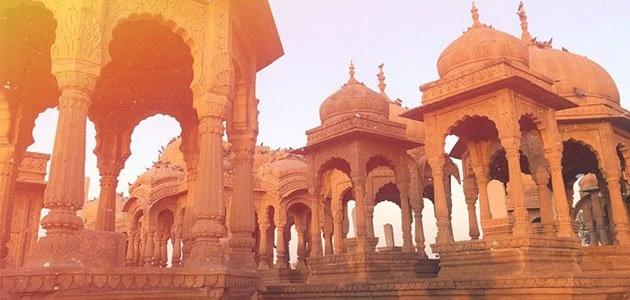
Rajasthan, the Land of Kings (14 days, from EUR 1,800) is a good fit. It runs from Delhi and Agra to Ranthambore, Jaipur, the painted havelis of Shekhawati, Bikaner, Jaisalmer, Jodhpur, Ranakpur and Udaipur. The Jaisalmer day ends with a camel ride as the sun goes down over the dunes. Bring the warm layer for that one.
Tiger safaris at Ranthambore run in January. October to February is the comfortable window. Sightings tend to improve later, in the heat of April and May, when animals gather at the last waterholes. Either way, the game drives are in shared park vehicles and a tiger is never guaranteed.
South India: warm, dry and in season
In the south, January is warm rather than hot. Kerala is dry after the monsoon, which makes it a good time for a night on a houseboat in the Alleppey backwaters and a visit to the spice hills around Thekkady.
Tamil Nadu gets better now too. The northeast monsoon has left the east coast, and January to March is the best window for the temple towns. Pongal, the Tamil harvest festival, falls in mid-January.
South India, Exotic World (11 days, from EUR 1,570) covers that ground. It runs from Chennai to Pondicherry, Thanjavur and Madurai, then over to Periyar, the backwaters and Kochi. If you want the north and the south in one trip, India from North to South (14 days, from EUR 1,840) does the Golden Triangle and Ranthambore, then flies from Jaipur to Kochi.
Beaches in January
Goa, Marari and the Andamans are all in season. The sea is calm and the days are sunny. We sell each one as a five-day add-on at the end of a longer route: Goa from EUR 350, Marari in Kerala from EUR 400, and Havelock Island in the Andamans from EUR 410. On the Goa stay there is no car and no guide. That is the point of it.
The Maldives also works well in January. A five-day stay there starts from EUR 700, and India's Facets & Maldives (15 days, from EUR 3,140) combines Rajasthan and Mumbai with the islands.
Dates to know in January
Republic Day falls on 26 January. Delhi holds a large parade, and parts of central New Delhi close for it and for rehearsals in the days before. If your Delhi sightseeing day lands then, the order of the day may change.
If you are flexible, start in the second half of the month. The air is clearer and the worst of the fog is usually behind you.
January or February?
Both are excellent. February is a little warmer at night and carries less fog risk, so it asks less of you on a first trip. January has the cooler days, which suits long walks through forts and old cities. Read India in February to compare, or see the best time to visit India month by month for the whole year.
If January is your month, the routes above are the ones that work best. Pick the trip first, then send us a request with your dates, and we will build in the slack the fog season needs.