Planning
Best Time to Visit Rajasthan: Winter, Heat, Monsoon and Desert Nights
22 November 2026 · 4 min read
Rajasthan is at its best from October to March. Here is what to expect in the winter peak, the heat of April to June, the monsoon and the desert at night.
The best time to visit Rajasthan is October to March, and November to February is the most comfortable stretch. Days are warm and dry, around 22 to 28°C. The catch is the cold at night, especially in the desert. April to June is very hot. July to September brings the monsoon and closes the core zones of the tiger parks.
The short answer
- November to February: the peak. Warm days, cool to cold nights, clear skies.
- October and March: good shoulder months. Warmer, with fewer people at the start and end.
- April to June: very hot, often 38 to 45°C. Best odds for tigers at Ranthambore.
- July to September: monsoon. Green and quiet, humid, tiger parks closed.
October to March: the main season
October is the turn. The heat breaks and Rajasthan becomes comfortable from about the second week. November is close to ideal, at around 28°C by day with clear skies.
December and January are the coolest months. Jaipur sits around 22°C by day, and the mornings are cold. From the third week of December, dense morning fog can settle over the plain around Delhi and Agra. It often delays flights and trains, so allow some slack in late December and January if your route has an internal flight.
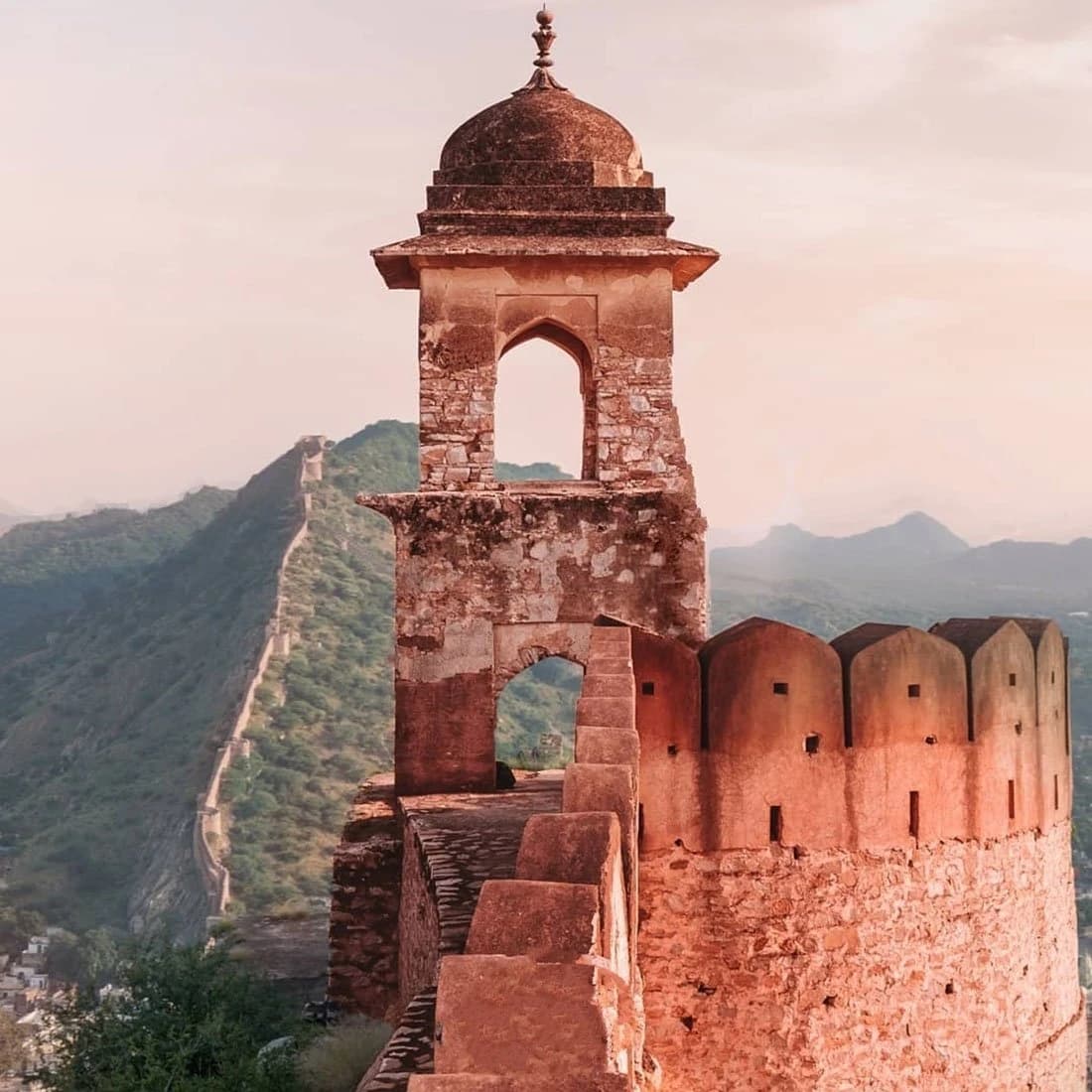
February is the steadiest month of all. Days run 26 to 28°C, nights around 12°C, and nothing feels like an effort. Walking up to Amber Fort or Mehrangarh at midday is pleasant, not a test.
March splits in two. Until about the middle of the month it stays near 30°C. By the end, Jaipur touches 36°C and the afternoons get long.
Desert nights
The Thar Desert is where the season matters most. In winter, desert days are warm and nights are cold. Around Jaisalmer and Bikaner, dawn can drop to 5 to 10°C in January. Pack a fleece and a warm layer for any evening out in the dunes.
Several of our routes include a desert evening. On Rajasthan The Land of Kings you take a camel ride outside Jaisalmer in the afternoon and watch the sun set over the dunes. The 21-day North India route does the same at Jaisalmer, followed by dinner in the desert. On the trails of the Maharajas goes further, with a stay at the Manvar desert camp: a jeep safari, a camel ride and an evening of local music and dance. Two other routes add a sunset camel ride in the Shekhawati region, near Mandawa.
All of these are best from November to February. In summer the desert is too hot for anything in daylight.
April to June: heat, and better odds for tigers
April is when the plains stop being pleasant. Jaipur and Ranthambore reach 38 to 41°C. May is hotter still, at 42 to 45°C across much of the state. June stays above 40°C until the rain arrives.
It is also when tiger sightings at Ranthambore and Sariska improve. The forest dries out and animals come to the remaining waterholes. The game drives are shared, in a jeep for up to six people or an open canter bus for up to twenty, depending on what the park allocates. Sightings are never guaranteed. The magic of Rajasthan puts two drives into one day at Ranthambore plus an afternoon at Sariska, which gives you more chances. If a tiger is the main goal, April and May are the honest recommendation, as long as you can handle the heat.
July to September: the monsoon
Rajasthan gets less rain than most of India, and the western desert gets the least. Expect short, heavy showers, high humidity and grey skies, rather than days of steady rain. The lakes in Udaipur fill up and the Aravalli hills turn green, which suits a slower trip focused on palaces and cities.
The firm trade-off is wildlife. The core zones at Ranthambore and Sariska close from July to the end of September, and reopen on 1 October. So a monsoon trip to Rajasthan is a trip without the tiger days.
Festivals
Holi usually falls in March. The date moves with the Hindu lunar calendar. Our 7-day Golden Triangle & Colors of India is built around it. It runs Delhi, Agra and Jaipur, with Holi celebrated in a royal garden, then finishes in Udaipur. It only works if your dates match the festival, so plan it early.
Diwali, the festival of lights, falls in October or November, when cities and havelis are lit up at night. The Pushkar camel fair also takes place around that time, but none of our tours go to Pushkar.
Which month for which trip
For a first trip with forts, palaces and the desert, November to February is the safe choice. For tigers, go in April or May and accept the heat. For festivals, plan around Holi in March. For the lowest prices and the fewest people, the monsoon months work, without the parks.
Our India month by month guide shows how Rajasthan fits with the rest of the country. To compare routes, start with our Rajasthan page or send us a request with your dates, and we will match the route to the season.