
Rishikesh by season
Best time to visit Rishikesh
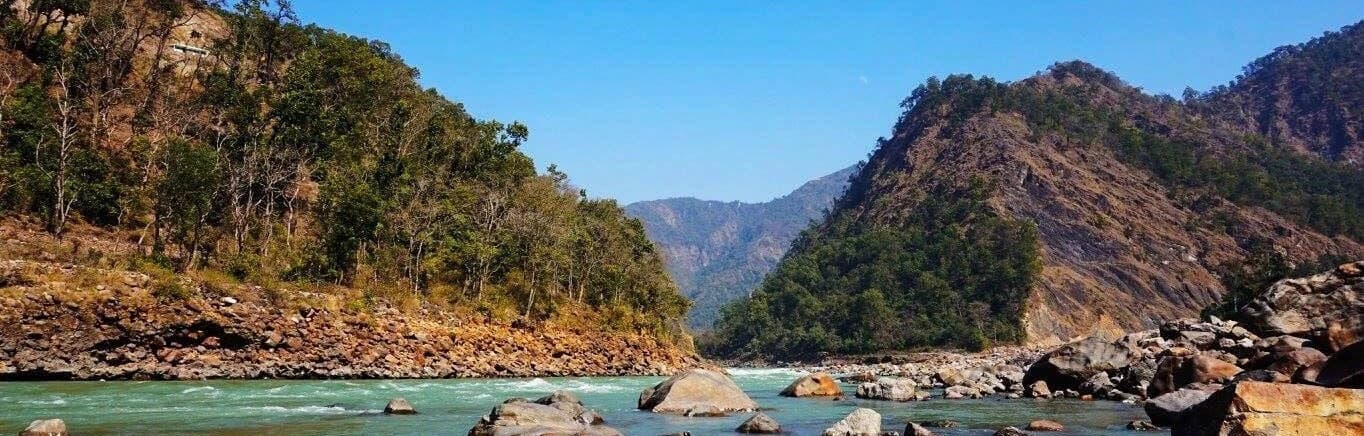
The best time to visit Rishikesh is October to March. The air is clear, the Ganges runs green and calm, and days are comfortable for walking between ashrams. Winter nights are cool. From April it gets hot, and July and August bring heavy monsoon rain and a fast, swollen river.
The short answer
October and November are the stand-out months: warm days, cool evenings and clear views of the hills.
December to February is mild by day, around 20°C, with cold nights.
March is pleasant and lively, with the yoga crowd in town.
April to June is hot, often well above 35°C by May.
July to September is the monsoon, with heavy rain and a high river.
Why Rishikesh feels different from the hills
Rishikesh sits where the Ganges leaves the Himalayan foothills. It is low, at only a few hundred metres, so it behaves more like the plains than a mountain town. That means a winter season, not a summer one.
October and November: the best weeks
The monsoon has cleared, the dust is washed out of the air, and the river settles back to its green colour. Days are warm and evenings are cool enough for a light jacket. Walking the riverside paths and market lanes is easy at any hour.
Diwali usually falls in October or November and is celebrated along the ghats. Check the date for your year.
December to February: calm and cool
Winter is the quietest part of the good season. Days are mild, around 20°C, and nights drop to 6 to 8°C. Morning mist can sit on the river early on, which gives the ghats a soft, still feel. Pack warm layers for evenings by the water.
If your route reaches Rishikesh from Delhi, remember that late December and January fog can delay trains on the northern plain.
March: warm and busy
March is warm and bright. The International Yoga Festival is usually held in Rishikesh in early March, and the town is at its busiest with yoga students. Holi also usually falls in March. Check both dates for your year.
April to June: the hot months
From April the heat climbs quickly, and May and June are uncomfortable for long walks. These months also bring heavy pilgrim traffic through Haridwar and Rishikesh, on the way to shrines higher up in the mountains.
July to September: monsoon
July and August bring heavy rain to the foothills. The Ganges runs high, brown and fast, and landslides can block roads further up into the mountains. September starts to dry out, but the river stays full. This is the time to skip unless you are staying put in an ashram.
How our tours fit
Our 21-day North India, landscapes and culture route finishes in the north with Rishikesh and Haridwar, then two days in Delhi. A train takes you from Delhi to Haridwar. In Rishikesh you join a meditation and a morning puja, walk the market lanes past temples and ashrams, see the Laxman Jhula suspension bridge, and watch the evening light ceremony at Triveni Ghat.
The next day you move to Haridwar for the Mansa Devi Temple and the evening Aarti on the Ganges, then take the train back to Delhi. The route starts in Ahmedabad and crosses Rajasthan first, so October to March suits the whole trip.
Common questions
What is the best month to visit Rishikesh?
October or November. The monsoon has passed, the river is calm and green, and days are warm without being hot.
Is Rishikesh cold in winter?
Days are mild, around 20°C, but nights drop to 6 to 8°C. Bring a warm layer for evenings by the river.
Should I avoid Rishikesh in the monsoon?
For a first visit, yes. July and August bring heavy rain, a fast river and road problems higher up in the mountains.
When is the International Yoga Festival?
It is usually held in early March. Check the dates for your year, as the town gets busy.
Our journeys
Tailor-made trips in Rishikesh
1 journey built and led by our local guides — from gentle coastal weeks to high-mountain crossings.
Build your own trip →Ready to plan your trip to Rishikesh?
Tell us roughly when, who's travelling and what kind of pace you like. We'll send back a draft itinerary within 1–2 days, no payment until you're happy with the plan.
Send a request