


Nepal – Temples, shrines and majestic Himalayas
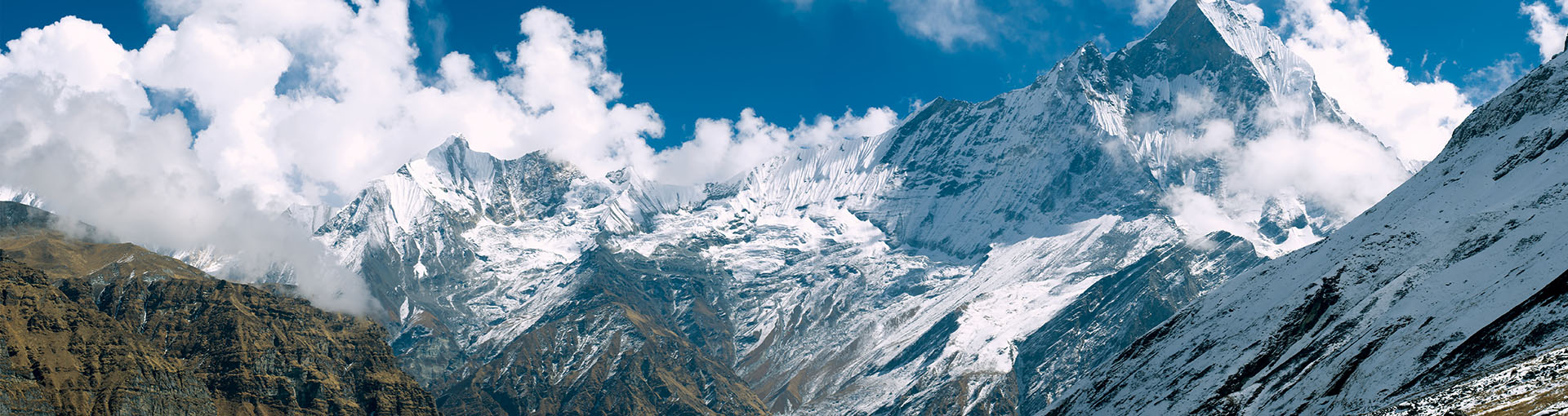
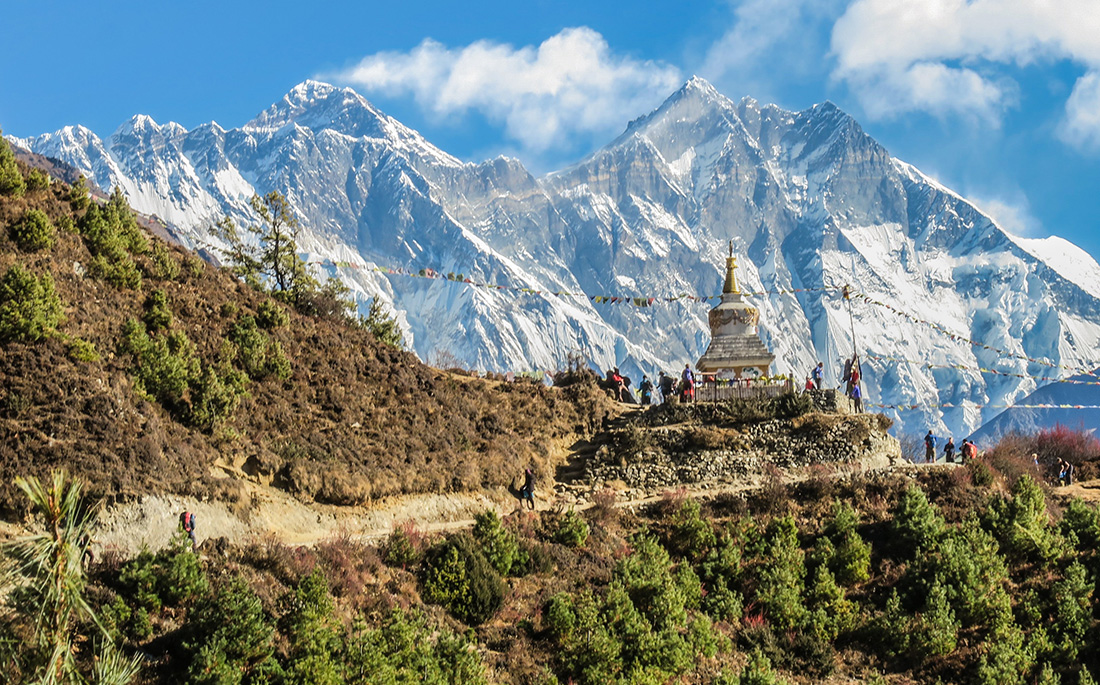
Buddhist wisdom and Hindu deities, set against the majestic backdrop of the world’s highest mountains, make Nepal seem otherworldly – Buddhist teachings and Hindu gods coexist in everyday religious practice, unleashing a special spiritual energy in conjunction with the breathtaking natural landscapes and together forming a unique culture. A truly special treasure, however, is the cheerful and hospitable people, who have adapted their way of life to the challenges of nature and often still lead an almost traditional existence on the roof of the world.
-
Destination
-
Dress Code
März - September (ausgenommen Regenzeit Juli - August) -
Included
1 Flasche Wasser bei Ankunft24-Stunden Erreichbarkeit während der gesamten Reisedeutschsprechender GuideFrühstückHotelübernachtung
1
Tag 1: Arrival and arrival in Kathmandu
Your Nepal adventure begins today with a private flight to Kathmandu, where you'll be welcomed to Nepal the following morning! Upon arrival, you will be met at the airport by a member of staff and transferred to your hotel, where you can relax and recover from your journey.
2
Tag 2: The capital Kathmandu
Durbar Square in Kathmandu is the heart of Nepal's traditional culture and art, home to numerous historic temples, palaces, and sculptures. Here you'll find the Hanuman Dhokha Palace, the Taleju Temple, the imposing Jagannath Temple, and the Kala Bharava statue. The Kastamandap Temple is said to have been built from the wood of a single tree. Also famous are the Temple of the Living Goddess of Kathmandu at Kumari Ghar and the Shiva-Parvati Temple. The Swayambhunath Temple, believed to be 2,000 years old, is the oldest Buddhist stupa and offers a magnificent panoramic view of the Kathmandu Valley. A trip to Patan, also known as Lalitpur, leads to the oldest of the three cities in the Kathmandu Valley, boasting numerous Hindu temples and Buddhist monuments such as the Krishna Temple, the "Golden Temple" Hirnaya Varna Mahavihar, and the Khumbeswar Temple. Each brick of the Mahabouda Temple has an image of Buddha engraved on it, giving it the nickname "Temple of 1000 Buddhas".
3
Tag 3: Temples and palaces
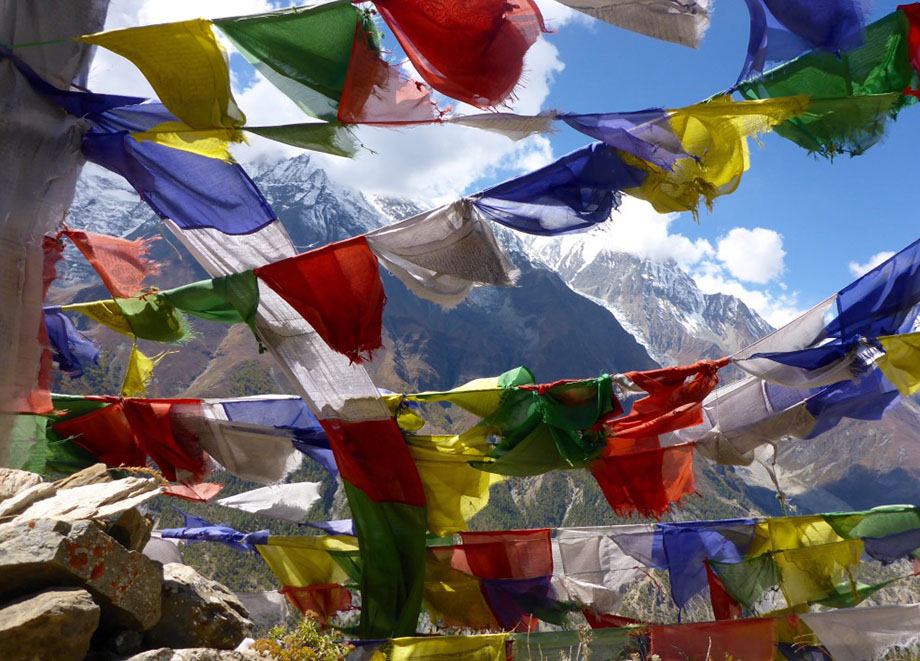
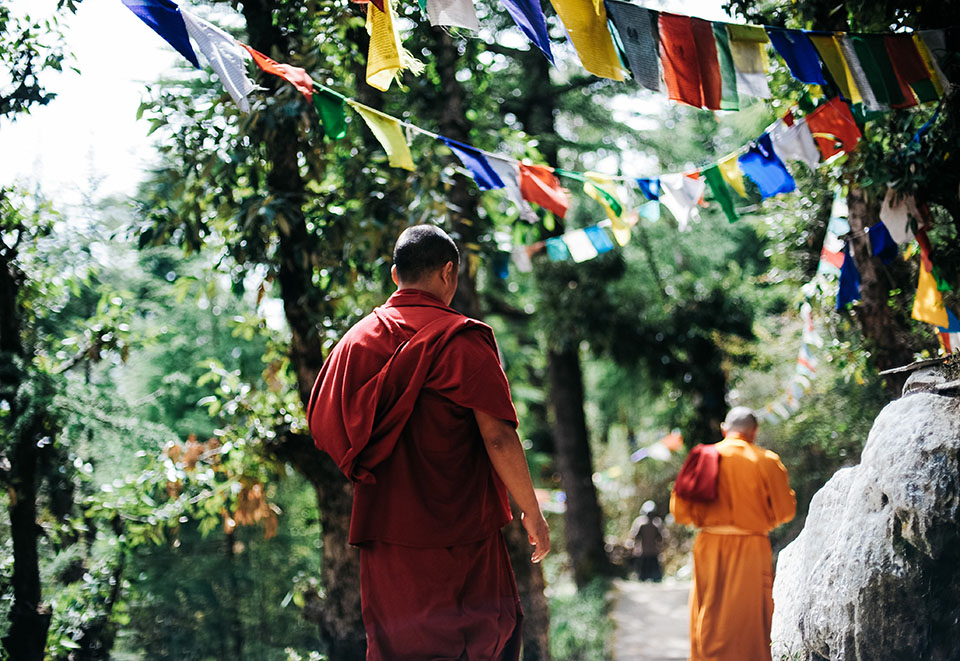
Tibetan monks in rust-colored robes wander along streets adorned with colorful flags, while pilgrims spin prayer wheels and stock up on yak butter and barley flour. Thousands of pilgrims arrive daily at the Boudhanath Stupa to perform religious rituals under the watchful gaze of the Buddha and to immerse themselves in the vibrant array of ceremonial objects during a stroll through the surrounding markets. The Pashupatinath Temple, dedicated to the god Shiva, on the banks of the sacred Bagmati River, is open only to Hindus, but from the eastern side of the river, numerous worshippers can be observed performing centuries-old rituals in the cycle of life, death, and rebirth. Bhaktapur, one of the three royal cities of the Kathmandu Valley, resembles a living museum of medieval art and architecture. Durbar Square, with its conglomerate of pagodas and temples surrounding the Fifty-Five-Window Palace, is one of the architectural gems of the valley.
4
Tag 4: Monastic life in Pharping
Not far from Kathmandu lies the Naydo Monastery in Pharping. Here you can freely immerse yourself in monastic life, discuss religious questions with the monks, or explore the surroundings on a walk – the perfect place to relax and unwind.
5
Tag 5: Rural Nepal
If you're an early riser, why not join the monks in the colorfully decorated prayer hall for the morning prayer hour, Puja (5:00 a.m.)? Enveloped in prayers and mantras, it's a meditative and peaceful start to the day! The journey continues west along the road to Bandipur. Rural life in Nepal seems untouched by time, moving at a leisurely pace. Visiting a village along the way offers insights into simple living, while the often narrow suspension bridges that connect the hilly regions provide a link to the outside world and offer breathtaking views. The picturesque town of Bandipur sits atop a narrow mountain pass at an altitude of 1,000 meters. The afternoon is perfect for relaxing in the enchanting mountain scenery or exploring this charming, timeless town with its narrow lanes, traditional wooden houses, and friendly people.
6
Tag 6: Hike to Ramkot
The dawn in the Himalayas feels almost mystical and surreal – the first rays of sunlight dissolving the mist around the mountains, the awakening activity of the people, the chirping of birds – a perfect start to the day! The unique natural landscape is best enjoyed on foot: a short, easy hike leads you through green hills, fields, and rice terraces to the village of Ramkot. An impressive view of the snow-capped peaks in the distance and the warm welcome from the friendly locals more than compensate for the slight exertion. Back in Bandipur, you can spend the rest of the day relaxing.
7
Tag 7: Dreamlike mountain scenery in Pokhara
Several beautiful lakes and breathtaking panoramic views of the Himalayan peaks make Pokhara one of Nepal's most beautiful valleys, boasting a magical and peaceful atmosphere. It also serves as a starting point for numerous mountain adventures, such as treks in the surrounding area. A trip to a nearby Tibetan settlement offers profound insights into the village life of exiled Tibetans in Nepal, who still maintain their own traditions and cultures.
8
Tag 8: Sunrise in the Himalayas
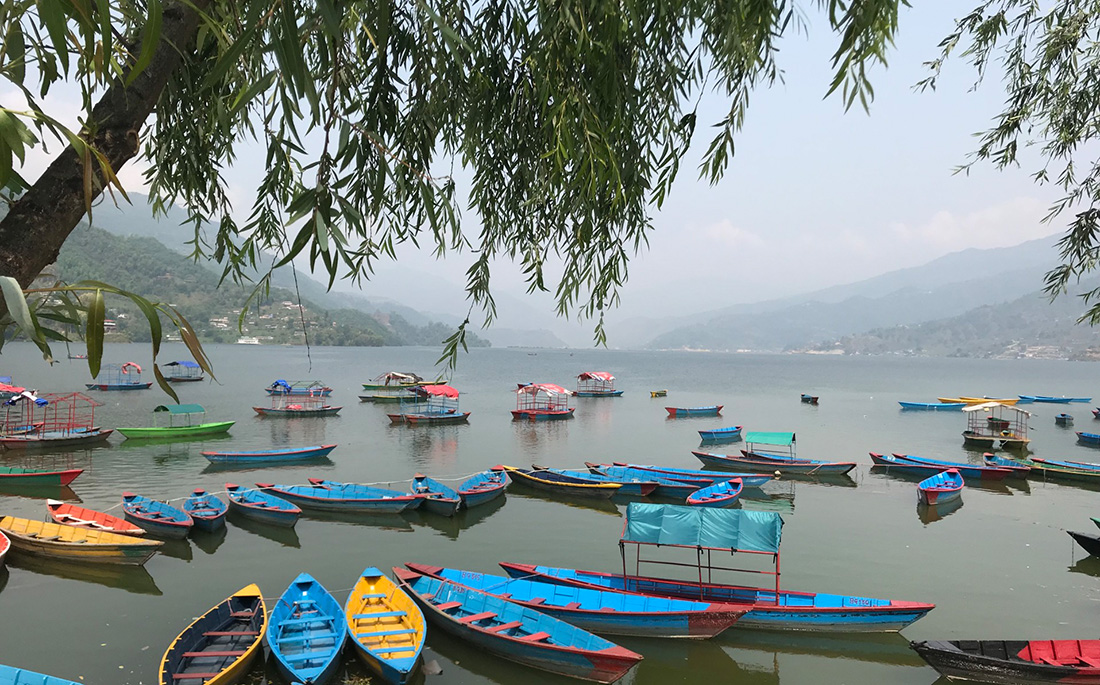
The majestic peaks of Dhaulagiri and Annapurna rise in the light of the rising sun in the early morning (around 5:00 AM) – an unforgettable start to the day from Sarangkot at an altitude of approximately 1,592 meters. Back at the hotel, you can reflect on your experiences over breakfast. Pokhara's natural beauty is on full display at Devi's Falls and the Seti River Gorge, where the interplay of water and rock creates a captivating spectacle. Perched on a nearby hill is the Bindhya Basini Temple. Dedicated to Bhagwati, Pokhara's guardian goddess, it offers a breathtaking view of the Annapurna peak. Marvelous underworlds await in the Ghupteshwar Mahadev Cave, one of the longest in South Asia. A boat trip on Phewa Lake provides a relaxing way to enjoy the stunning natural panorama.
9
Tag 9: Shanti Stupa
We reach the Shanti Stupa (Shanti = peace) after an approximately one-hour uphill hike. At an altitude of about 1115 meters, the snow-white structure towers over the Phewa Valley and, in good weather, offers a breathtaking panoramic view of Pokhara, Phewa Lake, and the snow-capped peaks of the Annapurna mountain range. The four Buddha statues, aligned with the cardinal directions, represent different phases of Buddha's life and serve as a reminder of the importance of peace among all races and religions throughout the world. Begnas Lake is an oasis of tranquility; its idyllic atmosphere, far removed from the tourist crowds, invites you to stroll through one of the surrounding villages.
10
Tag 10: The Chitwan Nature Reserve
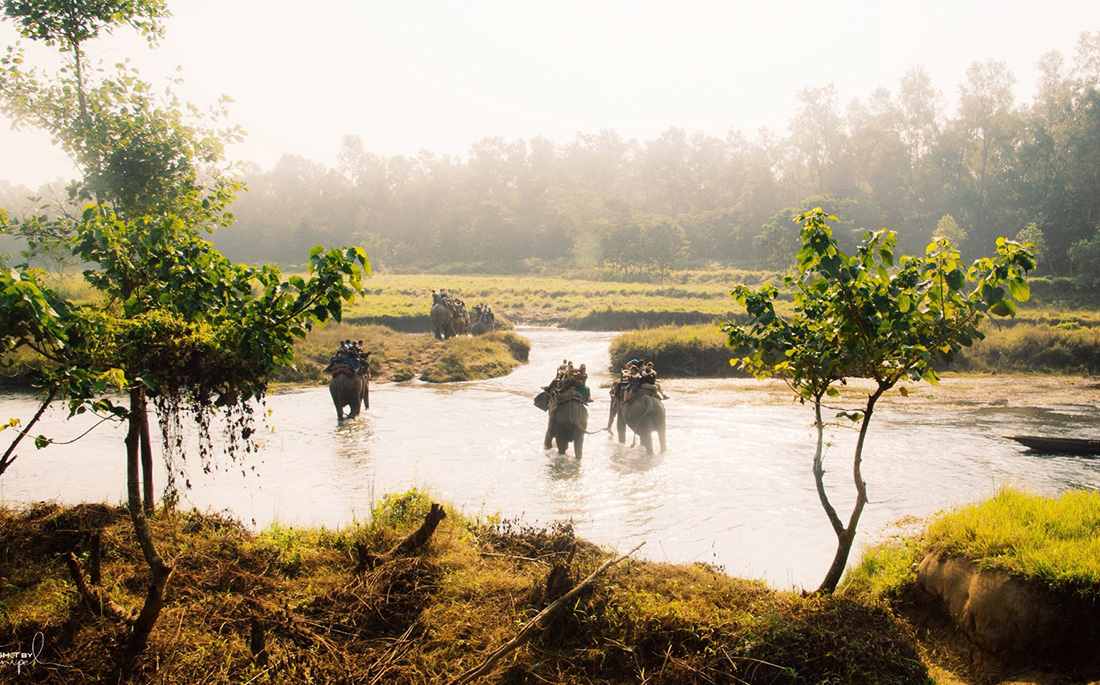
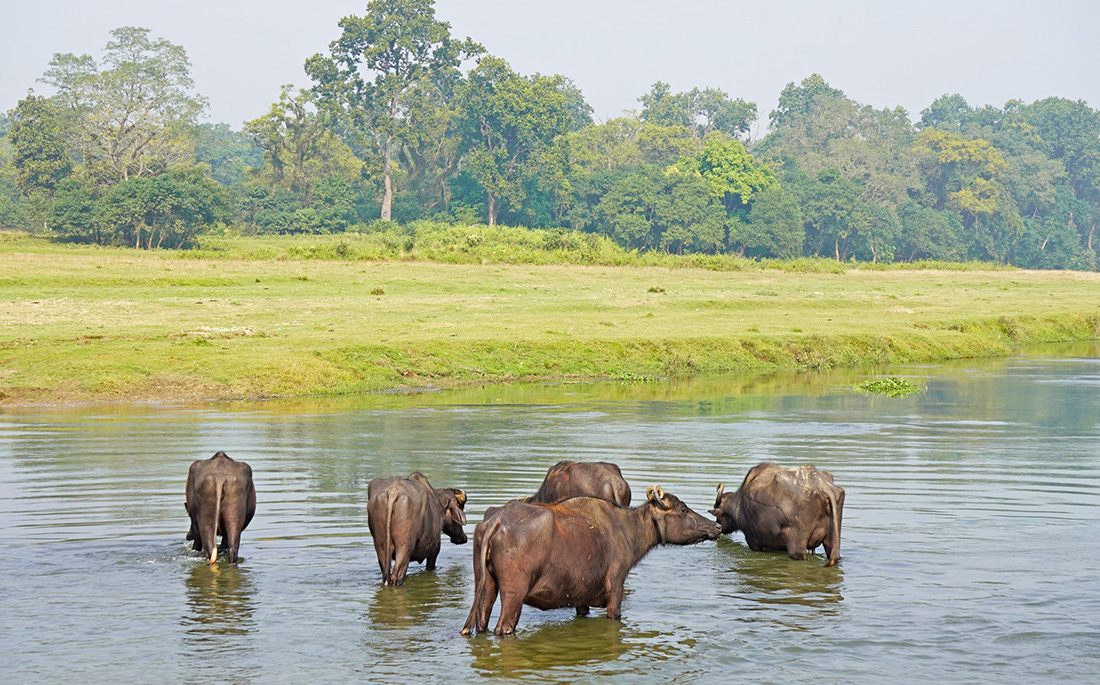
The Chitwan Nature Reserve at the foot of the Himalayas is one of the few remaining pristine remnants of the Terai region, which once stretched across the borders of India and Nepal. It boasts an exceptionally rich flora and fauna. One of the last populations of Asian rhinoceroses lives here in the park, and with a bit of luck, you might even spot a Bengal tiger. Your first jungle adventure awaits you in the afternoon (the exact time and location will be determined and organized by the hotel depending on the weather and local availability) in the national park.
11
Tag 11: Nature experiences in Chitwan National Park
Early in the morning, you'll depart for a birdwatching excursion or a nature walk. You'll return to your hotel or resort for breakfast. Afterwards, you'll spend the day enjoying further jungle activities, such as a jeep safari through the breathtaking jungle landscape or a canoe trip, weather permitting (the specific activity will be determined and organized by the hotel depending on the weather and availability).
Please note that jeep safaris are not offered in Chitwan National Park during the rainy season in July, August, and September.
12
Tag 12: Wonderful jungle world of Chitwan
Today's itinerary also includes exploring Chitwan's natural landscape. Depending on conditions and weather, you will embark on various jungle adventures to follow the tracks of its unique wildlife (these will be determined and organized by the hotel based on local conditions and availability).
Please note that jeep safaris are not offered in Chitwan National Park during the rainy season in July, August, and September.
13
Tag 13: Back to Kathmandu
Today's return journey to Kathmandu guarantees breathtaking views of natural landscapes! The rest of the day is perfect for relaxation – or, if you're still feeling adventurous, for one last shopping trip on your own at one of the nearby markets.
14
Tag 14: Farewell to Nepal
Depending on your departure time, you will have the day at your leisure before being transferred to the airport. From there, you will depart for your return flight home, filled with many new impressions. We wish you a pleasant journey home and hope to welcome you back as our guests again soon.
Eindrücke von der Reise