1
Tag 1: Arrival and Transfer to Delhi
Today you begin your India adventure and fly individually to Delhi, where the next morning you’ll be greeted with: Namaste and welcome to India! After you land, you will be met by a staff member at the airport and transferred to your hotel, where you can first relax and recover from your journey.
2
Tag 2: Majestic Taj Mahal
Numerous architectural treasures still testify to Agra’s former prosperity and power. The legendary Taj Mahal (closed on Fridays) rises radiantly above the sacred Yamuna River and, like few other monuments, is considered a symbol of India itself. It is said to reveal its unique charm at any time of day and in any weather, as the white marble and countless semi-precious stones captivate you in ever-changing light. The imposing Agra Fort, also known as the Red Fort of Agra, like its namesake in Delhi, is a demonstration of the power and strength of the former rulers. A stroll through the old town inevitably takes you through the bustling bazaars and markets.
3
Tag 3 Symmetrical Perfection and Bollywood
The small village of Abhaneri lies inconspicuously and peacefully along the way — yet it holds one of the most beautiful architectural treasures: the interplay of light and shadow on the hundreds of steps of the Chand Baori, which descend more than 20 meters into the water reservoir, creates an almost meditative effect. An astonishing masterpiece and a fascinating photo opportunity!
In contrast, Rajasthan’s capital Jaipur is shaped by both history and modernity, where countless cars, tuk-tuks, and motorcycles share the streets and squares with bicycle rickshaws, camel carts, and elephants, weaving through historic buildings, colorful market stalls, and shops. In the Raj Mandir palace cinema, you can experience the colorful world of Bollywood in the evening with a current film screening — a very special experience that is an inseparable part of daily life in India.
4
Tag 4: Royal Palaces in the Pink City
The golden-yellow Amber Fort offers royal splendor with its magnificent palaces and halls, and from its elevated hilltop location just outside Jaipur, you can enjoy views of the surrounding hills and the Maotha Lake below. The Jantar Mantar, as the largest stone observatory on Earth, still bears witness to scientifically sound knowledge that remains valid today, while the magnificent City Palace in the heart of the Pink City is still partially inhabited by descendants of the former Maharaja. The famous Hawa Mahal, or Palace of Winds, with its countless windows and balconies, is one of India’s most iconic photo motifs and served as a special vantage point for the women of the royal court to observe parades and processions on the streets below without being seen. A rickshaw ride through the bustling streets and bazaars of the city is a must at the end of the day.
5
Tag 5: Market Visit in Rural Ranthambore
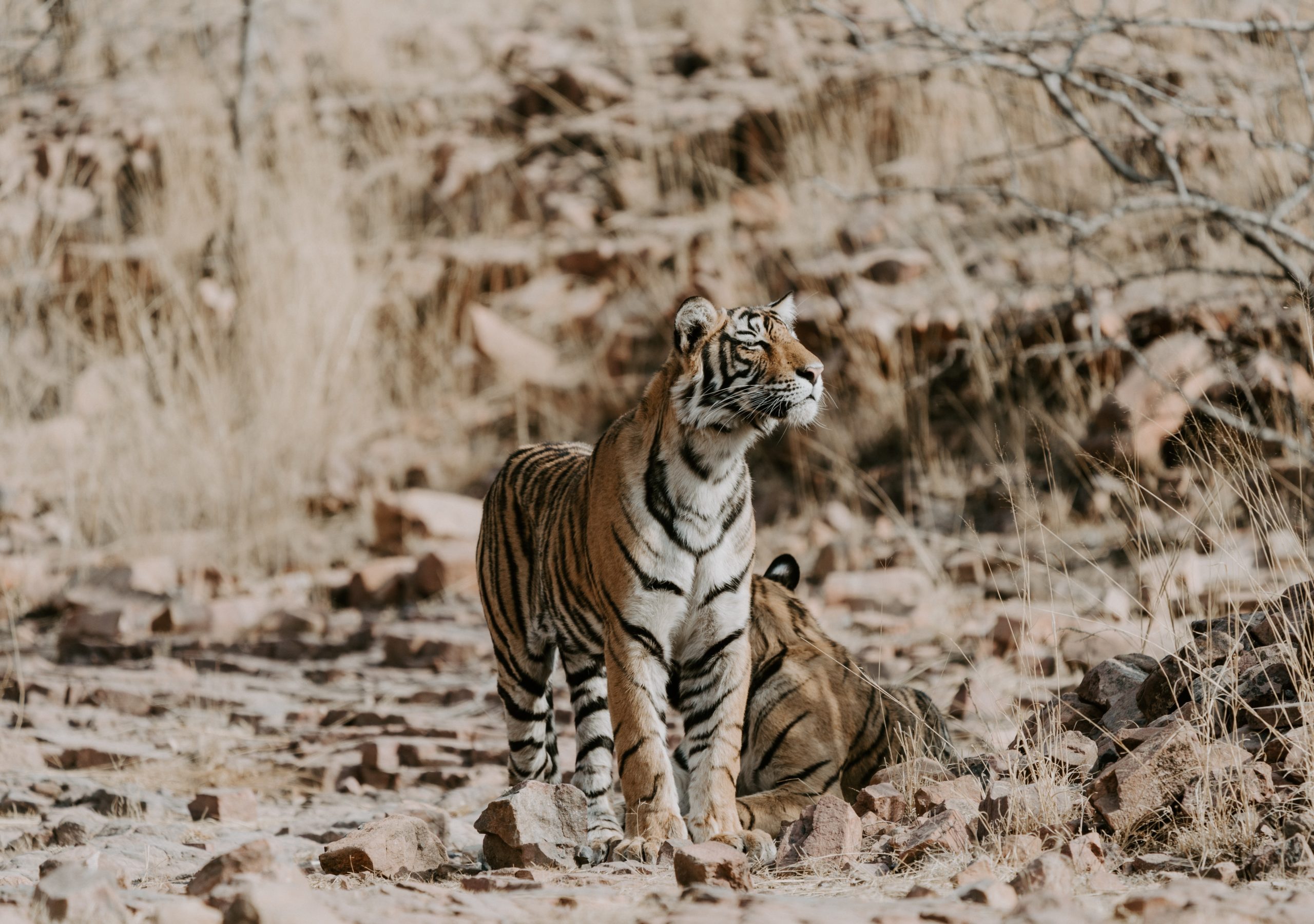
Hardly any other region in India offers such a variety of natural landscapes as Rajasthan. In Ranthambhore National Park, you even have the chance to look a tiger in the eye, as the dense forests provide a protected home for these endangered animals. In the small town of Sawai Madhopur, adjacent to the wildlife reserve, you can stroll through a typical vegetable market in the afternoon: marvel at the variety of vegetables and fruits artfully displayed by the vendors, observe the bargaining, buying, and selling, and immerse yourself in rural life.
6
Tag 6: In the Footsteps of the Tiger
Today, you will set out twice to follow in the footsteps of the king of the jungle — early in the morning, you will be picked up at the hotel and depart for the first shared safari (depending on availability in a jeep [up to 6 people] or canter/open safari bus [up to 20 people]) in Ranthambhore National Park. Stay alert, as numerous animal and bird species may cross your path in the light of the early day. In the afternoon, a second shared safari (depending on availability in a jeep [up to 6 people] or canter/open safari bus [up to 20 people]) offers another chance to immerse yourself in the unique natural landscape and observe its inhabitants in a different light of the day.
7
Tag 7: The Stepwells of Bundi
Bundi still exudes a medieval, almost timeless atmosphere, and within the old city walls, many remnants of the former Rajput rulers have been preserved. The city was famous for its exquisite miniature paintings. The Taragarh Fort stands proudly and imposingly on a hill above the city, bearing witness to a warlike past and fleeting power. The view of the landscape spreading out below remains magical to this day. Water is the essence of life — then as now. Of the city’s original 50 stepwells, only a few remain, and perhaps the most beautiful and significant in all of Rajasthan is the Raniji ki Baori, royal not only in name, featuring magnificent stone carvings and a depth of 46 meters.
8
Tag 8: Witnesses of Transience
Udaipur, also known as the “Venice of India,” welcomes you with an imposing fort, bustling streets, and traditionally dressed people. Considered the fairy-tale essence of Rajasthan, surrounded by green hills and artificial lakes, it is regarded as one of the most beautiful cities in all of India. The journey there offers glimpses of rural India.
9
Tag 9: The Venice of India – Udaipur
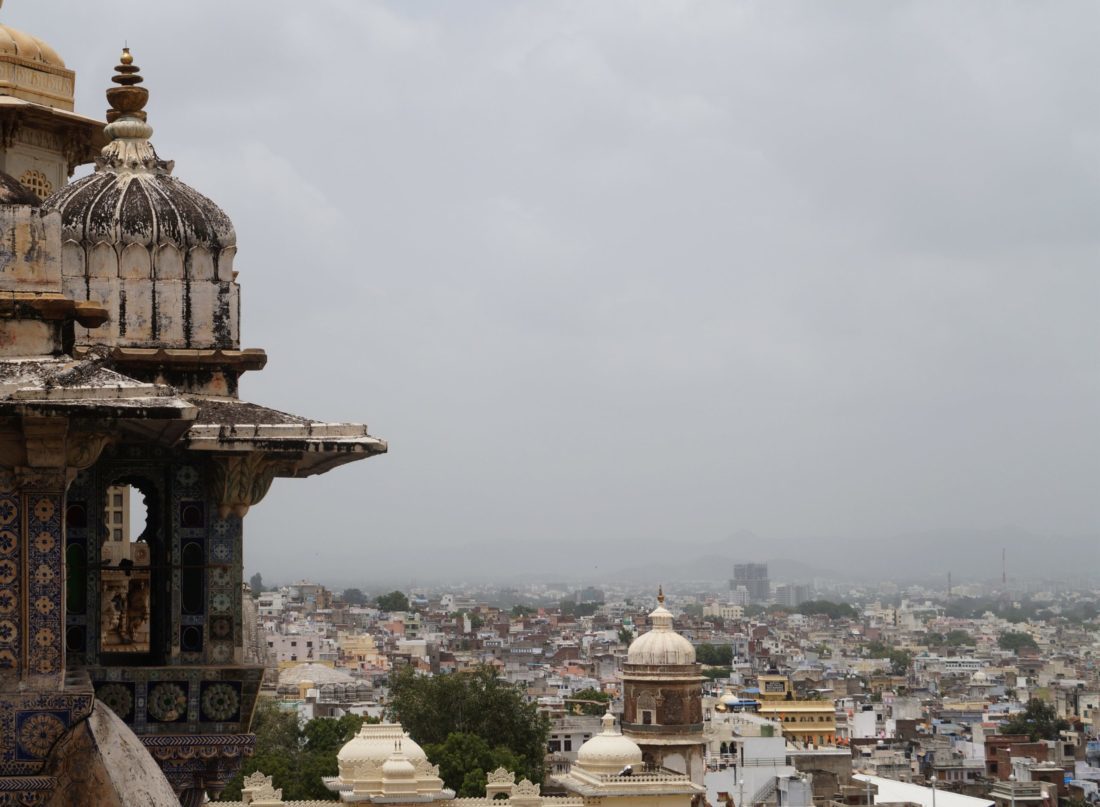
The narrow streets and bazaars of Udaipur invite you to stroll through the old town. The Jagdish Temple, dedicated to the god Vishnu, is the largest temple in the city, while the adjacent City Palace, nestled along the hilly shore of Lake Pichola, is considered the largest palace complex in Rajasthan. In the “Garden of the Maidens” Saheliyon Ki Bari, you can relax amid water fountains and pools, escaping the bustle of the city. A breathtaking backdrop of palaces, historic buildings, green hills, people washing clothes or bathing at the ghats, and the palaces Jag Mandir and Jag Niwas built on artificial islands in the middle of Lake Pichola, delight visitors at the end of the day during a picturesque boat ride (depending on water levels).
10
Tag 10: Rural Life in India
In an Indian village, many traditional customs and ways of life are still preserved — offering fascinating insights into an almost original way of living. In Ranakpur, the magnificent Adinath Temple of the Jain religion rises like a white jewel amid green hills, supported by 1,444 marble pillars richly decorated with intricate stone carvings, none of which are alike. The ride on the small narrow-gauge train from Phulad to Kamli Ghat near Deogarh through the picturesque mountain landscape is not only scenic but also provides opportunities to converse with local fellow travelers. The sun-yellow palace of Deogarh rises prominently from the rugged landscape of the Aravali Mountains, dotted with countless small lakes — your royal accommodation for the next night.
11
Tag 11: A Journey into the Desert
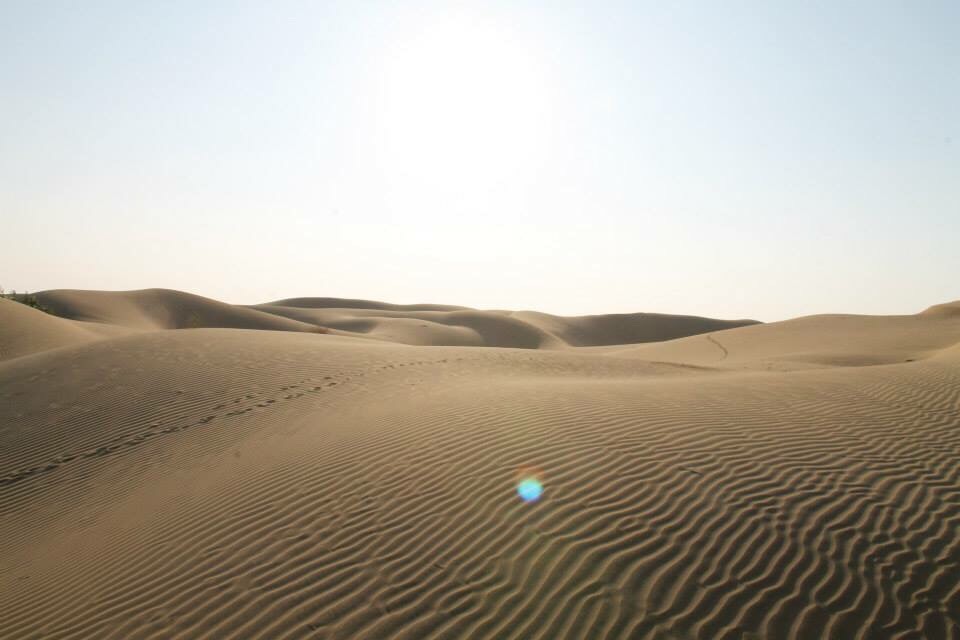
The desert exudes a fascination that no one can resist — rugged, inhospitable, and yet possessing a unique beauty and tranquility. Far from the hustle and bustle of everyday life, you can fully immerse yourself in the desert landscape at the Manvar desert camp.
Merciless heat during the day, freezing cold at night, and the constant absence of water — the desert appears to be an impossible place to live. Yet not only have animals and plants found their way into the desert, humans have also adapted to the conditions and made it their habitat. A jeep safari offers insights into the unique beauty of the landscape and the wildlife living freely here. A camel ride is, of course, an essential part of any desert adventure! The evening cultural program, featuring music and dance from the region, provides a very special conclusion to the day.
13
Tag 13: The Blue City of Jodhpur
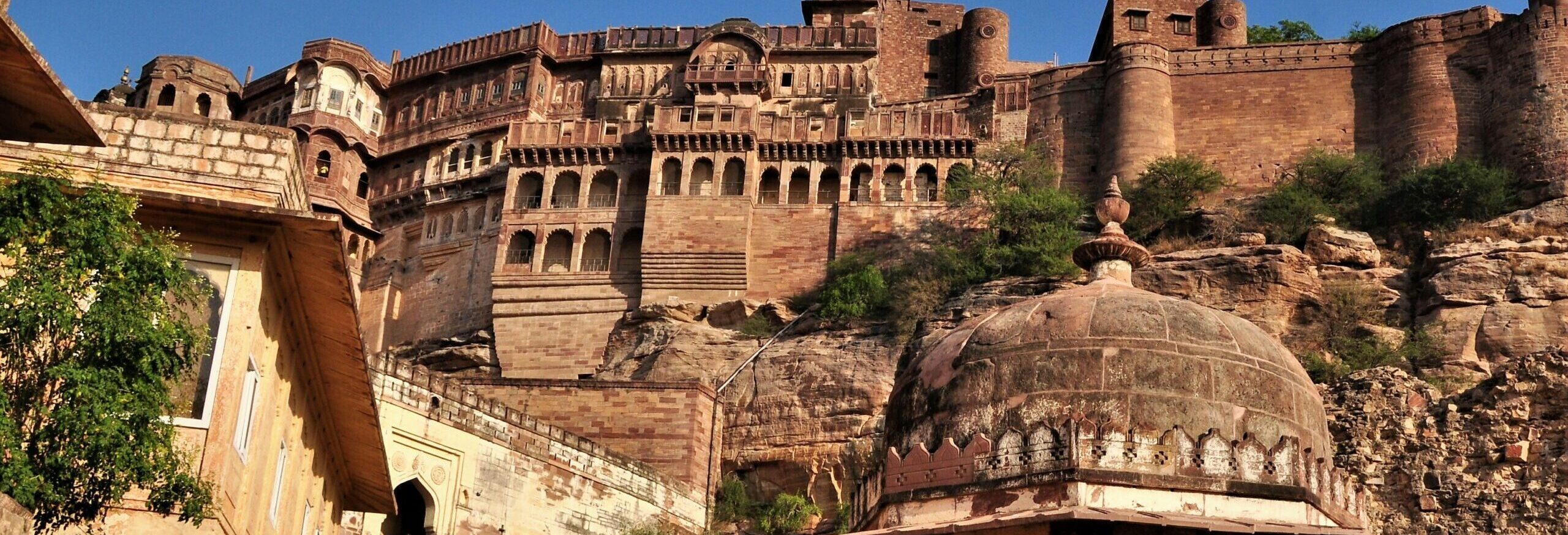
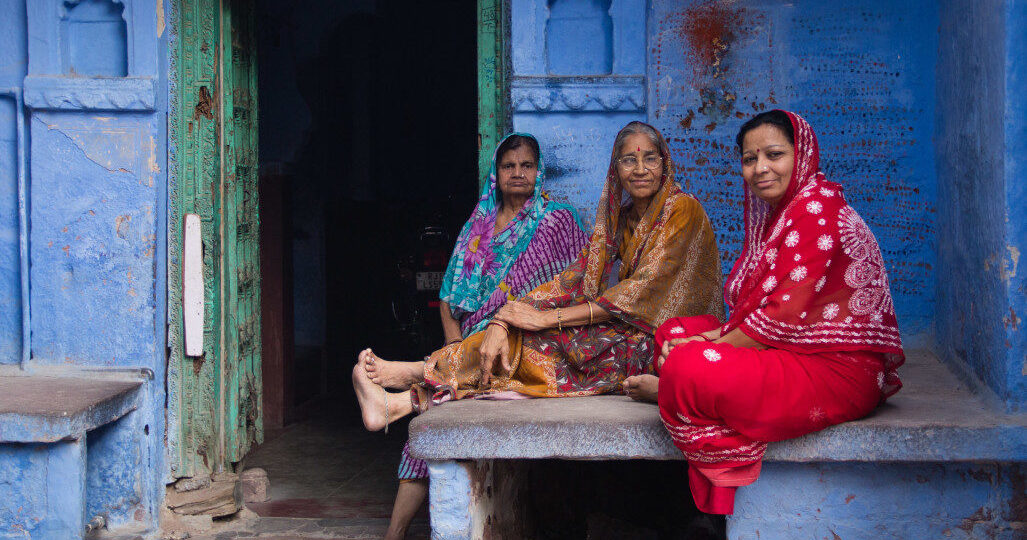
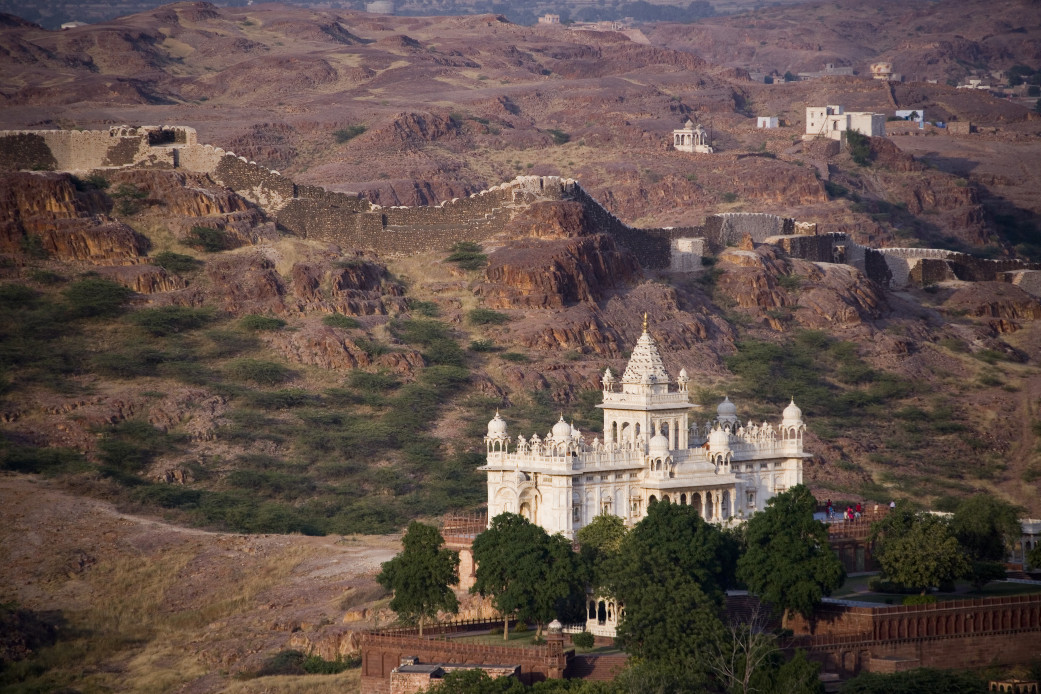
Blue is the traditional color of the Brahmin caste, but it is also said to be an effective way to repel mosquitoes — in Jodhpur, it can be seen on almost every house. The mighty Mehrangarh Fort, perched on a 130-meter-high hill, offers a breathtaking view of the sprawling blue city below. Imposing gates and the strategically designed winding path once made it difficult for attackers to conquer the fortress. In contrast, the delicately crafted white marble Jaswant Thada mausoleum provides a striking photo opportunity against the backdrop of the fort. The colorful bazaar around the famous clock tower forms the lively heart of the city — try your hand at the fascinating art of bargaining!
Today, it’s time to say goodbye to Jodhpur and the traditions of Rajasthan. You will fly back to the capital, Delhi. At the hotel, you can quietly reflect on the impressions of your journey so far — or use the rest of the day for your own exploration!
15
Tag 15: Farewell, India!
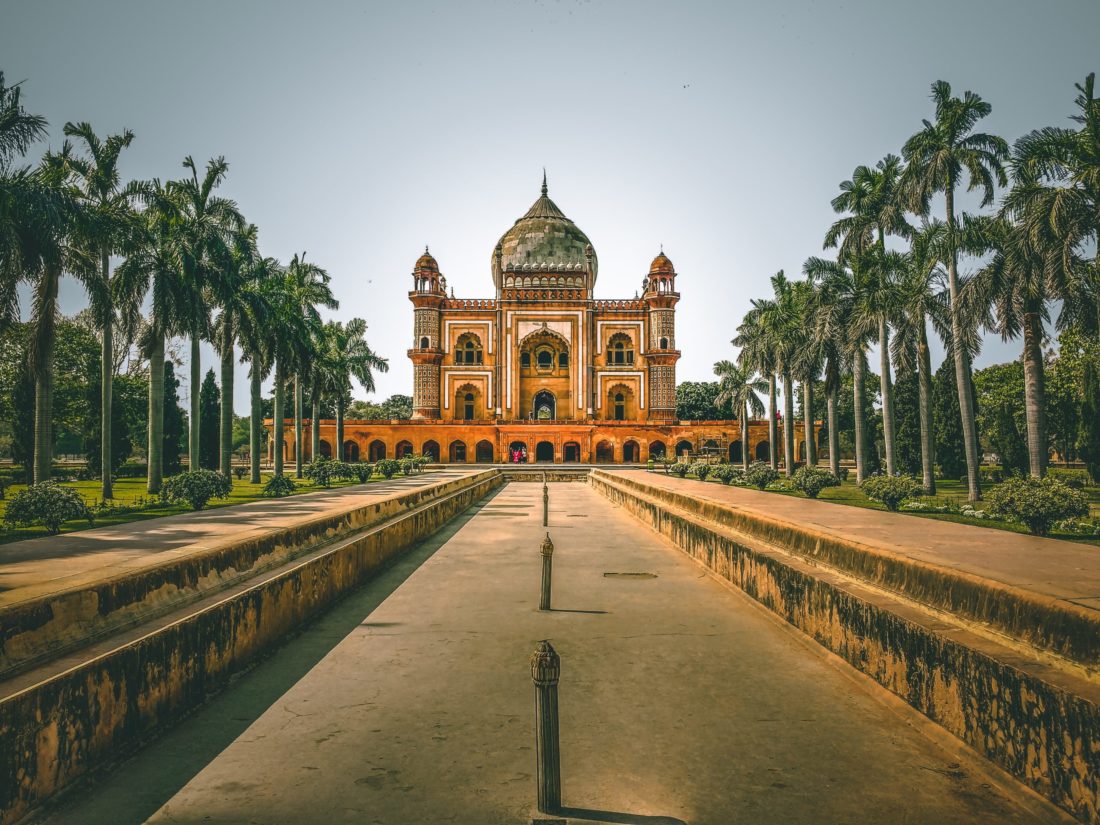
The imposing triumphal arch, India Gate, was built in memory of those who fell in World War I, while the grand buildings of the government district still reflect the spirit of the slowly fading British India. You are then welcomed by the Sikh religion at its largest temple in Delhi, the Bangla Sahib Gurudwara, where charity is a daily practice. Built as a victory tower and minaret at the beginning of the 13th century after the Muslim conquest of the city, the Qutb Minar reaches a height of over 72 meters. The nearby remains of Delhi’s oldest mosque, along with several other buildings, testify to the early Muslim influence on art and architecture. A hotel room near the airport is available for resting and freshening up before you conclude your journey with a leisurely dinner. From Delhi’s international airport, you depart for your flight home after midnight. We wish you a pleasant journey and hope to welcome you again as our guest soon.