


Agricultural and cultural treasures of North India
-
Destination
-
Included
1 Flasche Wasser bei Ankunft24-Stunden Erreichbarkeit während der gesamten Reisedeutschsprechender GuideFrühstückHotelübernachtung
1
Tag 1: Flight to Ahmedabad and arrival the following early morning
Your Indian adventure begins today with a private flight to Ahmedabad, where you'll be greeted with a warm welcome to India tomorrow morning. A representative will meet you at the airport and transfer you to your hotel, where you can relax and recover from your journey. Ahmedabad is the second largest and most cosmopolitan city in Gujarat. This city boasts a rich history, a sense of harmony, and exquisite architecture. After your arrival at the hotel, the rest of the day is yours to enjoy at your leisure.
2
Tag 2: Ahmedabad's architectural treasures
After an early breakfast, your sightseeing tour of Ahmedabad's old city begins promptly (around 7:30 am). The Heritage Walk starts at the Swaminarayan Temple and ends at the Jama Masjid around 10:30 am. The Rani Rupmati Masjid, founded by Sultan Mehmud Beghara, is particularly impressive for its domes, carved galleries, and tall minarets. The Sidi Saiyed Masjid also boasts wonderful stone-carved lattice windows with free-form "Tree of Life" motifs. A peaceful retreat awaits you at the Sabarmati Ashram, founded by Gandhi in 1915, before you immerse yourself in the Jain religion at the Hathee Singh Temple. The temple is renowned for its fabulous architectural design featuring intricate carvings. The Calico Textile Museum (closed Wednesdays) will introduce you to the exquisite textile craftsmanship for which the region is so famous.
3
Tag 3: Magnificent Akshardam Temple
In Udaipur, also known as the "Venice of India," you'll find the fairytale quintessential Rajasthan: an imposing fort, bustling streets, and traditionally dressed people, all surrounded by verdant hills and artificial lakes. First, however, be impressed by the stepwell in the small village of Adalaj, which blends Hindu and Islamic architectural styles and, with its octagonal well shaft, is one of the largest and most beautiful of its kind. Another highlight of the day awaits you in Gandhigarh: the Akshardham Temple (closed on Mondays), one of the largest complexes in the world, uniting art and architecture with education and research.
4
Tag 4: Witnesses to transience
Udaipur's narrow lanes and bazaars invite you to stroll through the old city. The Jagdish Temple, dedicated to the god Vishnu, is the largest temple in the city, while the adjacent City Palace, nestled against the hilly shores of Lake Pichola, is considered the largest palace complex in Rajasthan. In the "Garden of the Maidens" (Saheliyon Ki Bari), you can relax amidst water fountains and cascades, escaping the hustle and bustle of the city. A breathtaking panorama of palaces, historic buildings, verdant hills, and people washing clothes or bathing at the ghats, along with the Jag Mandir and Jag Niwas palaces built on artificial islands in the middle of Lake Pichola, provide a delightful end to the day with a scenic boat trip.
5
Tag 5: Rural life in India
In Ranakpur, the magnificent Adinath Temple of the Jain religion rises like a white jewel amidst verdant hills, supported by 1,444 richly intricately carved marble columns, no two of which are alike. The sun-yellow Deogarh Palace stands prominently against the rugged landscape of the Aravali Mountains, dotted with countless small lakes – your regal accommodation for the night.
6
Tag 6: Encounters on the rural train
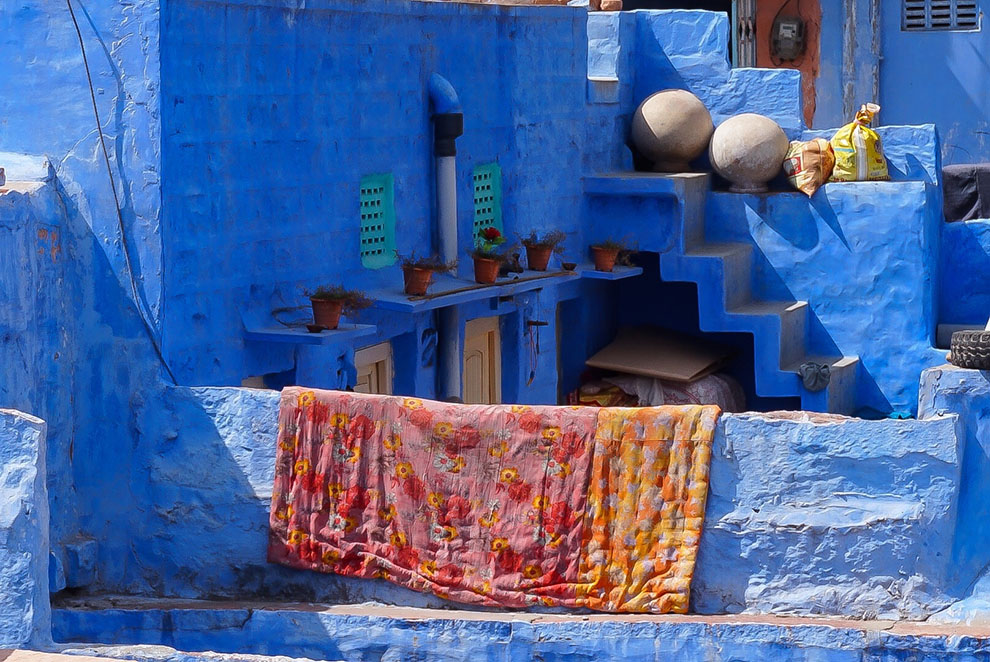
In the morning, you will be transferred to Kamblighat railway station, where you will board the small mountain railway that takes you to Phulad. The journey on the narrow-gauge railway to Phulad through the picturesque hills is not only scenic but also offers opportunities to chat with your fellow passengers. From there, you will continue by car to the Blue City. Blue is the traditional color of the Brahmin caste, but it is also said to be an effective mosquito repellent – in Jodhpur, it can certainly be found on almost every house.
7
Tag 7: The blue city of Jodhpur
The mighty Mehrangarh Fort, perched atop a 130-meter-high hill, offers breathtaking views of the sprawling blue city below – and fascinating insights into the lives of its former rulers. Imposing gates and the strategically designed serpentine road once made it difficult for attackers to conquer the fortress. In contrast, the delicate white marble tomb of Jaswant Thada provides a striking photographic backdrop to the fort. The colorful bazaar surrounding the famous clock tower forms the vibrant heart of the city – try your hand at the captivating art of haggling!
8
Tag 8: Off to the desert adventure!
Jaisalmer lies in the heart of the desert like a sandcastle from the Arabian Nights – the fort high above the city is a living museum, where countless people still live in the havelis adorned with stone carvings. The Bada Bagh cremation ground, just outside the city, with its numerous memorial temples to the deceased (chhattris) cremated here, exudes a special atmosphere at sunset and offers a breathtaking view of the city illuminated in red and gold.
9
Tag 9: The golden city in the desert
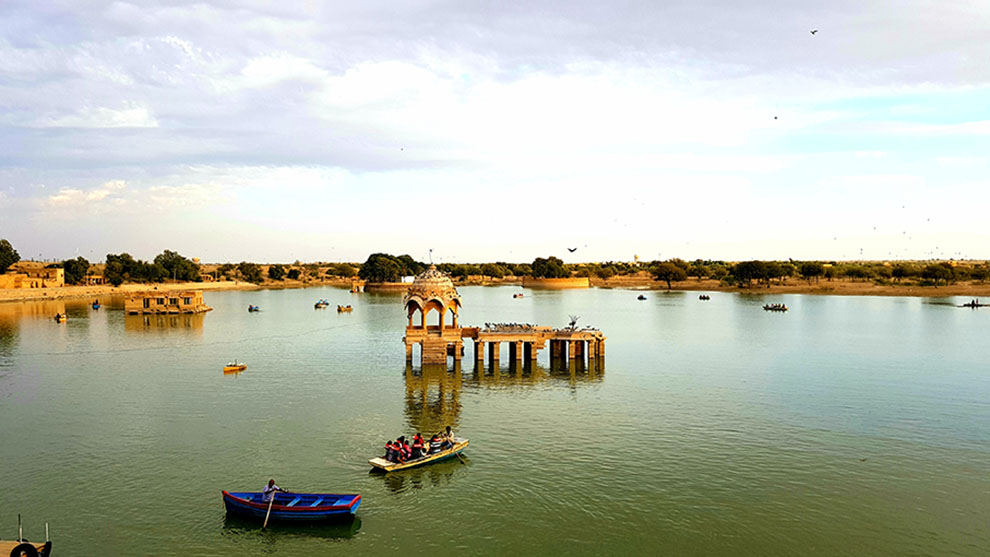
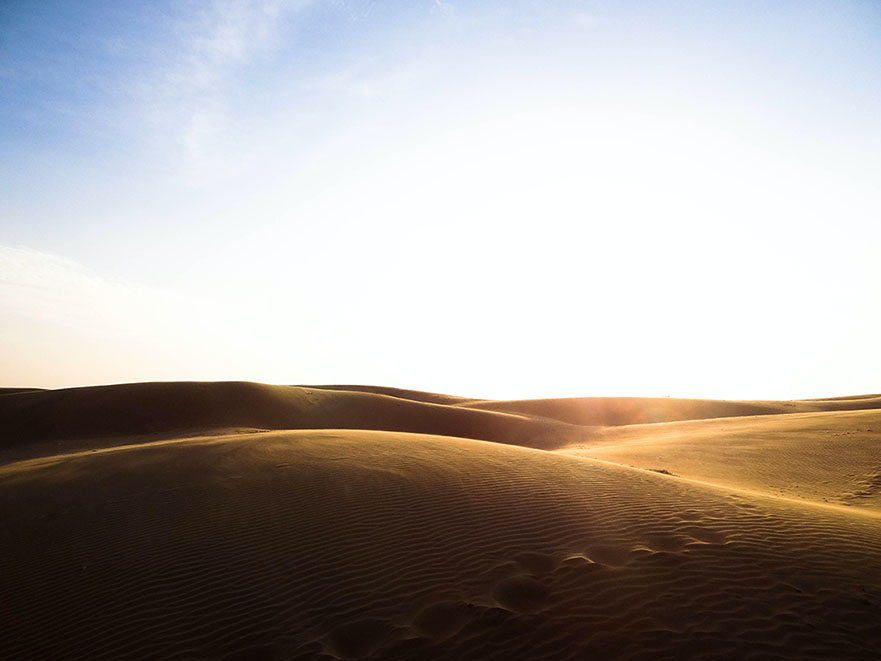
Like a building made of sand, this desert dream straight out of 1001 Nights sits atop a 75-meter-high hill. In the fortress of Jaisalmer, you can stroll through the winding, narrow streets and admire the richly carved havelis and temples. A glimpse inside some of the most beautiful havelis reveals that these former merchant houses weren't just outward displays of their owners' wealth. The view from the city walls is equally breathtaking, where numerous stone cannonballs still bear witness to more warlike times. The desert surrounding the city exudes a unique beauty and a special fascination, which you can experience in style on a camel ride in the afternoon. Hold your breath as the sun disappears into the dunes on the horizon, bathed in a reddish-gold light. Your dinner in the desert will surely be a memorable end to the day.
10
Tag 10: Through the desert
The Ram Deora Temple will transport you into the world of Hindu thought. The journey continues along ancient trade routes to Bikaner, once one of the most important trading centers on the old caravan route through Central Asia, whose preserved historical monuments, combined with traditionally dressed inhabitants, paint the picture of a medieval desert metropolis.
11
Tag 11: The heritage of the Shekhawati region
A tuk-tuk ride takes you through the awakening old town of Bikaner to the imposing Junagarh Fort – this formidable fortress was expanded over generations with impressive palaces reflecting the prevailing tastes and spirit of the age, and speaks of the former importance and wealth of the Bikaner dynasty. In contrast, the former trading posts along the old east-west caravan route appear as if frozen in time. The small desert towns of the Shekhawati region are particularly captivating for their magnificent, almost princely havelis, which reflect the wealth of the merchants who once resided here. The colorful and intricately detailed murals of the havelis tell stories from the daily life, mythology, and religion of the former inhabitants, and some interiors offer glimpses into the often tradition-bound business and family structures.
12
Tag 12: Life in Jaipur
Jaipur, the capital of Rajasthan, is a city where history and modernity intertwine. Countless cars, tuk-tuks, and motorcycles, along with bicycle rickshaws, camel carts, and elephants, navigate the streets and squares, weaving their way through daily life past historic buildings, colorful market stalls, and shops. At the Raj Mandir Palace Cinema, you can experience the vibrant world of Bollywood with a current film screening – a truly special experience that is an integral part of everyday Indian life.
13
Tag 13: Royal City in Pink
The golden Amber Fort, with its magnificent palaces and halls, offers royal splendor. From its elevated hilltop location just outside Jaipur, one can gaze upon the surrounding hills and the Maotha Lake below. The Jantar Mantar, the largest stone observatory in the world, testifies to profound scientific knowledge that remains valid to this day, while the magnificent City Palace, in the heart of the Pink City, is still partly inhabited by the descendants of the former Raja. The famous Hawa Mahal, the Palace of Winds, with its countless windows and bay windows, is one of India's most photographed landmarks and served as a special platform for the ladies of the court to observe the parades and processions on the street below unseen.
14
Tag 14: The Abandoned City
Fatehpur Sikri was built by Emperor Akbar as a new capital and a tolerant center for diverse religions and cultures. However, water scarcity and poor planning soon led to its abandonment. A stroll through the wonderfully preserved buildings transports you to the spirit of a bygone era. Numerous architectural treasures still bear witness to Agra's former prosperity and power.
15
Tag 15: Taj Mahal and the ancient Mughal capital
The legendary Taj Mahal (closed on Fridays) rises majestically above the sacred Yamuna River and, like few other monuments, is considered a symbol of all of India. It is said to possess a unique charm at any time of day and in any weather, but it is at sunrise that it exerts a particularly magical spell, when the white marble and countless semi-precious stones captivate you in the light of the dawning day. However, its builder, Shah Jahan, could only enjoy this view from afar in his later years, from his private prison in the mighty Agra Fort – also known as the Red Fort of Agra, which served as the center of power for the Mughal Empire for several generations. In the afternoon, a cooking demonstration with a local family will introduce you to the diverse world of spices used in Indian cuisine and offer an opportunity to chat with your hosts over dinner.
16
Tag 16: The Akshardham Temple in Delhi
Built according to historical models, the Akshardham Temple in Delhi (closed on Mondays) brings together numerous different crafts from all over India and aims to be a prominent cultural center. After a stroll through the impressive grounds, the enchanting light and water show tells the story of the great cycle of life and death, offering a modern perspective on Indian culture.
17
Tag 17: Yoga capital Rishikesh
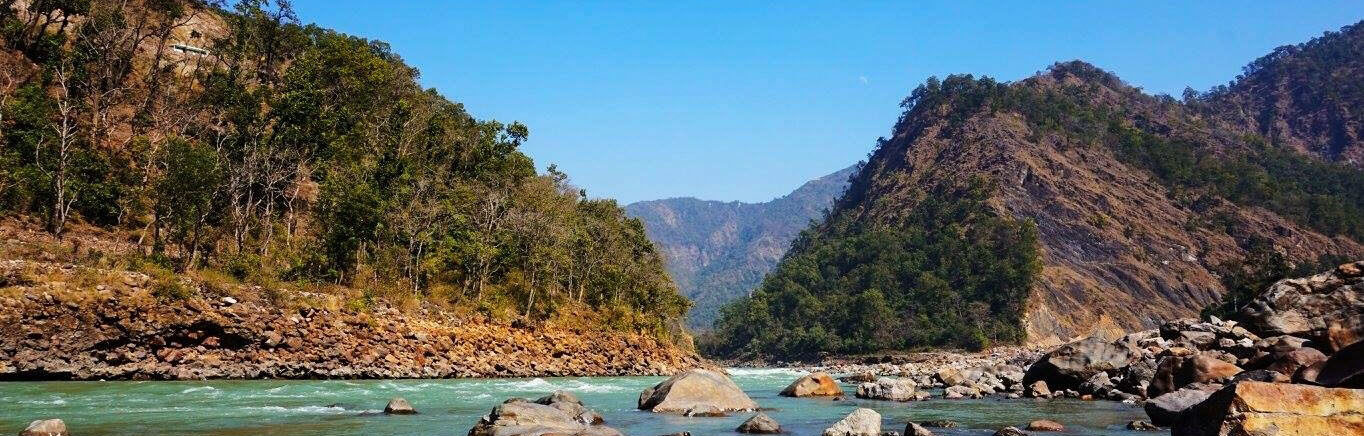
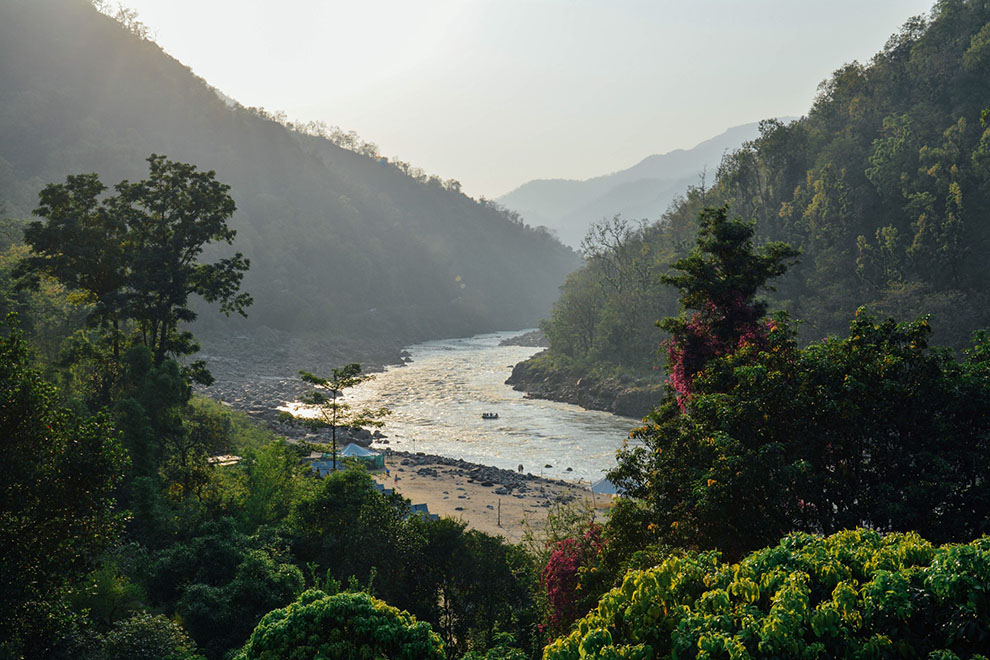
A train will take you to Haridwar at the foot of the Himalayas – enjoy one of the most popular ways to travel in India! Rishikesh, the famous little pilgrimage town, also known as the “Yoga Capital of the World”, is picturesquely situated on the banks of the holy Ganges, which here winds its way out of the Himalayan mountains, shimmering cool and green, giving the town a fresh yet tranquil atmosphere.
18
Tag 18: Spirituality in a unique natural landscape
Numerous ashrams exude an almost tangible spiritual power – here, meditation and a puja (morning prayer ceremony) draw you deeply into the relaxed atmosphere that surrounds you. A stroll through the market streets of Rishikesh leads past numerous temples and
ashrams that spread out on both banks of the river against the breathtaking backdrop of the Himalayas. Crossing the Laxman Jhula, the famous suspension bridge that connects the parts of the city on either side of the sacred river, has truly earned its nickname, "Laxman's Swing." A slice of Indian culture is revealed by the residents and pilgrims who go about their daily lives or pray along the banks and ghats. The highlight of the evening is the light ceremony at Triveni Ghat, where the Ganges, Yamuna, and Saraswati rivers converge underground.
19
Tag 19: From Rishikesh to Haridwar
Haridwar is one of the seven holiest cities in Hinduism and, every 12 years, the site of the Kumbh Mela, the largest annual pilgrimage in India, which draws countless Hindu pilgrims to this small town. The Mansa Devi Temple, overlooking the Ganges and the plains of Haridwar, is a must-see for every pilgrim. Haridwar's cremation ghats offer insights into the Hindu funeral rites, which are often quite unfamiliar to Europeans. A more secular and bustling experience awaits as you stroll through the lively markets and streets, where vendors offer a wide array of goods of all kinds. In the evening, you can witness the Aarti prayer ceremony on the banks of the Ganges, where worshippers place their offerings of flowers and lights into the river.
20
Tag 20: Delhi's old part
The return journey to Delhi is by train, allowing you to immerse yourself in the vibrant heart of Old Delhi. The Red Fort exudes an aura of worldly power and strength, even from the outside, while the Jama Masjid, India's largest mosque, which can accommodate up to 20,000 worshippers, testifies to divine power. The bustling activity in the old city's alleyways leads you to an overwhelming array of traditional crafts and modern everyday items, colorful clothing, and a diverse array of aromas from spices, tea, and street food to satisfy every appetite, from Chandni Chowk to Khari Baoli, Asia's largest spice market. Mahatma Gandhi's final journey took him to Raj Ghat, where an eternal flame now commemorates the cremation site of the still-revered freedom fighter.
21
Tag 21: New Delhi and farewell to India
Today, the Sikh religion welcomes you to its largest temple in Delhi, the Bangla Sahib Gurudwara, where charity is a daily practice. The Lotus Temple is an architectural gem of modern Delhi, rising like a white lotus blossom from the surrounding gardens. The imposing India Gate triumphal arch was erected to commemorate those who fell in World War I, while the buildings of the government district still reflect the spirit of the slowly fading British India. A ride on the metro through India's metropolis offers a glimpse into one of the ways people commute to work each day, before you can relax and refresh in a hotel room near the airport and enjoy a farewell dinner to conclude your trip. From Delhi International Airport, you will depart for your return flight home after midnight. We wish you a pleasant flight home and hope to welcome you back as our guests again soon.
Impressionen der Reise
|
Stadt |
Hotel |
Anzahl der Nächte |
|
Ahmedabad |
The House of MG (Deluxe Room) oder ähnlich |
2 |
|
Udaipur |
Fateh Niwas (Deluxe Room) oder ähnlich |
2 |
|
Deogarh |
Deogarh Mahal (Deluxe Room) oder ähnlich |
1 |
|
Jodhpur |
Ranbanka (eluxe Room) oder ähnlich |
2 |
|
Jaisalmer |
Gulaal (Deluxe Room) oder ähnlich |
2 |
|
Bikaner |
Maharaja Ganga Mahal (Royal Deluxe Room) oder ähnlich |
1 |
|
Nawalgarh |
Vivana Heritage (Deluxe Room) oder ähnlich |
1 |
|
Jaipur |
Alsisar Haveli (Standard Room) oder ähnlich |
2 |
|
Agra |
Crystal Sarovar Premiere (Deluxe Room) oder ähnlich |
2 |
|
Delhi |
The Suryaa (Deluxe Room) oder ähnlich |
1 |
|
Rishikesh |
Divine Resort (Deluxe Room) oder ähnlich |
2 |
|
Haridwar |
Haveli Hari Ganga () oder ähnlich |
1 |
|
Delhi |
The Suryaa (Deluxe Room) oder ähnlich |
1 |